




















Body
Tummy tuck (abdominoplasty) in Thessaloniki and Athens, Greece
I perform 20-25 tummy tucks a year and have been a plastic surgeon since 2012. I choose the technique for each patient according to how loose the skin is, the state of the abdominal muscles and the fat around the trunk.
A tummy tuck removes loose skin and excess fat from the lower abdomen and, where needed, tightens the abdominal muscles and repairs hernias. It is for women after pregnancy, and for men and women after major weight loss. The scar sits low, below the underwear line.
20–25
operations a year

At a glance
What it treats
Loose skin and fat on the abdomen, separated abdominal muscles (diastasis recti), hernias, stretch marks below the navel
Anaesthesia
General anaesthesia
Operating time
Classic: under 2 hours. Overall, from under 1 hour (mini) to over 3 hours (extended techniques or combined procedures)
Hospital stay
Usually 1 night for a classic tummy tuck
Back to work
1 to 2 weeks for desk work, 4 to 6 weeks for heavy work
Exercise
After 4 to 6 weeks; after 2 to 3 weeks for a mini tummy tuck
Final result
At 3 to 6 months
Where
Interbalkan Medical Center, Thessaloniki · Athens Medical Center, Marousi
Medically reviewed by Dr Prodromos Papaioannou, Plastic Surgeon, HESPRAS member, ASPS International Member · Last reviewed:
What is a tummy tuck?
A tummy tuck (abdominoplasty) corrects laxity of the skin, the fat and the abdominal wall. Excess skin below the navel is removed, abdominal muscles that have drifted apart are stitched back together, and hernias are repaired. It is usually combined with liposuction to shape the waist and flanks as well.
The term covers very different operations, from removing a small strip of skin below the navel to an incision all the way around the trunk after major weight loss. That is why I choose the technique case by case rather than offering one standard operation.
When weight or the size of the abdomen goes up and down, the skin and the abdominal wall can change permanently. After a pregnancy without much weight gain, the abdomen may recover almost completely. How much it recovers depends on age, on how large the change was and how long it lasted, and on anatomical, hereditary, hormonal and nutritional factors.
Am I a good candidate for a tummy tuck?
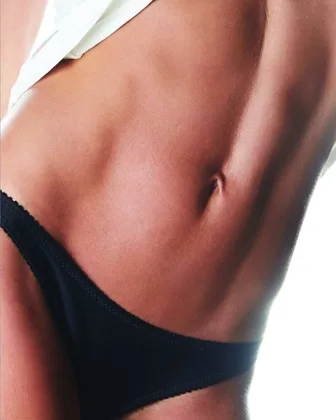
A tummy tuck suits healthy adults at a stable weight whose loose skin or slack abdominal wall has not improved with diet and exercise. After pregnancy, I prefer that you have finished having children and that at least 6 months have passed since your last delivery. Whether it is right for you is decided at the examination.
Who are typical candidates?
- Women after pregnancy with loose skin, stretch marks or separated abdominal muscles in the lower abdomen.
- Men and women after major weight loss, through diet, bariatric surgery or weight-loss medication, once their weight has been stable for 6 to 12 months.
- People with a large overhanging abdomen caused by excess skin, with irritation in the skin folds or difficulty dressing and exercising.
- People with an umbilical hernia or another abdominal wall hernia together with loose skin.
- People with mild laxity only in the lowest part of the abdomen, who may need only a mini tummy tuck.
When do I not recommend it?
- When you are planning another pregnancy.
- Before 6 months have passed since your last delivery.
- When your weight has not stabilised. If the abdomen is large because of overall weight, I first suggest losing weight or, in some cases, surgery combined with extensive liposuction.
- In heavy smokers who cannot stop smoking.
- When serious medical conditions, such as uncontrolled diabetes, make the risk disproportionate.
- When the laxity is minimal and liposuction alone is enough; see the liposuction page.
What happens at the consultation and how do I prepare?
At the consultation I examine your abdomen standing and lying down, we agree the technique and the position of the scar, and you receive a written plan and quote. Before surgery you need blood tests and an anaesthetic check, must stop smoking for 4 weeks before and after, and should avoid large weight changes.
What happens at the consultation?
I examine the abdomen standing and lying down: how much skin there is and its quality, stretch marks, fat on the abdomen and flanks, the navel, old scars (such as a caesarean section scar) and the abdominal wall, looking for separated muscles or a hernia. We go through your medical history, your weight and whether you are planning another pregnancy. Together we choose the technique, the extent of liposuction and where the incision will go, taking into account whether you prefer high-cut or low-cut underwear and swimwear. How major the operation will be is decided only after this examination. You receive a written plan and quote.
What tests and instructions apply before surgery?
You need pre-operative blood tests and a check for general anaesthesia. If a hernia is suspected, I may also ask for an ultrasound or other imaging of the abdominal wall. Smoking significantly increases healing problems: stop for at least 4 weeks before and 4 weeks after surgery. In heavy smokers I do not operate unless they stop. If you take blood thinners (anticoagulants or antiplatelet drugs), tell me; they are stopped only in agreement with the doctor who prescribes them. Avoid large changes in weight before the operation. The date of surgery is set once your tests are complete.
How is a tummy tuck performed and how long does it take?
A classic tummy tuck is done under general anaesthesia (anesthesia) and takes under two hours; a mini tummy tuck can also be done under local anaesthesia with sedation. The incision is placed low, below the underwear line. I choose the technique according to how loose the skin and the abdominal wall are.
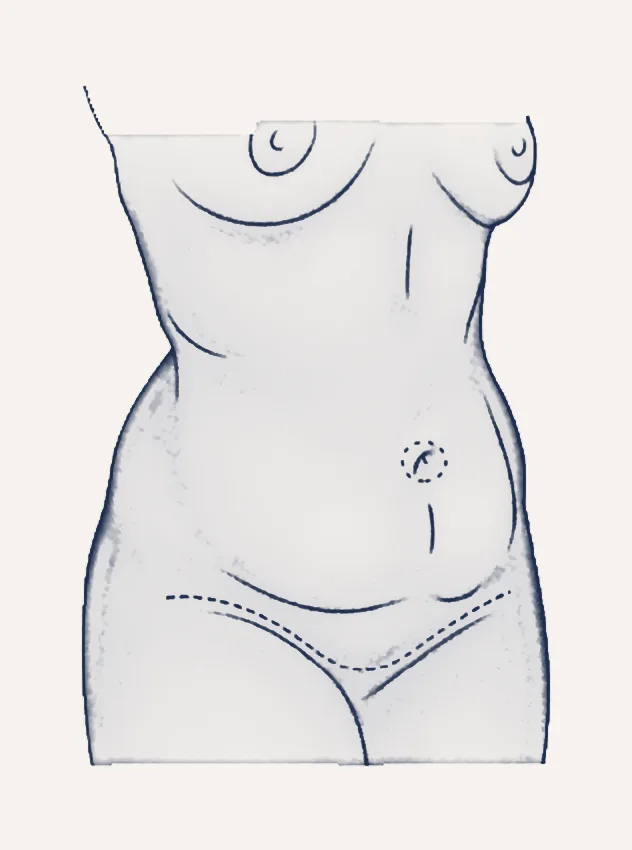
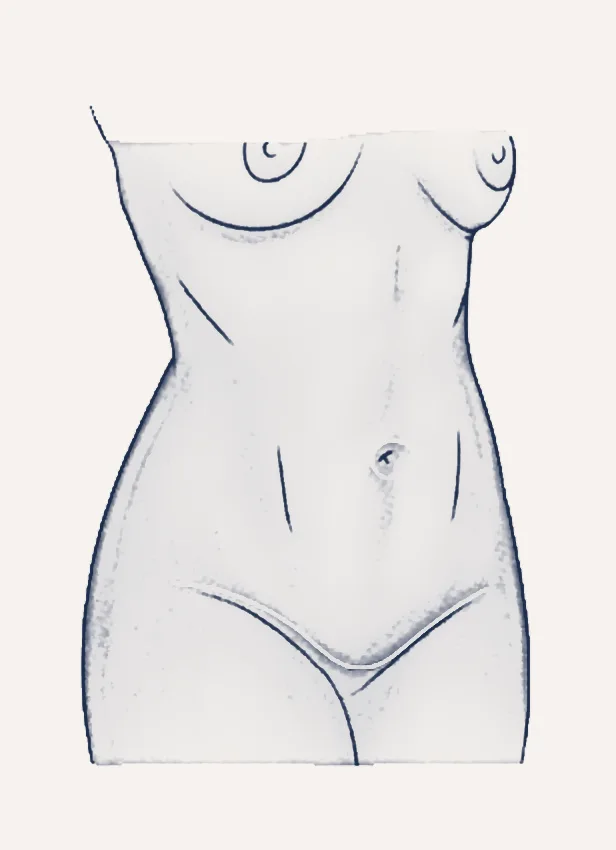
Operating time ranges from under one hour to over three hours, depending on the amount of liposuction, how loose the skin is, the state of the abdominal wall and any hernias. I always place drains for the first 3-5 days. For pain control, I infiltrate the abdominal wall with a long-acting local anaesthetic.
Mini tummy tuck
Only skin below the navel is removed, for mild laxity in the lower abdomen. The navel and the abdominal wall are not touched, so recovery is simpler. The incision sits low, at the pubic area, and is usually a little longer than a caesarean section scar. It is combined with liposuction.
Classic (full) tummy tuck
This is the most common operation for women after pregnancy. The incision lies low, below the underwear line, and usually runs from one hip bone to the other. Loose skin and fat below the navel are removed, the skin of the upper abdomen is drawn down, and the abdominal wall is usually repaired as well. It is done under general anaesthesia, and recovery takes longer than after a mini tummy tuck.
The navel (belly button)
In a classic tummy tuck there are three variations, depending on how the navel is handled:
- Floating navel (floating tummy tuck). The navel is detached from the abdominal wall and moved 1 to 3 cm lower, with no new scar around it.
- Navel transposition. The navel stays attached to the abdominal wall in its original position and is brought out through a new opening in the skin that has been drawn down.
- New navel. In some cases, such as a large umbilical hernia, a new navel is created.
Diastasis recti and hernias
After pregnancy the two rectus abdominis muscles often move apart, and the abdomen sticks out even when your weight is back to normal. In classic and extended tummy tucks I stitch the muscles back together in the midline through their fascia, and I repair an umbilical hernia or other hernias of the abdominal wall. When reinforcement is needed, I use a biocompatible mesh. Repairing the wall makes the abdomen flatter and the waist slimmer, but it also decides when you can return to exercise.
Extended and circumferential tummy tuck
Technically this is similar to the classic tummy tuck, but the incision extends beyond the hip bones. In the circumferential form (lower body lift) the incision continues around the back of the trunk, like a belt around the body. The main indication is major weight loss, when the skin is looser and the laxity reaches the flanks and the waist. For these cases, see also the page on body contouring after major weight loss.
Fleur-de-lis tummy tuck (vertical midline incision)
This is a variation of the extended tummy tuck for major weight loss with marked laxity at the sides of the abdomen as well. The incision is an inverted T: an ellipse of skin is removed from the lower abdomen and a triangle from the middle, and the skin is closed in a T shape. It leaves a vertical scar down the middle of the abdomen as well, but it tightens the waist horizontally, which a horizontal incision alone cannot do.
Incisions and stitches
For most women the main concern is the scar. With careful planning the incision is placed low, like a caesarean section scar, below the underwear line, so that it stays hidden even in swimwear. I plan it around your preferences, because some women wear high-cut swimwear and others low-cut. After a mini tummy tuck the scar is a little longer than a caesarean scar; after a classic tummy tuck it runs from one hip bone to the other; after extended techniques it is longer. The scar usually takes 5 to 6 months to thin and fade, and then remains a fine line.
The deep stitches are internal and dissolve; the skin stitches are removed at 5 to 7 days.
Combined procedures
With liposuction (lipoabdominoplasty). In most cases I combine the tummy tuck with liposuction and liposculpture, small or extensive, to reduce fat and better shape the flanks and the upper abdomen. The amount of liposuction is a main factor in how major the operation is and how long the swelling lasts. For the method, see the liposuction page.
With breast surgery (mommy makeover). Pregnancy and breastfeeding often change both the abdomen and the breasts. A tummy tuck can be done in the same operation as a breast augmentation or breast lift, with one anaesthetic and one recovery. Combining them lengthens the operation, so I suggest it only when your health and the overall extent of surgery allow it; otherwise we split them into two stages.
Hospital stay
After a classic tummy tuck you usually stay one night in hospital. After a mini tummy tuck you may go home the same day, while extended techniques and combined procedures always need at least one night. You leave with someone accompanying you, wearing the compression garment and with the drains in place; after general anaesthesia you must not drive.
How long is recovery after a tummy tuck?
You walk from the first day and usually stay one night in hospital. Desk work is possible after 1 to 2 weeks, the compression garment comes off at 3 to 4 weeks, and heavy work and exercise resume gradually at 4 to 6 weeks. After a mini tummy tuck you return to physical activity at 2 to 3 weeks.
| When | How you feel | What you can do |
|---|---|---|
| Days 1–2 | Tightness and pain in the abdomen, stronger when the muscles have been repaired; after a mini tummy tuck the pain is mild | One night in hospital after a classic tummy tuck; walking early, wearing the compression garment |
| Days 3–14 | Pain eases; you walk slightly bent forward for the first few days | Simple painkillers are enough. Desk work at 1–2 weeks; no lifting |
| Weeks 2–3 | Mini tummy tuck: almost back to normal | Return to physical activity and sport |
| Weeks 3–4 | Discomfort decreases, swelling remains | Compression garment comes off |
| Weeks 4–6 | Almost normal movement | Heavy work and exercise, gradually; if the muscles or a hernia were repaired, gentle exercise from week 6 |
| Months 3–6 | Swelling settles completely and the final result shows | Full training, including after abdominal wall repair |
| Months 5–6 | The scar thins and fades | Normal activity |
How long do I need to stay in Greece after a tummy tuck?
Plan to stay in Greece for about 10 to 15 days after a tummy tuck. After a classic tummy tuck you usually spend one night in hospital; after a mini tummy tuck you may leave the same day, and extended or combined procedures need at least one night.
The drains stay in for the first 3-5 days and go home with you from hospital, so the first days are spent close to the practice. I remove the drains at a check at the practice, and I see you again the day before your flight. The deep stitches are internal and dissolve; the skin stitches are removed at 5 to 7 days, before you travel.
You can usually fly home from day 10, with flights of 3 hours at most in the first weeks. Because blood clots are a rare but serious risk after abdominal surgery, I will advise you on walking, compression stockings and any blood-thinning protection for the journey, which depends on your risk.
Once home, follow-up continues by video call at 10 days, 1 month, 6 months and 1 year. Before you travel, arrange:
- someone to help you at home for the first days, as you will walk slightly bent and cannot lift;
- time off work: 1 to 2 weeks for desk work, 4 to 6 weeks for heavy work;
- a local GP or nurse who can see you if a fluid collection or wound problem needs attention; for any concern you message the practice on WhatsApp and receive a reply the same day, in an emergency you call us, and for an acute problem you go to the nearest hospital emergency department.
What results can I expect, and how long do they last?
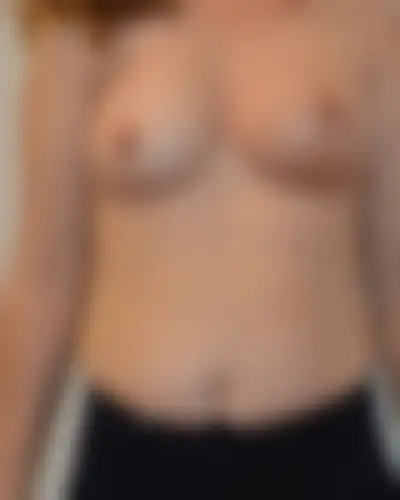
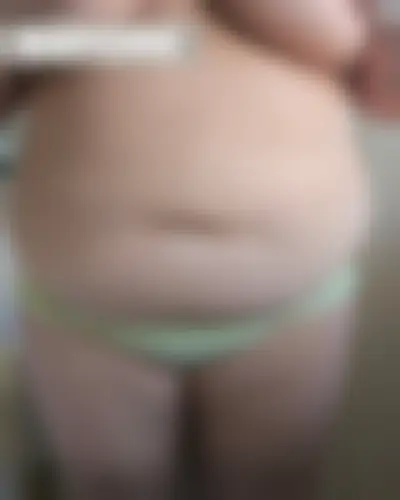
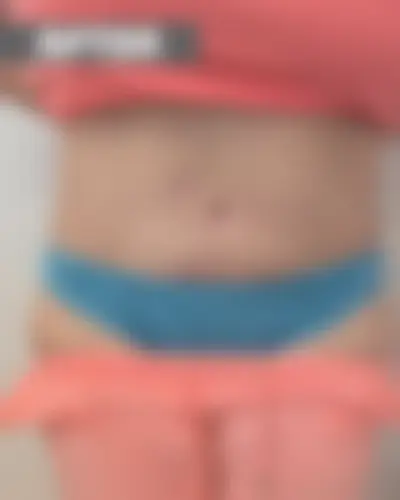
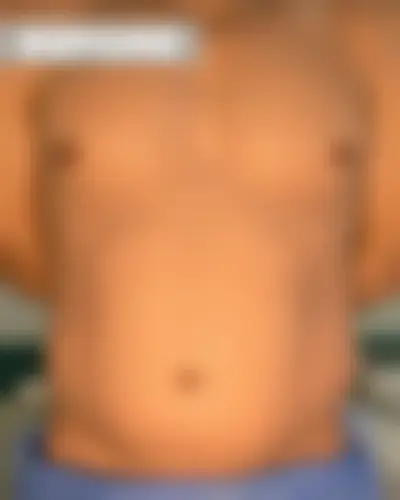
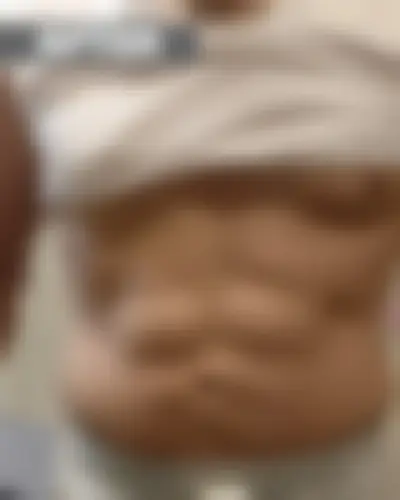
The final result shows at 3 to 6 months, once the swelling has settled, and the scar thins over 5 to 6 months. The skin that is removed does not come back, so the result lasts as long as your weight stays stable. A new pregnancy or a large change in weight can alter it again.
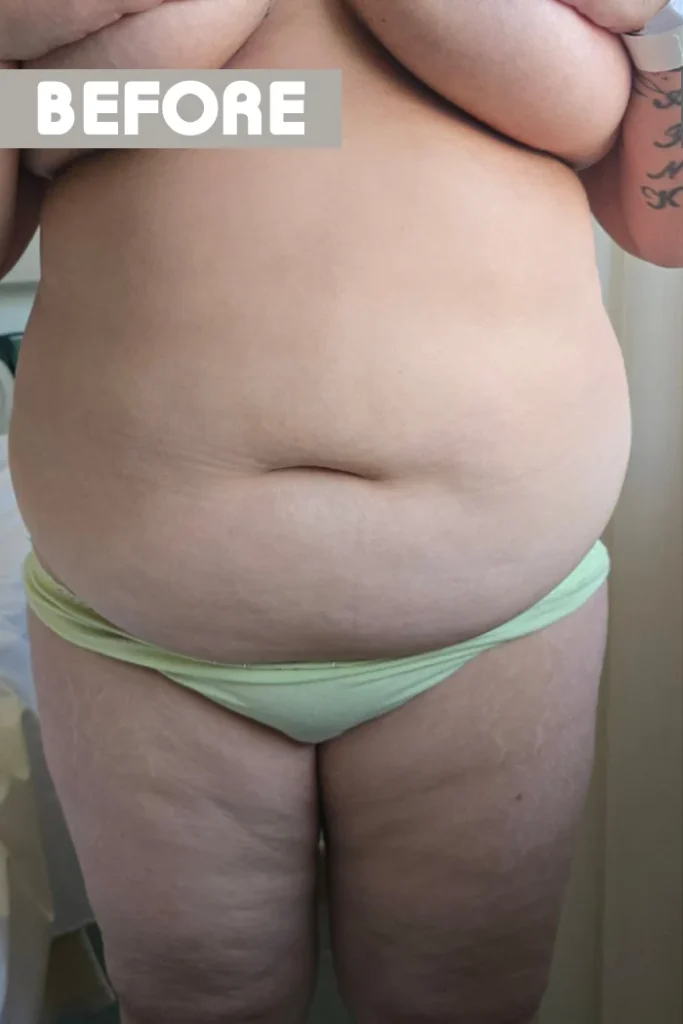 Before
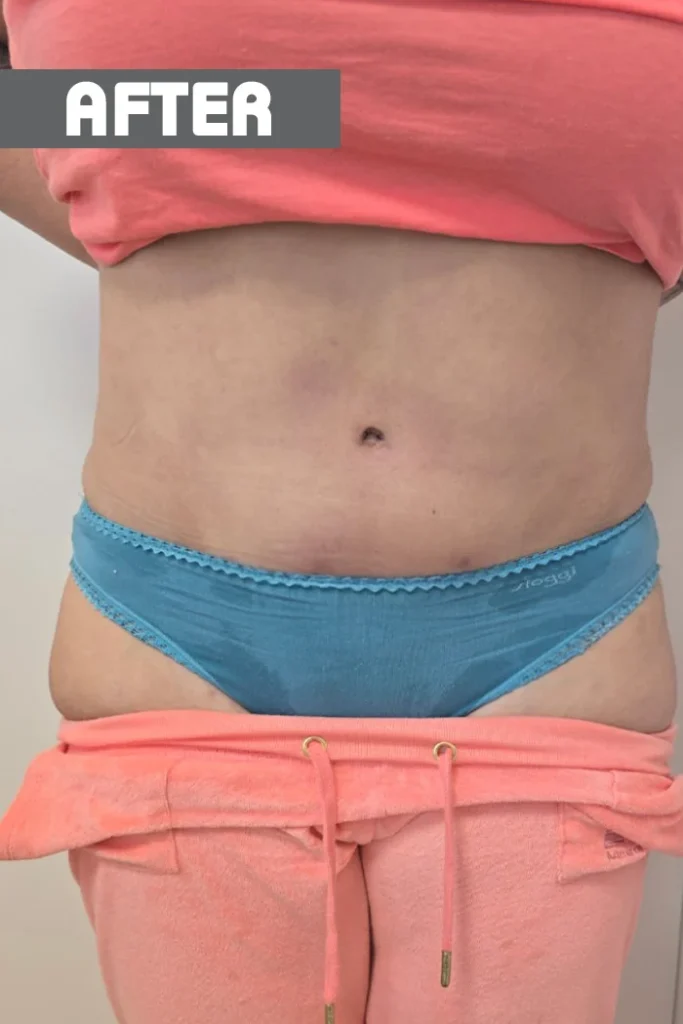 After
These photos include nudity.
Tummy tuck
Woman, 30 · 6 months after
Front
Results vary from patient to patient.
After a mini tummy tuck the result is visible straight away, although swelling can last up to 3 months. After a classic tummy tuck the abdomen is flatter and the outline of the abdominal muscles is more visible. The scar stays low, under your underwear or swimwear.
What are the risks of a tummy tuck?
Most complications of a tummy tuck are minor and treatable. The risk is higher with extended techniques after major weight loss, in smokers, in people with diabetes and in people with serious medical conditions. I explain your personal risk at the consultation, and the table below shows the main complications and how they are prevented and managed.
| Complication | How common | Prevention and treatment |
|---|---|---|
| Fluid collection (seroma) | Not uncommon | Compression garment and limited movement in the first weeks; drained with a needle at the practice |
| Delayed wound healing | Not uncommon, more frequent in smokers | Stopping smoking, correct skin tension; usually closes with dressings |
| Haematoma (hematoma) | Rare, in the first days | Checking medicines that affect clotting; drained if it occurs |
| Infection | Rare | Antibiotics and wound care; treated promptly if it occurs |
| Numbness of the lower abdominal skin | Common, temporary | Returns gradually over months |
| Wide or raised (hypertrophic) scar | Not uncommon | Scar care, sun protection; corrected with a minor procedure if needed |
| Small excess of skin at the ends of the scar (“dog ears”) | Not uncommon | Planning of the incision and liposuction of the flanks; corrected under local anaesthesia |
| Navel healing problem | Rare | Wound care; corrected if needed |
| Blood clots (venous thromboembolism) | Rare, but serious | Early walking, graduated compression stockings and blood-thinning protection according to your risk; no blood thinner is given where the bleeding risk is high |
Smoking. Stop for at least 4 weeks before and 4 weeks after surgery. Smokers have a higher chance of complications after a tummy tuck, such as delayed healing and fluid collection, so I do not operate on heavy smokers unless they stop.
Blood thinners. Tell me if you take anticoagulants or antiplatelet drugs. They are always stopped in agreement with the doctor who prescribes them.
How much does a tummy tuck cost?
We do not publish prices. A tummy tuck is not one fixed operation done the same way for everyone, so the cost depends on the technique, the amount of liposuction and whether the abdominal wall is repaired. You receive a quote after the consultation, once I have examined you and we have agreed on the plan that suits you.
- The technique: mini, classic, extended, circumferential or fleur-de-lis.
- The extent of liposuction and liposculpture.
- Repair of diastasis or a hernia, with or without biocompatible mesh.
- The anaesthetic: general, or local with sedation.
- The number of nights in hospital.
- Combination with breast surgery or surgery on another area.
Frequently asked questions
Can liposuction or skin-tightening treatments replace a tummy tuck?
Not when there is loose skin or separated muscles. Skin-tightening devices such as radiofrequency, laser liposuction or LPG have little effect and do not correct a slack abdominal wall, so they cannot replace surgery. When the skin is of reasonably good quality and the problem is mainly fat, liposuction and liposculpture can sometimes avoid a tummy tuck, with a shorter recovery and no long scar. Liposuction cannot remove loose skin or repair the abdominal muscles, though: if there is excess skin or diastasis, it is not enough on its own. Which option suits you is decided at the examination.
How much time off work do I need after a tummy tuck?
It depends on the type of operation and on your job. For desk work you usually need 1 to 2 weeks. For heavy physical work involving lifting or long hours standing, plan on 4 to 6 weeks. After a mini tummy tuck, where the abdominal wall is not touched, you usually return sooner. If the tummy tuck is combined with extensive liposuction or breast surgery, allow a little longer. At your post-operative check I give you personal advice based on how you are recovering.
When can I exercise after a tummy tuck?
The key question is whether the abdominal wall was repaired for diastasis recti or a hernia. If it was, gentle exercise starts after 6 weeks, and full training, including sit-ups and weights, after 3 to 6 months. When the operation is smaller and does not involve the abdominal wall, as in a mini tummy tuck, you can return to physical activity and sport after 2 to 3 weeks. Walking is allowed, and encouraged, from the first days after surgery.
Where is the tummy tuck scar, and will it show in a bikini?
In a classic tummy tuck the incision is placed low, below the underwear line like a caesarean section scar, and usually runs from one hip bone to the other. To keep it hidden on the beach, I plan it around your preferences, because some women wear high-cut swimwear and others low-cut. Bring the underwear or swimwear you usually wear to the consultation. The scar takes 5 to 6 months to thin and fade, and then remains a fine line.
Can I get pregnant after a tummy tuck?
A tummy tuck is not recommended before you have finished having children. Repair of the abdominal wall with stitches or biocompatible mesh may affect a pregnancy, and a pregnancy can undo the result. If you do become pregnant after a tummy tuck, tell your obstetrician and your surgeon so that they can monitor you. After the birth we assess together whether any correction is needed.
Do men have tummy tucks?
Yes. In men the main reason is major weight loss, after diet, bariatric surgery or weight-loss medication, which has greatly increased the number of men asking for the operation. In men the problem often extends to the flanks, so the tummy tuck is usually combined with liposuction or done with an extended incision. Your weight needs to have been stable for 6 to 12 months first. See also the page on body contouring after major weight loss.
Is a tummy tuck major surgery?
It depends on the type of tummy tuck: operating time ranges from under one hour to over three hours. What decides it is the amount of liposuction, how loose the skin is, the state of the abdominal wall and any hernias. A mini tummy tuck is a light operation, while a circumferential tummy tuck after major weight loss is a much larger one. We assess how major your operation will be at the consultation.
What can I do after giving birth to stop my stomach becoming loose?
Prevention helps: avoid excessive weight gain during pregnancy and large swings in weight, and exercise regularly. An abdominal support garment can help with swelling in the first 6 weeks after the birth, but not beyond that. Many women are still left with permanent laxity in the lower abdomen that does not improve on its own. At that point we can discuss a tummy tuck, a mini tummy tuck or liposuction.
When can I fly home after a tummy tuck?
Most patients can fly home from day 10 after a tummy tuck. Before that, you spend one night in hospital after a classic tummy tuck, and the drains stay in for the first 3-5 days, so the first days are spent near the practice. The skin stitches are removed at 5 to 7 days, before you travel. Because blood clots are a rare but serious risk, I will tell you how to protect yourself on the flight, such as walking, wearing compression stockings and keeping flights to 3 hours at most in the first weeks.
Can my follow-up be done at home?
Yes, after you return home your follow-up continues by video call at 10 days, 1 month, 6 months and 1 year. You send photos of the wound and we talk through your recovery: the compression garment, return to work and when to start exercising. If a fluid collection or a wound problem needs hands-on care, nursing care at home can be arranged, and I stay in contact with you throughout. Before you leave Greece, you receive written instructions for each stage of recovery.
References
- Pitanguy I. Abdominal lipectomy: an approach to it through an analysis of 300 consecutive cases. Plast Reconstr Surg. 1967;40(4):384–391.
- Lockwood T. High-lateral-tension abdominoplasty with superficial fascial system suspension. Plast Reconstr Surg. 1995;96(3):603–615.
- Matarasso A. Liposuction as an adjunct to a full abdominoplasty. Plast Reconstr Surg. 1995;95(5):829–836.
- Saldanha OR, Pinto EB, Matos WN Jr, et al. Lipoabdominoplasty without undermining. Aesthet Surg J. 2001;21(6):518–526.
- Nahas FX, Augusto SM, Ghelfond C. Should diastasis recti be corrected? Aesthetic Plast Surg. 1997;21(4):285–289.
- Manassa EH, Hertl CH, Olbrisch RR. Wound healing problems in smokers and nonsmokers after 132 abdominoplasties. Plast Reconstr Surg. 2003;111(6):2082–2087.
- Winocour J, Gupta V, Ramirez JR, et al. Abdominoplasty: risk factors, complication rates, and safety of combined procedures. Plast Reconstr Surg. 2015;136(5):597e–606e.
Consultation
In Thessaloniki, in Athens or by video. Examination, options and a written plan.