





















Face · Aesthetics
Lip lift (upper lip lift) in Thessaloniki and Athens, Greece
I perform about 15 to 20 lip lifts a year and have been a specialist plastic surgeon since 2012. I plan the incision with separate measurements at the centre and at the sides of the lip, so that the whole lip lifts, not only the centre.
A lip lift shortens the distance between the base of the nose and the upper lip by removing a thin strip of skin just under the nose. It is for people whose upper lip is long and hides their upper teeth, whether they were born with it or it has lengthened with age.
15–20
operations a year

At a glance
What it corrects
A long nose-to-lip distance, an upper lip that covers the teeth, a lip out of proportion with the face
Anaesthesia
Local
Operating time
About half an hour
Hospital stay
None; you go home the same day
Back to work
With a face mask from the next day; visible swelling settles in about 10 days
Exercise
Light after 1 week, strenuous after 2 to 3 weeks
Final result
Bruising and swelling settle in about 10 days; the scar matures and becomes almost invisible over a few months
Where
Thessaloniki: Interbalkan Medical Center · Athens: Athens Medical Center, Marousi
Medically reviewed by Dr Prodromos Papaioannou, Plastic Surgeon, HESPRAS member, ASPS International Member · Last reviewed:
What is a lip lift?
A lip lift is surgery that raises and shortens the upper lip. I remove a strip of skin shaped like a bull’s horn (a “bullhorn”) along the base of the nose. This shortens the nose-to-lip distance so that the upper teeth show. The scar sits in the natural crease under the nose.
A lip lift does not correct every change around the mouth, but it does correct the position and shape of the upper lip. A facelift lifts the cheeks and jawline, but it does not shorten the upper lip; this is why the two are often combined.
A lip lift is an operation, and it is different from a lip flip or “Russian lips”, which are done with injections. Injectables add volume or relax the muscle, but they cannot shorten the distance between the nose and the lip.
Am I a good candidate for a lip lift?

A lip lift suits you if your upper lip is long and covers your upper teeth, even when you smile. There is no age limit, because what matters is your anatomy. I do not recommend it when the nose-to-lip distance is already short, because it can then cause both cosmetic and functional problems.
Typical candidates are people who have:
- a long distance from the base of the nose to the edge of the lip (the philtrum): about 15 mm or more in younger patients, and 16 mm or more in older patients, whose lip has already lengthened;
- an upper lip that has dropped like a “curtain” and covers the upper teeth, even when smiling;
- a lip that is out of proportion with the jaw and the face;
- a mouth corner that droops on one side, where an asymmetric lip correction can restore symmetry;
- a facelift planned, and want to complete the rejuvenation around the mouth.
Because the position of the lip also depends on anatomy, a lip lift suits younger people with a naturally long upper lip, not only those whose lip has changed with age.
When do I not recommend a lip lift?
- In heavy smokers, because healing can be poor.
- When the skin of the upper lip has very deep smoker’s lines: this needs particular care or a variation of the technique, and often a combination with laser or a peel.
- When the nose-to-lip distance is already short and the teeth already show well, because a lip lift would then show too much tooth.
- When the only aim is a fuller lip; fat transfer is the better option for that.
- When the asymmetry lies higher in the face rather than in the lip itself.
- During an active cold sore (herpes) outbreak on the lip; surgery is postponed.
What happens at the consultation, and how do I prepare?
At the consultation I measure your lip and look at how it moves, then we decide together whether a lip lift alone is enough or whether it should be combined with another procedure. You leave with a written plan and cost. Before surgery you stop smoking, review any blood thinners with your doctor and, if needed, take cold-sore prevention.
What happens at the consultation?
I measure the nose-to-lip distance, separately at the central part (the philtrum) and at the sides under the nostrils. I look at the shape and movement of the upper lip, how much of your teeth shows at rest, when you speak and when you smile, the symmetry of the mouth corners, the width of the nostrils and the quality of the skin. Together we decide whether a lip lift alone is enough or whether it should be combined with a facelift, fat transfer or laser. You receive a written plan and cost.
What tests and instructions apply before surgery?
Pre-operative blood tests are done where needed; when the lip lift is combined with a facelift, the facelift tests apply. Stop smoking at least 4 weeks before and 4 weeks after surgery. If you take anticoagulants or antiplatelet medicines, tell me; they are stopped only in agreement with the doctor who prescribes them. If you often get cold sores on the lip, we discuss it at the consultation so that you can take preventive treatment. The date of surgery is set once the tests are complete.
How is a lip lift performed?
A lip lift is done under local anaesthesia and takes about half an hour. After careful assessment and measurement, I remove a strip of skin at the base of the nose, up to the outer edge of the nostrils, and close it with an absorbable stitch under the skin. You go home the same day.
My technique is the bullhorn lip lift [1, 2]: the incision is shaped like a bull’s horn and follows the natural outline of the base of the nose. It can be done on its own or as part of other facial lifting techniques, such as a facelift. The planning must lift the whole lip evenly and symmetrically, without lifting only the central part, which gives a “rabbit mouth” look.
Planning and measurements
I plan with separate measurements at the centre and at the sides of the lip, so that the lift is even [3, 4]. At the centre I remove less than under the nostrils, so that the teeth do not show too much at rest or when you speak. An overly aggressive lip lift causes a cosmetic and a functional problem.
The bullhorn incision
The incision starts exactly at the curve of the nostril, where it meets the upper lip, runs under the base of the nose following the curves of the philtrum and the columella, and ends on the other side, again under the nostril. When needed, the tissues are released as far as the nasolabial fold, to the extent each case requires [5]. If the nostrils are already wide, I take this into account in the planning, because the base of the nose can widen slightly.
Mouth corners and asymmetry
The bullhorn lip lift is usually enough. If one corner of the mouth has dropped, I lift that side more. This applies only to the lip; asymmetries higher in the face are not corrected. Drooping mouth corners can also be treated with a corner lip lift, which is not needed when a deep plane facelift is done. I do not perform vermilion advancement.
Incision and stitches
The scar lies under the base of the nose and follows its natural outline. I close it with a continuous absorbable stitch under the skin, which does not need removing. Tapes are placed over the incision and come off on day 5.
Combining a lip lift with other procedures
A lip lift can be combined with:
- a facelift (see the deep plane facelift page), which lifts the mouth corners at the same time;
- fat transfer to the upper lip and around the mouth, for volume.
Do I need to stay in hospital?
No. Under local anaesthesia you go home the same day. When the lip lift is done together with a facelift, the anaesthesia and hospital stay of the facelift apply.
How long is recovery after a lip lift?
Recovery is quick. You can go back to work wearing a face mask, the tapes come off on day 5, bruising and swelling settle in about 10 days, and the scar matures over a few months. Light exercise is possible after 1 week and strenuous exercise after 2 to 3 weeks.
| When | How you feel | What you can do |
|---|---|---|
| Days 1–4 | The upper lip is swollen and tight, with some bruising | Keep the incision dry, move your mouth gently; work with a face mask |
| Day 5 | The tapes come off; the stitch dissolves on its own | Care for the incision as I instruct you |
| About 10 days | Bruising and swelling settle; no visible swelling of the lip | Social activities without a mask |
| Weeks 2–3 | The lip may still feel a little tight or numb | Gradual return to exercise |
| A few months | The scar matures and becomes almost invisible | Normal activity |
| Up to about 1 year | In some people, numbness of the lip fades gradually | Normal activity |
The upper lip swells in the first days. This is expected and does not show the final shape. When the lip lift is combined with a facelift, you follow the facelift recovery plan.
How long do I need to stay in Greece after a lip lift?
Most patients having a lip lift alone can plan a short stay: there is no hospital night, and the tapes come off on day 5. Plan to stay in Greece for 5 to 10 days. If the lip lift is combined with a facelift, the facelift stay applies.
- Hospital: none. The operation is done under local anaesthesia and you go home the same day.
- Tapes and stitches: the tapes over the incision come off on day 5. The stitch under the skin is absorbable and does not need removing.
- Flying home: from day 5, after the tapes come off and your final check.
- Follow-up: by video call at 10 days, 1 month, 6 months and 1 year.
- At home: keep the incision dry in the first days, move your mouth gently, and arrange to work with a face mask or from home until the visible swelling settles at about 10 days. Avoid strenuous exercise for 2 to 3 weeks. All follow-up checks are done by me; nursing care at home can be arranged if you would like it.
What results can I expect, and how long do they last?
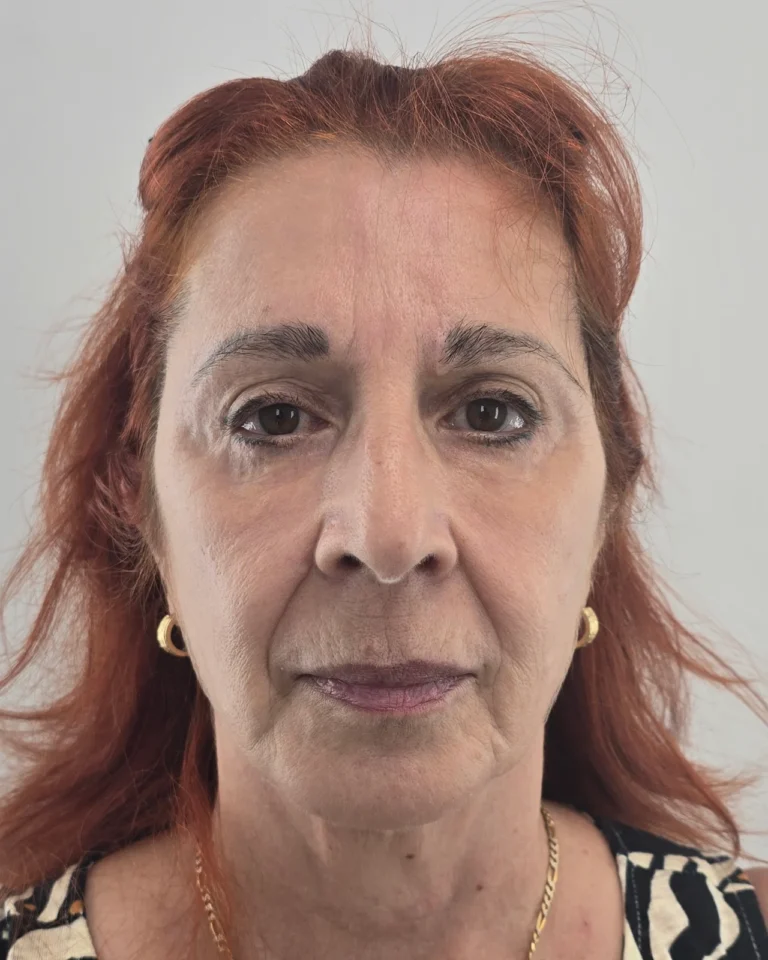
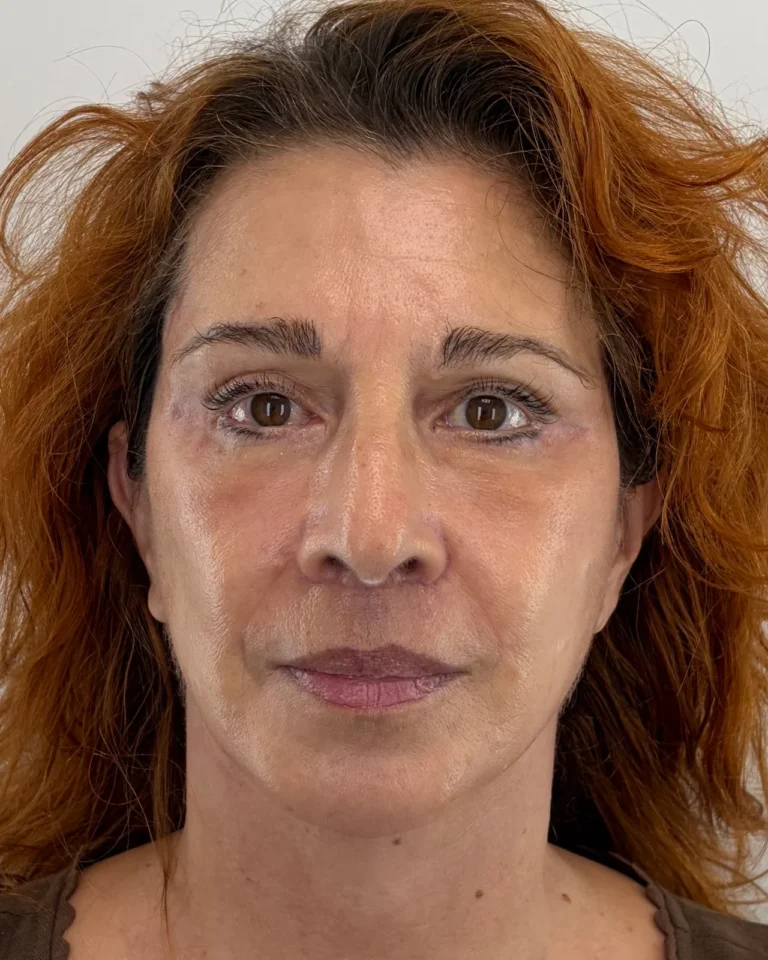
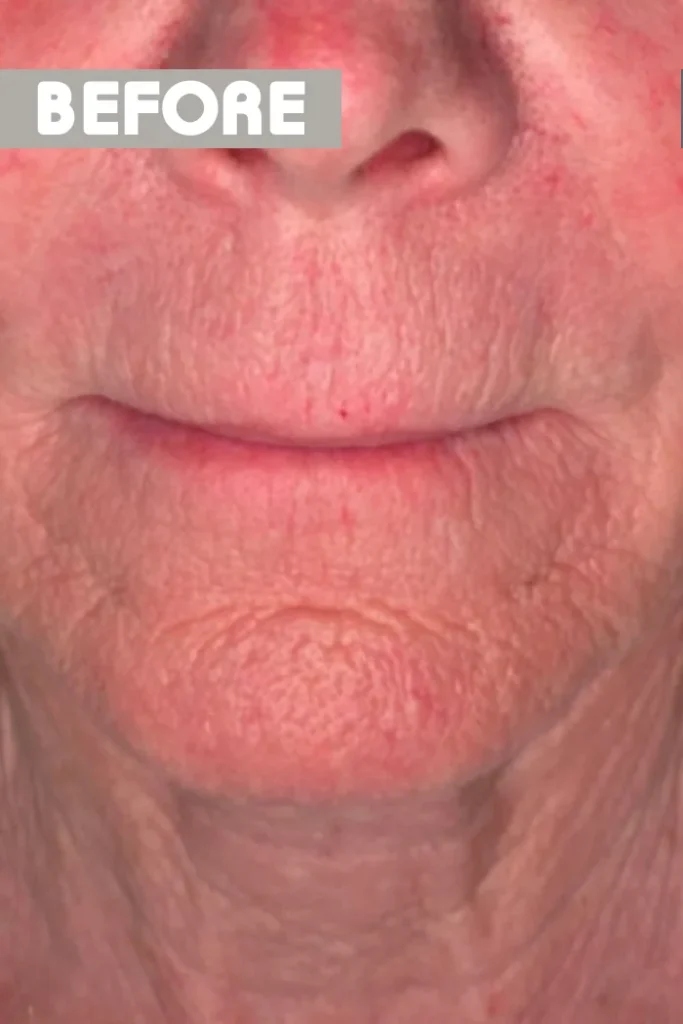
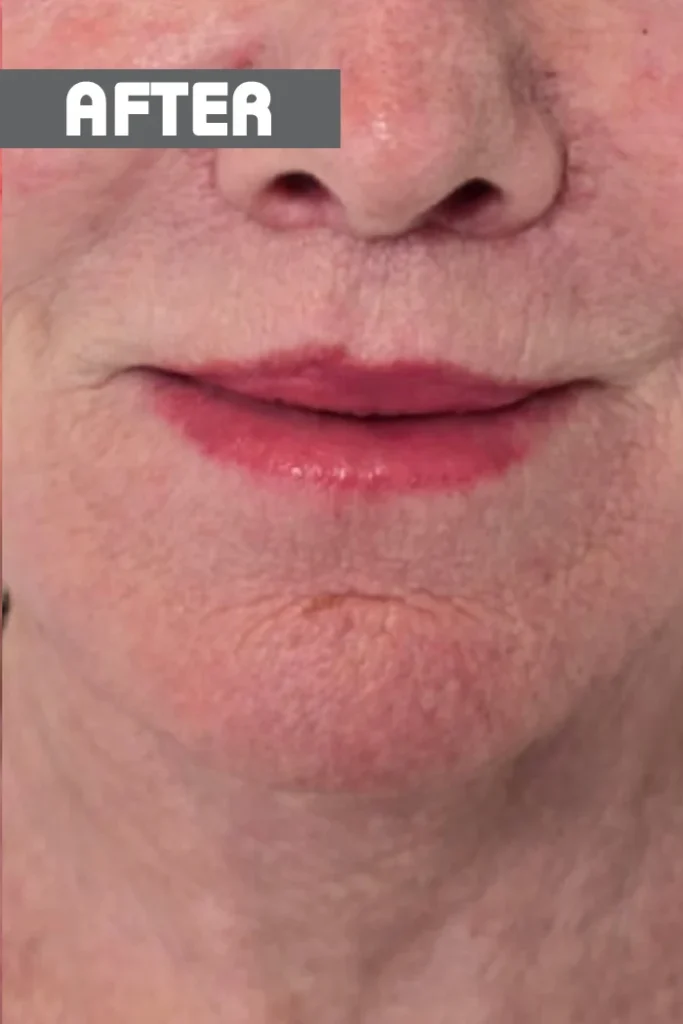
The result shows straight away and improves as the swelling settles: the lip is shorter and the upper teeth show when you smile. The scar matures over a few months. How long the result lasts depends on the reason for surgery and on natural ageing, but in most people it lasts many years.
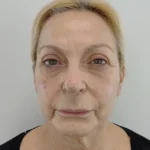
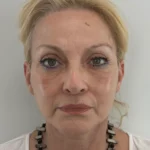
 Before
 After
Lip lift
Front
Results vary from patient to patient.
The scar is hidden under the base of the nose and in most cases becomes barely visible within a few months. If it stays noticeable, it can be improved with laser or a small revision. The face continues to age; if volume is needed, fat transfer can be added.
What are the risks of a lip lift?
A lip lift is a small operation under local anaesthesia, but like every operation it carries risks. The most common are temporary: swelling, bruising and numbness. The ones that matter most for the result, a visible scar and over-lifting, are rare and are prevented by careful planning.
| Complication | How common | Prevention and treatment |
|---|---|---|
| Swelling and bruising | Common, temporary | Settle in about 10 days; gentle mouth movements in the first days |
| Numbness of the lip | Common, usually temporary | Usually fades gradually; in some people it lasts up to about 1 year, as in the recovery table |
| Visible scar | Rare | Incision along the natural outline and a stitch under the skin; if it stays visible, laser or a small revision |
| Over-lifting (“rabbit mouth”, too much tooth showing) | Rare | Less skin removed at the centre; separate measurements at the centre and sides |
| Widening of the nostrils | Mainly in people whose nostrils are already wide | Discussed and planned before surgery |
| Asymmetry | Rare | Measurements on both sides before and during surgery |
| Cold sore recurrence | In people with frequent outbreaks | Preventive treatment before and after surgery |
| Delayed healing | Mainly in smokers | Stop smoking; I do not recommend a lip lift for heavy smokers |
Smoking. Stop at least 4 weeks before and 4 weeks after surgery. Smoking slows the healing of the incision under the nose and can leave a more visible scar.
Blood thinners. Tell me if you take anticoagulants or antiplatelet medicines. They are always stopped in agreement with the doctor who prescribes them.
How much does a lip lift cost?
We do not publish prices. The cost depends on whether the lip lift is done on its own or together with a facelift or fat transfer, and on the hospital. You receive a written quote after the consultation. The main factors are:
- whether a separate corner lip lift is needed;
- combination with fat transfer;
- the anaesthesia: local, or, when combined with a facelift, that of the facelift;
- the hospital, in Thessaloniki or Athens.
Frequently asked questions
Will a lip lift leave a visible scar?
In most cases it is barely visible. The incision is hidden under the base of the nose, along the natural edges of the nostrils, and I close it with an absorbable stitch under the skin, so there are no stitch marks. The scar matures and becomes almost invisible within a few months. If you tend to heal slowly or form poor scars, laser or other techniques can improve it further. I ask you to stop smoking before and after surgery, because smoking delays healing.
What is the difference between a lip lift, lip injectables and a lip flip?
A lip lift is surgery; lip injectables and a lip flip are not. Injectable materials add volume to the lip, and a lip flip uses injectable treatments to relax the muscle so that the lip turns slightly outwards. Neither shortens the distance between the nose and the lip, and both are temporary. A lip lift corrects that distance surgically and raises the lip, with a result that lasts many years. If you also need volume, it can be combined with fat transfer. I do not offer injectables or lip flips myself.
Will my teeth show more after a lip lift?
A little, enough for the smile to look natural. This is often the aim when the lip covers the upper teeth completely. A lip lift should not be so aggressive that the teeth show too much when you speak or at rest, because beyond the look it also causes functional problems. To avoid this, I design the bullhorn so that less skin is removed at the centre than at the sides, under the nostrils.
How do you make sure the whole lip lifts, not just the centre?
Through precise planning. Before surgery I measure the distances at the central and outer parts of the lip and plan each part separately. This makes the lift even and complete, and avoids the “rabbit mouth” look in which only the centre rises. When needed, the tissues are released as far as the nasolabial fold, so that the sides of the lip lift as well. This is why I spend time on measurements at the consultation and again before the operation.
Can a lip lift fix an uneven mouth?
To a degree. If, for example, one corner of the mouth has dropped, I can make an asymmetric correction and lift that side more, so that the lip becomes symmetrical. The improvement, however, is limited to the lip itself. Asymmetries higher up or in other areas of the face are not corrected by a lip lift; we discuss other options for those at the consultation, once I have examined your whole face.
How long does the philtrum need to be for a lip lift?
As a general rule, a lip lift is indicated when the height of the philtrum, the central part of the lip from the base of the nose to the edge of the lip, is about 15 mm or more in younger patients and 16 mm or more in older patients, whose lip has already lengthened. The number alone is not enough, though. In practice, the indication is a lip that hangs like a curtain and covers the teeth when you smile, or a lip out of proportion with the jaw and face.
How long does a lip lift last?
Many years. With the right indication and technique, the lip stays shorter and the teeth show when you smile. The face, however, keeps ageing, and over time some volume around the mouth may be lost. This is treated separately, for example with fat transfer, and most people do not need a second lip lift. The scar itself, once mature, stays hidden under the base of the nose.
How many lip lifts do you perform a year?
I perform about 15 to 20 lip lifts a year, some on their own and some together with a facelift. The operation is short, but it demands precise planning: a few millimetres’ difference at the centre or the sides changes the result. This is why I spend time on measurements at the consultation and again before surgery, and why I plan the centre and the sides of the lip separately.
When can I fly home after a lip lift?
You can fly from day 5, after the tapes come off. There is no hospital stay, since the operation is done under local anaesthesia and you go home the same day. The tapes over the incision come off on day 5, and the stitch under the skin dissolves on its own, so there are no stitches to remove before you travel. Bruising and visible swelling settle in about 10 days. If the lip lift is combined with a facelift, the facelift travel advice applies instead, and we plan your dates together at the consultation.
Can my follow-up be done at home?
Yes. After you return home, follow-up is by video call at 10 days, 1 month, 6 months and 1 year. The stitch under the skin is absorbable, so nothing needs to be removed after the tapes come off on day 5. At home you keep the incision dry in the first days, move your mouth gently and follow the wound-care instructions I give you. Light exercise can restart after 1 week and strenuous exercise after 2 to 3 weeks. If you have a concern once home, message the practice on WhatsApp and you receive a reply the same day; in an emergency, call us, and for an acute problem go to the nearest hospital emergency department.
References
- Austin HW. The lip lift. Plast Reconstr Surg. 1986;77(6):990–994.
- Ramirez OM, Khan AS, Robertson KM. The upper lip lift using the “bull’s horn” approach. J Drugs Dermatol. 2003;2(3):303–306.
- Raphael P, Harris R, Harris SW. Analysis and classification of the upper lip aesthetic unit. Plast Reconstr Surg. 2013;132(3):543–551.
- Lee DE, Hur SW, Lee JH, et al. Central lip lift as aesthetic and physiognomic plastic surgery: the effect on lower facial profile. Aesthet Surg J. 2015;35(6):698–707.
- Talei B. The modified upper lip lift: advanced approach with deep-plane release and secure suspension: 823-patient series. Facial Plast Surg Clin North Am. 2019;27(3):385-98. PMID: 31280853. doi:10.1016/j.fsc.2019.04.004.
- Komisarek O, Banasiak Ł, Olichwer V, Burduk P. The Bullhorn and Beyond: evidence-based review and clinical recommendations for lip lift techniques. J Cosmet Dermatol. 2026:e70703. PMID: 41731334. PMCID: PMC12929697. doi:10.1111/jocd.70703.
Consultation
In Thessaloniki, in Athens or by video. Examination, options and a written plan.