
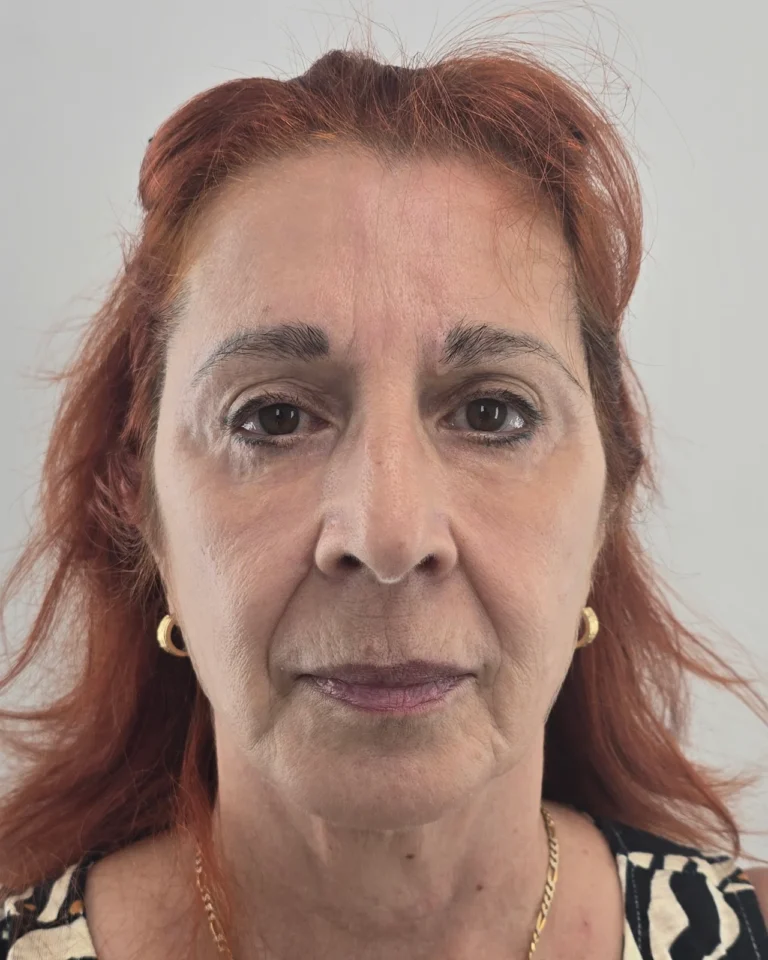
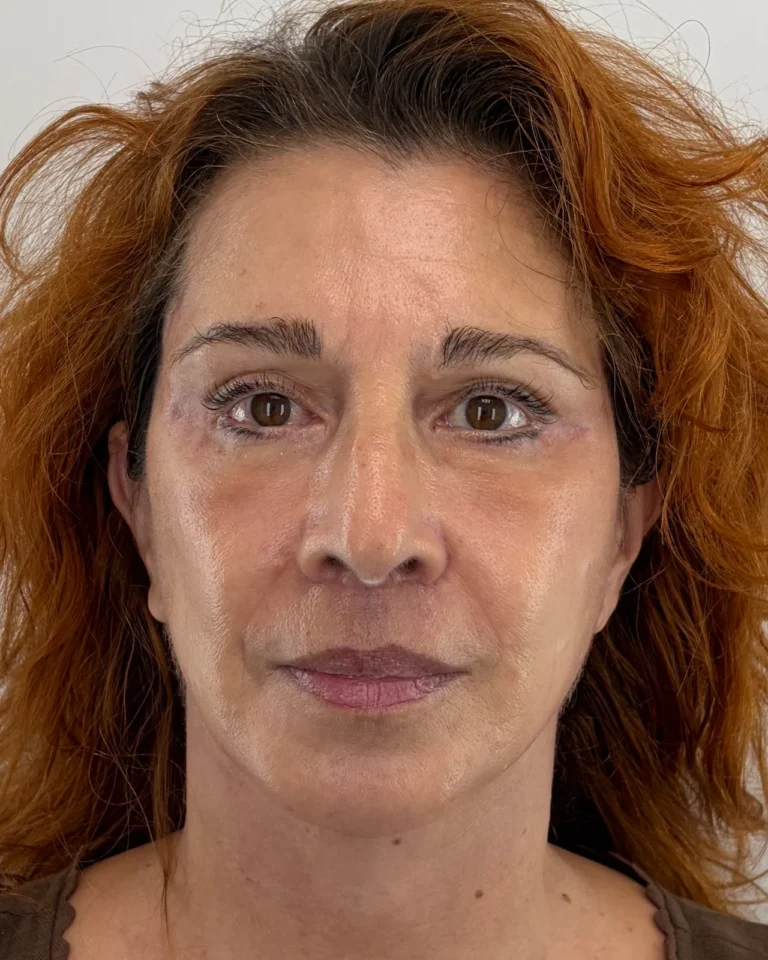
Face · Rejuvenation
Deep neck lift in Thessaloniki and Athens, Greece
In about 70% of my deep plane facelifts I also reduce the submandibular salivary gland, and I perform 30–40 deep neck lifts a year. I examine every neck individually and carry out only the steps it needs.
A deep neck lift corrects the neck from the deep layers outwards: the submandibular salivary gland, the digastric muscles, the deep fat and the platysma. It is for people with an obtuse neck angle, a double chin or neck bands, where tightening the skin alone is not enough. It is usually combined with a deep plane facelift.
30–40
operations a year

At a glance
What it corrects
Obtuse neck angle, a “full” neck and double chin under the jaw, platysmal bands, loose neck skin
Anaesthesia
General
Operating time
+30–40 minutes when added to a deep plane facelift; about 1 hour as a standalone procedure
Hospital stay
From a few hours to 1 day in hospital
Back to work
10 to 15 days
Exercise
Light after 3 weeks, strenuous after 6 weeks
Final result
At 6 to 12 months, once the swelling has fully settled
Where
Interbalkan Medical Center, Thessaloniki · Athens Medical Center, Marousi
Medically reviewed by Dr Prodromos Papaioannou, Plastic Surgeon, HESPRAS member, ASPS International Member · Last reviewed:
What is a deep neck lift?
A deep neck lift reshapes the neck by treating the structures that lie beneath the platysma muscle: the submandibular salivary gland, the digastric muscles and the deep fat. The platysma is then tightened and the skin lifted, so that a clean angle forms again between the neck and the jawline.
The deeper the work, the more stable the tissues and the longer the result lasts. That is why a deep neck lift is usually done together with a deep plane facelift, so that face and neck are lifted as one unit. I perform it on its own only when a previous facelift did not correct the neck, and as part of facial feminisation surgery.
Am I a good candidate for a deep neck lift?

A deep neck lift suits men and women with a full or obtuse neck, a double chin that does not go with diet, visible neck bands, a large submandibular gland or loose skin. There is no strict age limit; which deep steps you need is decided at your examination.
Who are typical candidates?
- People with an obtuse angle between the neck and the jaw and a blurred jawline.
- People with a double chin that persists despite a stable weight.
- People with prominent salivary glands or bulky digastric muscles that fill the angle under the jaw.
- People with vertical platysmal bands, visible at rest or when speaking.
- Usually people over 40, but also younger people with a naturally heavy lower face (a “bottom-heavy face”).
- People after major weight loss, in whom laxity can appear much earlier.
- Patients whose previous facelift did not correct the neck.
- Patients having facial feminisation surgery.
When do I not recommend it?
- When the only problem is a little superficial fat with good skin quality; neck liposuction is often enough.
- When the main cause is a small chin; we then discuss a chin implant, on its own or together with the neck.
- When your weight has not yet stabilised.
- When you cannot stop smoking for the weeks before and after surgery.
- When there is uncontrolled high blood pressure or a clotting disorder, until it is treated.
- When expectations go beyond what your anatomy allows.
What happens at the consultation, and how do I prepare?
At the consultation I examine your neck at rest and while you speak, and we decide together whether you need the neck alone or a combination with a deep plane facelift or another procedure. You receive a written plan and cost after the examination. The date of surgery is set once your pre-operative tests are complete.
What happens at the consultation?
I examine your neck at rest and while you speak, the platysma, the salivary gland and the fat under the jaw. I check whether the fullness lies above or below the muscle, how much the skin has loosened, the position of your chin and how the neck relates to the rest of your face. Every face is different, so the approach has to be holistic: together we decide whether you need the neck alone or a combination with a deep plane facelift or another procedure. You receive a written plan and cost after the examination.
The deep structures of the neck lie close to nerves and blood vessels. At any consultation, including mine, it is worth asking:
- Which deep structures do you treat: the glands, the digastric muscles, the deep fat?
- How do you decide whether the salivary gland needs reducing?
- How do you treat platysmal bands?
- Can I see neck cases with results at least one year after surgery?
What tests and instructions apply before surgery?
You will need pre-operative blood tests, and a cardiac check where appropriate for your age and medical history. Your blood pressure must be well controlled, because high blood pressure increases the risk of a haematoma. Smoking increases healing complications: stop 4 weeks before and 4 weeks after surgery. If you take anticoagulants or antiplatelet medicines, tell me; they are stopped only in agreement with the doctor who prescribes them. The date of surgery is set once your tests are complete.
How is a deep neck lift performed?
A deep neck lift is performed under general anaesthesia. When added to a deep plane facelift, it adds 30 to 40 minutes to the operation; as a standalone procedure it takes about one hour. I always work in the same order, from deep to superficial, and carry out only the steps your neck needs.
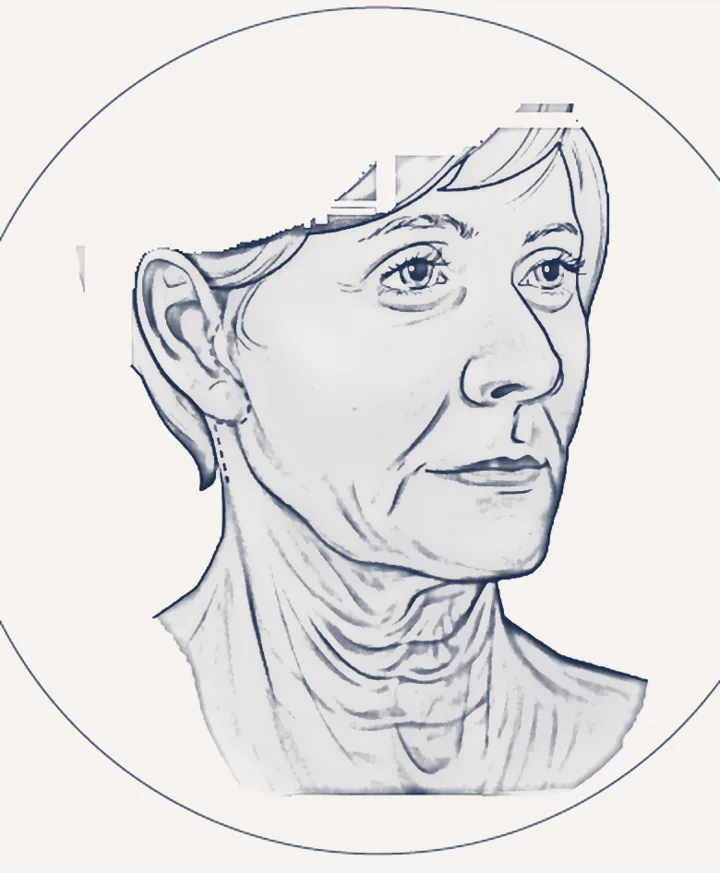
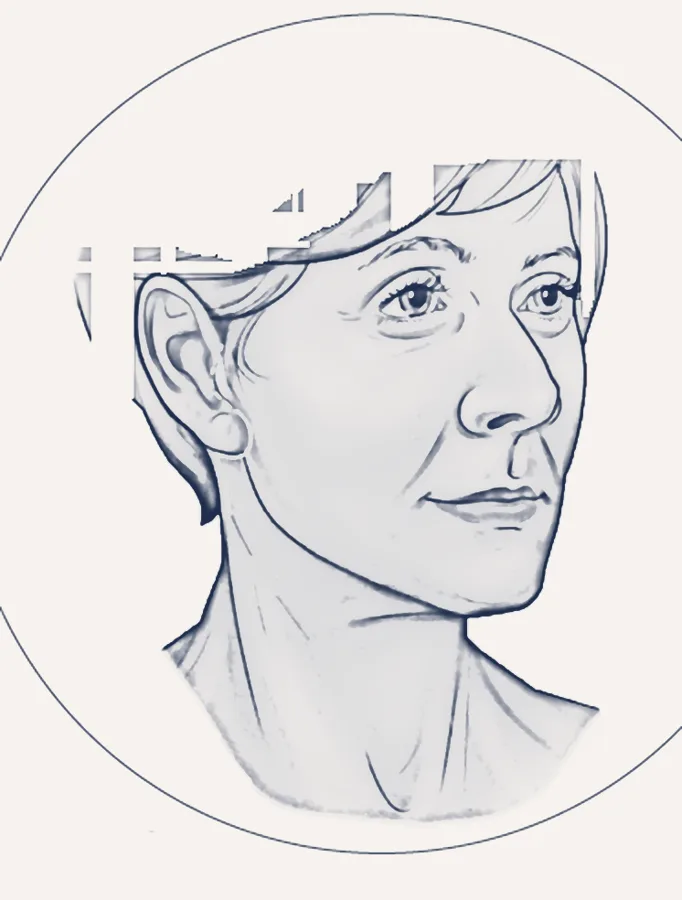
The centre of the neck is reached through a small incision in the crease under the chin. Through it I reshape the fat, the platysma and, where needed, the deeper structures. When the neck is done together with a deep plane facelift, it is also lifted backwards through the incisions around the ear, so that the centre and the sides of the neck are corrected together. Every neck is assessed individually: the order is always the same; which steps are needed is not.
| Step | What I do | When |
|---|---|---|
| 1. Submandibular salivary gland | Reduction of the gland in the subcapsular plane, with a vessel-sealing device (LigaSure) that cuts and seals at the same time | When the assessment shows a prominent gland |
| 2. Digastric muscles | Reduction or tightening | When they fill the angle under the jaw |
| 3. Submandibular fat | Reduction of the deep fat | When it adds volume under the jaw |
| 4. Platysma | Central suturing | To recreate the neck angle |
| 5. Platysmal bands | Horizontal myotomy | When visible bands are present |
The submandibular salivary gland
A prominent gland shows as a bulge under the jaw, which often becomes more visible after liposuction or a facelift has removed the fat around it. I do not remove the whole gland: I reduce only the part that protrudes below the jaw, in the subcapsular plane, that is, from within its capsule. I use a vessel-sealing device (LigaSure), which cuts and seals at the same time, so bleeding is minimal.
Digastric muscles and deep fat
The front bellies of the digastric muscles sit under the chin. When they are bulky, they fill the angle under the jaw and stop the neck from gaining a clean contour; I then reduce or tighten them. The fat beneath the platysma cannot be removed with liposuction. I reduce it carefully, because removing too much leaves a hollow.
Platysma and neck bands
After the deep steps, the platysma is joined in the midline by plication, so that the neck angle forms again, like a “hammock” under the jaw. This hammock-type fixation deals better with problems under the jaw, in the double chin area. When there are visible bands, I also perform a horizontal myotomy, so that the cords do not form again.
The neck within a deep plane facelift
In a deep plane facelift the dissection starts at about the corner of the eye and continues in one piece down to the neck, beneath the mobile part of the SMAS, the superficial muscle layer of the face. The lift is almost vertical, at 60 to 70 degrees, directly against gravity, and the tissues are fixed to strong structures such as the mastoid process. A deep neck lift adds the correction of the centre of the neck. The deep plane facelift page explains this in detail.
Incisions and stitches
The incision under the chin is small and hidden in its shadow. When the neck is done together with a facelift, the incisions run around the ear: depending on how much excess skin there is, they start in front of the sideburn, continue behind the tragus in women and in front of it in men (so the beard line does not shift), pass under the earlobe, go up behind the ear and down towards the hairline. The skin is closed without tension, which helps the scar heal fine, and the hairline does not change. The stitches are internal and absorbable, so none need removing.
The combination of newer medicines and a special haemostatic net usually makes drains unnecessary and markedly reduces bruising and swelling.
Combined procedures
Most often the deep neck lift is done together with a deep plane facelift. Neck liposuction, where needed, enhances the result further. In the same operation I can perform eyelid surgery (blepharoplasty), a brow and forehead lift, a lip lift, facial fat transfer or a chin implant, so that the upper and lower face stay in proportion. Skin treatments such as laser and peels bring out the result further.
Hospital stay
You stay in hospital from a few hours to one day, depending on whether the deep neck lift is done on its own or with a facelift. You need someone to accompany you home, and you must not drive after a general anaesthetic.
How long is recovery after a deep neck lift?
There is usually no pain, but a feeling of pressure in the neck can last 2 to 3 weeks. Most people return to work and social life in 10 to 15 days. A firmer swelling under the jaw softens within 6 to 8 weeks, and the final result settles at 6 to 12 months.
| When | What you feel | What you can do |
|---|---|---|
| Days 1–7 | The healing week: swelling, possible bruising, pressure in the neck, usually no pain | Rest with your head raised; gentle walking at home; first stitches out at 5 days |
| Days 10–15 | Decongestion begins: the fluid that collected starts to clear | Back to work and social life; cover with make-up or powder for the first days; remaining stitches out at 12 days |
| Weeks 2–3 | Swelling, bruising and neck pressure settle | Normal daily life; light exercise after 3 weeks |
| Weeks 6–8 | A firmer, more organised swelling under the jaw, which softens gradually without visible distortion | Strenuous exercise after 6 weeks |
| Months 3–6 | Remodelling: the tissues return to normal function, numbness fades, scars almost disappear by 3–4 months | Normal activity |
| Months 6–12 | The swelling settles completely | Final result |
Recovery and the appearance of scars vary from person to person and are not always predictable. Numbness in the skin of the neck and face fades gradually over 3 to 6 months, and muscle movement may be affected for a while, without lasting effect. In my experience, recovery after a deep plane facelift with a deep neck lift is generally easier than after other facelift techniques, probably because the main lift is done in the deep layer and skin undermining is limited.
How long do I need to stay in Greece after a deep neck lift?
Plan to stay in Greece for 5 to 10 days after a deep neck lift. You spend from a few hours to one day in hospital, and the stitches are internal and absorbable, so none need removing.
- Hospital: from a few hours to one day, depending on whether the deep neck lift is done on its own or together with a facelift.
- Before flying: from day 5, alone or with a deep plane facelift, after your final check the day before the flight.
- Stitches: internal and absorbable, so none need removing.
- Follow-up: by video call at 10 days, 1 month, 6 months and 1 year.
- At home: you need someone to accompany you when you leave the hospital, and you must not drive after a general anaesthetic. For the first week, rest with your head raised. Most people are back at work in 10 to 15 days, light exercise resumes after 3 weeks and strenuous exercise after 6 weeks.
What results can I expect, and how long do they last?
A deep neck lift gives a clean neck angle and a defined jawline, with a natural result that does not change your features or expression. The improvement is visible from the first weeks, but the final result matures after the sixth month and can take up to 12 months. How long it lasts depends mainly on keeping your weight stable.
What are the risks of a deep neck lift?
A deep neck lift is performed close to nerves, blood vessels and the salivary gland, so it calls for specialist experience. Serious complications are rare and most can be treated. Swelling, firm swelling under the jaw and numbness are common but temporary. I explain the risks for your own case at the consultation.
| Complication | How common | Prevention and treatment |
|---|---|---|
| Swelling, bruising, firm swelling under the jaw | Common, temporary | Haemostatic net and medicines reduce them; the swelling softens in 6–8 weeks |
| Skin numbness | Common, temporary | Fades gradually over 3–6 months |
| Haematoma | Rare | Blood pressure control, review of medicines that affect clotting, haemostatic net; if it occurs, it is drained |
| Sialocele (a collection of saliva after gland reduction) | Extremely rare | Subcapsular reduction with a vessel-sealing device; if it occurs, it is usually treated with needle aspiration |
| Weakness of the nerve branch that moves the corner of the mouth | Rare, usually temporary | Working in a safe plane with sound knowledge of the anatomy; usually recovers within weeks to months |
| Contour irregularities or a hollow under the jaw | Uncommon | Conservative reduction of the deep fat; corrected with fat transfer |
| Recurrence of platysmal bands | Uncommon | Plication and horizontal myotomy; corrected with a minor procedure |
| Healing problems or a wide scar | Rare | Tension-free closure, stopping smoking |
Reducing the submandibular salivary gland is the step patients ask about most. In more than 80 of my own reductions with a vessel-sealing device I have had no sialocele, haematoma or nerve injury, in line with the published literature [1, 2].
Smoking. Stop 4 weeks before and 4 weeks after surgery; smoking reduces the blood supply to the skin and increases healing complications.
Anticoagulants. Tell me if you take anticoagulants or antiplatelet medicines. They are always stopped in agreement with the doctor who prescribes them.
How much does a deep neck lift cost?
I do not publish prices. The cost depends on whether the deep neck lift is done on its own or with a deep plane facelift, which deep steps your neck needs, and any combined procedures. You receive a written quote after your examination at the consultation.
- Whether the deep neck lift is done on its own or as part of a deep plane facelift.
- Which deep steps are needed: glands, digastric muscles, deep fat, bands.
- Combination with neck liposuction, a chin implant or other facial procedures.
- The length of the operation and of the hospital stay.
- Whether it is a first operation or a correction after a previous facelift.
Frequently asked questions
Can I have a neck lift without a facelift?
Yes, but rarely. I perform a neck lift on its own in two situations: when a previous facelift did not correct the neck, and as part of facial feminisation surgery. Laxity in the neck usually comes with laxity along the jawline and in the cheeks, and a neck corrected on its own would look out of proportion with the rest of the face. That is why the deep neck lift is usually done together with a deep plane facelift, in the same operation.
Why is part of the submandibular gland removed in a neck lift?
Only when the gland is prominent and fills the angle under the jaw; in that case the bulge remains however much the skin and platysma are tightened. I do not remove the whole gland. I reduce only the part that protrudes, in the subcapsular plane, using a vessel-sealing device. The other salivary glands continue to work.
What are platysmal bands and how are they corrected?
They are the vertical cords of the platysma, the most superficial muscle of the neck, which show under the chin, especially when you speak or tense your neck. They appear when the edges of the muscle loosen and drift apart from the midline. I correct them by plicating the platysma in the midline, which recreates the neck angle like a “hammock”, and with a horizontal myotomy so that the cords do not form again. Injectable treatments relax the bands temporarily, but they do not correct the laxity or the fullness under the jaw.
Neck liposuction or a deep neck lift: which do I need?
It depends on where the fullness lies. If it is superficial fat above the platysma and your skin has good elasticity, neck liposuction is often enough. If the fullness comes from deep fat, a prominent salivary gland or bulky digastric muscles, or if there are bands and loose skin, liposuction is not enough and can make the gland more visible. You then need a deep neck lift, often combined with liposuction, which enhances the result further. The distinction is made at your examination.
Is a neck lift painful?
Usually not. Most patients describe no pain at any stage of recovery, but rather a feeling of pressure or tightness in the neck that can last 2 to 3 weeks. In the first days there is swelling and possibly bruising, which settle gradually. The skin of the neck stays numb for a while, and sensation returns over 3 to 6 months. Any discomfort is controlled with ordinary painkillers.
When can I go back to work after a deep neck lift?
Most patients return to work and social life in 10 to 15 days, with no noticeable distortion. You may need make-up or powder to cover any marks in the first days, but soon you will be able to go out without it. The first 3 weeks are when swelling and bruising settle. A firmer swelling under the jaw can remain for 6 to 8 weeks, but it generally causes no visible distortion.
When can I fly home after a deep neck lift?
You can usually fly home from day 5, after your final check. You stay in hospital from a few hours to one day, depending on whether the deep neck lift is done on its own or with a facelift. The stitches are internal and absorbable, so none need removing, and the first week is the healing week, with swelling and pressure in the neck. After day 5 there is no limit on flight length. We agree your travel dates at the consultation, before surgery is booked.
Can my follow-up be done at home?
After your check-ups in Greece, follow-up is by video call at 10 days, 1 month, 6 months and 1 year. Most of recovery after a deep neck lift happens after the first two weeks: swelling, bruising and neck pressure settle over 2 to 3 weeks, a firmer swelling under the jaw softens over 6 to 8 weeks, and the final result appears at 6 to 12 months. All follow-up checks are done by me; nursing care at home can be arranged if you would like it.
Will the scars be visible?
The incision under the chin is small and hidden in its shadow. When the neck is done together with a facelift, the incisions run around the ear, so much of them is concealed, and the hairline does not change. Because the lift is done in the deep plane, the skin is closed without tension, which helps the scar stay fine. Scars almost disappear within 3 to 4 months, although healing varies from person to person and is not always predictable.
Can a thread lift replace a neck lift?
Not for the problems a deep neck lift corrects. In a thread lift, barbed sutures are placed under local anaesthesia, anchored in the fat under the skin, and pull the tissues upwards and outwards. They do not reach the gland, the digastric muscles or the deep fat, the result lasts only a few months, and the skin can look uneven in the first days. If surgery is needed later, the threads leave scar tissue behind. Comparing the two methods, the balance comes down firmly in favour of a surgical lift.
References
- Auersvald A, Auersvald LA. Innovative tactic in submandibular salivary gland partial resection. Plast Reconstr Surg Glob Open. 2014;2(12):e274. doi:10.1097/GOX.0000000000000240
- Bravo FG. Reduction neck lift: the importance of the deep structures of the neck to the successful neck lift. Clin Plast Surg. 2018;45:485–506. doi:10.1016/j.cps.2018.05.002
- Mendelson BC, Tutino R. Submandibular gland reduction in aesthetic surgery of the neck: review of 112 consecutive cases. Plast Reconstr Surg. 2015;136(3):463–471.
- Auersvald A, Auersvald LA, Uebel CO. Subplatysmal necklift: a retrospective analysis of 504 patients. Aesthet Surg J. 2017;37(1):1–11.
- Connell BF, Shamoun JM. The significance of digastric muscle contouring for rejuvenation of the submental area of the face. Plast Reconstr Surg. 1997;99(6):1586–1590.
- Feldman JJ. Corset platysmaplasty. Plast Reconstr Surg. 1990;85(3):333–343.
- Ellenbogen R, Karlin JV. Visual criteria for success in restoring the youthful neck. Plast Reconstr Surg. 1980;66(6):826–837.
Consultation
In Thessaloniki, in Athens or by video. Examination, options and a written plan.