
Gender-affirming
Gender-Affirming Surgery in Thessaloniki and Athens, Greece
This guide is for trans women, trans men and non-binary people who are considering gender-affirming surgery. I explain the four procedures I perform, the criteria in the WPATH Standards of Care, Version 8 (SOC8), hormone therapy, the first consultation and what recovery generally involves. I operate at Interbalkan Medical Center in Thessaloniki and Athens Medical Center in Marousi.

Medically reviewed by Dr Prodromos Papaioannou, Plastic Surgeon, HESPRAS member, ASPS International Member · Last reviewed:
Which gender-affirming surgeries do I perform?
I perform four gender-affirming procedures, for adults only: facial feminisation surgery (FFS), chest masculinisation (top surgery), breast augmentation for trans women, and vaginoplasty. I do not perform phalloplasty, metoidioplasty or other gender-affirming procedures. If you need one of these, I will tell you from the start, so that you can go to a specialist centre.
Facial feminisation surgery (FFS)
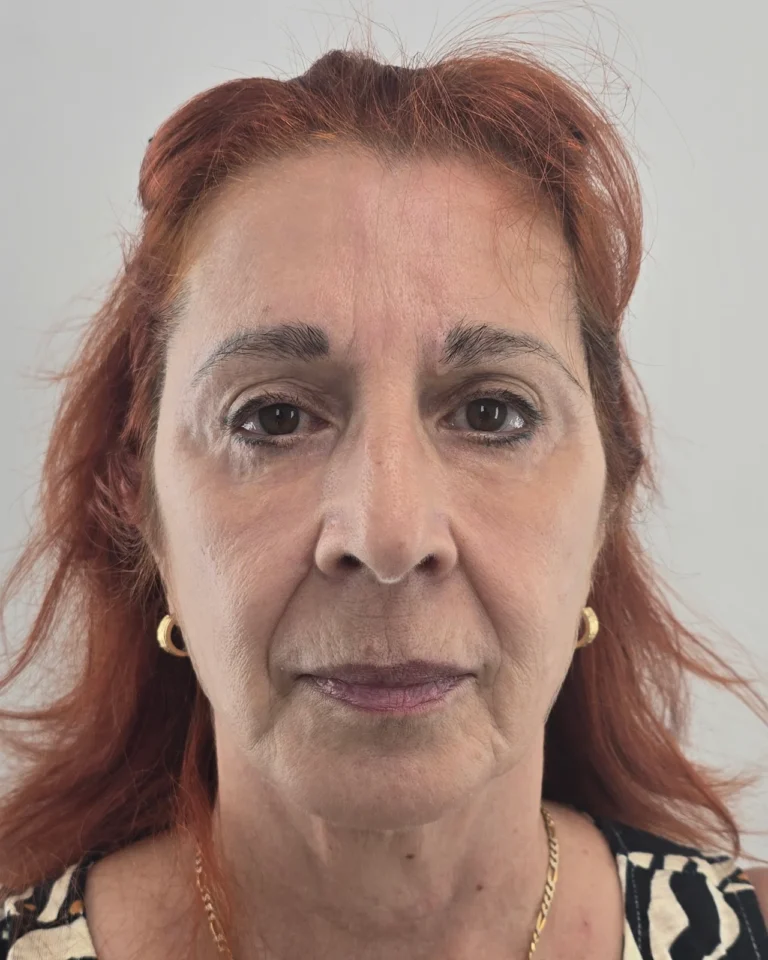
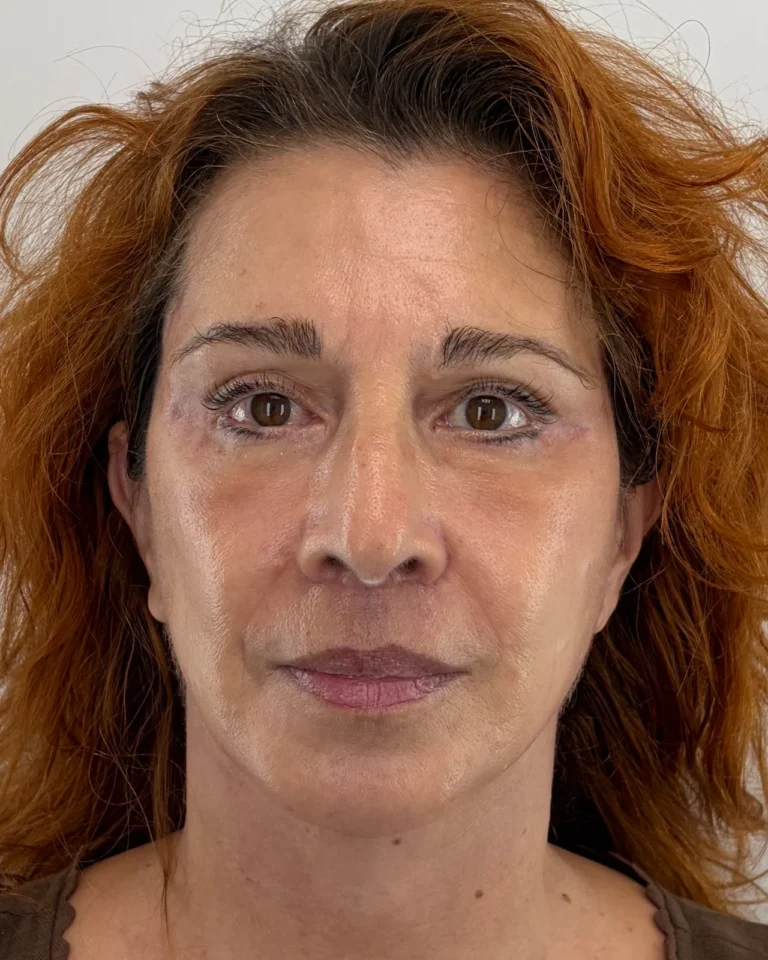
Facial feminisation (feminization) softens the features we read as masculine, from the forehead down to the neck, and is for trans women and non-binary people. Its core is forehead reconstruction, Type 1, 2 or 3, chosen on a CT scan; where needed, it is combined with hairline advancement, rhinoplasty, chin surgery, and reduction of the Adam’s apple and of a full neck. I operate on the forehead and chin bones together with a colleague who is an oral and maxillofacial surgeon. You will find more on the Facial feminisation surgery (FFS) page.
Chest masculinisation (top surgery)
Top surgery removes the breast tissue and excess skin and creates a flat chest, with a smaller nipple in a more lateral position. It is for trans men and non-binary people, with or without hormone therapy, and for many it means the end of the chest binder, which irritates the skin and causes back pain. The technique (a periareolar incision, keeping the nipple on a flap, or a double incision with nipple grafts) depends on breast size and skin quality; I explain each one on the Chest masculinisation (top surgery) page.
Breast augmentation for trans women
Breast augmentation gives volume and a female shape to the breasts, usually with silicone implants, when hormone therapy has not produced the growth you want. It is for trans women and transfeminine non-binary people. Because the chest is wider and the pectoral muscle stronger, the implant, the plane it sits in and the incision are planned from your own measurements. Fat transfer can add to an implant, but on its own it rarely gives the volume most trans women ask for; see the Breast augmentation for trans women page.
Vaginoplasty
Vaginoplasty creates a vagina, clitoris and labia from the genital tissues, usually by penile inversion and, when needed, a scrotal skin graft; the clitoris is formed from part of the glans together with its nerves and blood vessels, so that sensation is preserved. It is for trans women and transfeminine people who want a vagina and a vulva. Vaginoplasty is one step in gender-affirming medical care, alongside hormone therapy and, if you wish, other surgery such as breast augmentation or facial feminisation. It is the largest of the four procedures: it needs permanent hair removal beforehand and a dilation programme afterwards, as I explain on the Vaginoplasty page.
What does WPATH SOC8 require before gender-affirming surgery?
I follow WPATH SOC8. For adults, the criteria are marked and sustained gender incongruence, capacity to give informed consent to the specific procedure, assessment of any other health conditions, and one assessment by a qualified health professional. Two letters of referral are no longer required.
- Assessment. It is carried out by a psychologist, psychiatrist or other health professional experienced in gender identity. Its purpose is not to “approve” you, but to confirm that the decision is your own, informed and stable.
- Hormone therapy, where it applies. At least 6 months is recommended before breast augmentation and vaginoplasty, but not before top surgery. I explain this procedure by procedure in the next section.
- General health. Pre-operative tests, stopping smoking at least 4 weeks before and 4 weeks after surgery, and agreeing with your endocrinologist how to manage the period around the operation. Before vaginoplasty, permanent hair removal and a discussion about fertility also come first.
- Informed consent. You receive a written plan setting out the technique, the risks and the recovery, and you decide without pressure.
SOC8 does not set a period of “living in your gender role”. The whole pathway, from first contact to surgery, is set out in the article Steps towards gender affirmation.
Do I need hormone therapy before gender-affirming surgery?
It depends on the procedure. Under SOC8, at least 6 months of stable hormone therapy is recommended before breast augmentation and vaginoplasty, unless you do not want it or it is contraindicated. Hormone therapy is not a requirement for top surgery, and no minimum period is set for facial surgery.
| Procedure | Hormone therapy under SOC8 | What it means in practice |
|---|---|---|
| Facial feminisation | No minimum period set | Hormones do not change the facial skeleton; if you take oestrogen, I take it into account in your plan |
| Top surgery | Not required | On testosterone the breasts often shrink and sag, which affects the choice of technique |
| Breast augmentation | At least 6 months, unless you do not want it or it is contraindicated | Most breast growth happens in the first months; the implant is chosen according to what hormones have achieved |
| Vaginoplasty | At least 6 months, with the same exceptions | Orchidectomy (orchiectomy) permanently ends sperm production; we discuss fertility beforehand |
Oestrogen (estrogen) increases the risk of blood clots. Whether it is continued, reduced or paused around surgery is decided individually with your endocrinologist; it is usually continued, with thrombosis prevention according to your individual risk. Testosterone is usually not stopped before top surgery. If you do not take hormones and do not wish to, this does not rule out breast augmentation or vaginoplasty; we discuss it at the consultation. Do not change your treatment without instructions from the doctor who prescribes it.
What happens at the first consultation?
The first consultation is a confidential conversation about what you would like to change and what is achievable for your body, with no commitment to surgery. It takes place at the practice or, initially, by video call, for all procedures. At the end you receive a written, personalised plan and quote, and you decide in your own time.
What to bring
- The assessment from the health professional who sees you, if you already have it.
- Details of your hormone therapy: the medicine, the dose and when you started.
- The medicines you take, especially anticoagulants or antiplatelet drugs, and any previous surgery.
- For facial feminisation, photographs of your face taken following the instructions we send you; I request the CT scan myself, if it is needed.
- If it helps, photos that show the result you would like.
What we discuss
We start from your own goals and priorities. I examine you and explain which technique suits you and why, where the scars will be, what the risks are and what recovery will be like. For vaginoplasty we also discuss fertility, hair removal and the dilation programme. If you take hormones, I coordinate with your endocrinologist.
Privacy
I ask how you would like to be addressed, and the practice team uses your name and pronouns. Your photographs and personal details stay confidential and are never used anywhere without your explicit written consent.
What is recovery like after gender-affirming surgery?
Recovery varies widely between the four procedures: from a few days after breast augmentation to about two months after vaginoplasty. For all of them, the final result is judged after several months, once the swelling has settled and the scars have matured. The figures below are general ranges; each procedure page gives the details.
| Procedure | Hospital stay | Back to desk work | Final result |
|---|---|---|---|
| Facial feminisation | 1 to 2 nights after forehead or chin surgery | 2 to 3 weeks | 6 to 12 months |
| Top surgery | No overnight stay | 1 to 2 weeks | 6 to 12 months |
| Breast augmentation | No overnight stay | 3 to 5 days | 3 to 4 months |
| Vaginoplasty | 3 to 5 days | 6 to 8 weeks | 6 to 12 months |
After every procedure you start walking early, while lifting and strenuous exercise wait, usually until week 6, and after vaginoplasty until 2 to 3 months. Smoking stops at least 4 weeks before and 4 weeks after surgery.
Changes to the facial bones and removal of breast tissue are permanent. Breast implants are durable but not lifelong, and the depth of the new vagina is maintained only with regular dilation or sexual intercourse. In studies, satisfaction after these procedures is high. The week-by-week details for each procedure are on its own page.
Frequently asked questions
Is there an age limit for gender-affirming surgery?
I operate on adults only, aged 18 and over, for every gender-affirming procedure, including top surgery. The WPATH SOC8 standards have separate recommendations for adolescents, which this page does not cover. There is no upper age limit; what matters is your general health, which is checked with pre-operative tests and, where needed, an opinion from a cardiologist or anaesthetist. At an older age I take into account skin quality, healing and the risk of blood clots, especially if you take oestrogen.
Can I have two gender-affirming procedures in one operation?
Sometimes, yes. Breast augmentation can be combined with facial feminisation, provided the total time under anaesthesia stays safe, and top surgery is often combined with liposuction of the torso. Vaginoplasty is usually done on its own, with other procedures scheduled at a separate time. Combining means one anaesthetic, but a larger operation and a more demanding recovery. We decide after the examination, based on safety and your own priorities.
I live abroad or in another city. How is surgery organised?
The first consultation can take place by video call, using photos you send me beforehand. The in-person examination and tests are scheduled usually 1 to 2 days before surgery; tests done abroad are accepted if they are no more than 1 month old. After the operation you stay near us until the final check: after facial feminisation, the journey home is usually possible from day 5 to 10, while after vaginoplasty it is best to stay nearby for about 3 weeks in total. After top surgery or breast augmentation, plan 5 to 10 days. Follow-up then continues by video call at 10 days, 1 month, 6 months and 1 year.
Do I need surgery to change my legal gender?
Gender-affirming surgery is a personal choice, not a legal step you have to complete. The rules for legal gender recognition depend on the country that issues your documents, so check what applies where you live. Each person decides whether they want surgery, which procedure and when; there is no compulsory order and no compulsory set of procedures. For the legal process, it is best to speak to a lawyer or to an organisation that supports trans people.
Why don’t you perform phalloplasty or metoidioplasty?
Phalloplasty and metoidioplasty are complex operations, often done in several stages, and they need long-term urological follow-up. They are best performed in specialist centres with a multidisciplinary team. I have chosen to perform four procedures that I can offer consistently: facial feminisation, top surgery, breast augmentation and vaginoplasty. If you need phalloplasty or metoidioplasty, I will tell you at first contact, so that you can approach a specialist centre in good time.
Will insurance cover gender-affirming surgery?
It depends on your insurer and your policy; the practice provides a medical letter for your insurer. Medical documents are often required, such as the assessment from your health professional, so it is best to ask your insurer before the consultation. At the consultation I give you a written quote and the information you need to submit it. We do not publish prices, because the cost depends on the procedure, the technique, the hospital stay and any combination of procedures.
Related articles
- Steps towards gender affirmation
- Gender affirmation: myths and facts
References
- Coleman E, Radix AE, Bouman WP, et al. Standards of Care for the Health of Transgender and Gender Diverse People, Version 8. Int J Transgend Health. 2022;23(Suppl 1):S1-S259. PMID: 36238954. PMCID: PMC9553112. doi:10.1080/26895269.2022.2100644.
- Morrison SD, Vyas KS, Motakef S, et al. Facial feminization: systematic review of the literature. Plast Reconstr Surg. 2016;137(6):1759-70. PMID: 27219232. doi:10.1097/PRS.0000000000002171.
Consultation
In Thessaloniki, in Athens or by video. Examination, options and a written plan.