
Face · Aesthetics
Otoplasty (Ear Pinning) in Thessaloniki and Athens, Greece
Otoplasty corrects prominent ears and brings them closer to the head while keeping a natural shape. I perform it in children from the age of 4 and in adults, through an incision behind the ear. You go home the same day, and your hearing is not affected.
I perform 15 to 20 otoplasties a year and have been a specialist plastic surgeon since 2012. I examine each ear separately and choose the technique according to exactly what makes that ear stick out, so that we achieve the greatest possible symmetry.
At a glance
What it corrects
Prominent ears: a large concha and/or an incomplete fold (antihelix), asymmetric ears, in children from age 4 and adults
Anaesthesia
Local from age 10 · general under age 10, depending on how cooperative the child is
Duration
About 1 hour
Hospital stay
None; you go home the same day
Back to work
School and work after 1 week
Exercise
Sport and swimming after 1 month · contact sports after 3 months
Final result
Scars and ear shape settle in about 6 months
Where
Interbalkan Medical Center, Thessaloniki · Athens Medical Center, Marousi
Medically reviewed by Dr Prodromos Papaioannou, Plastic Surgeon, HESPRAS member, ASPS International Member · Last reviewed:
What is otoplasty?
Otoplasty is the surgical correction of prominent ears. Through an incision behind the ear, I reshape the cartilage so that the concha (the deep bowl of the ear) is reduced and the antihelix fold is formed. The ear moves closer to the head and keeps its natural folds.
Ears stick out for different reasons. Either the concha is too deeply curved, or the antihelix, the fold in the middle of the ear, has not formed fully. Often both play a part, and not always to the same degree in the two ears.
At the examination I identify which of the two causes is present in each ear, because they are corrected differently. During the operation I check both ears together. The aim is not an ear “pinned flat” against the head, but a natural outline and the same appearance from the front.
Otoplasty does not affect hearing: the operation involves only the skin and cartilage of the outer ear, while the inner ear lies much deeper.
Who is a good candidate for otoplasty?
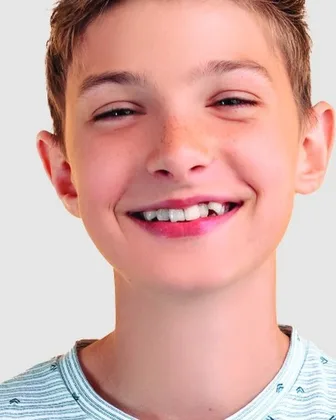
Otoplasty suits children from the age of 4 and adults with prominent or asymmetric ears. In children I prefer the age of 4 to 6, before they start school. In adults it is done under local anaesthesia (anesthesia), with no hospital stay, and there is no upper age limit.
Typical candidates
- Children aged 4 to 6 with prominent ears, before they start school and face teasing from classmates.
- Older children and teenagers who are self-conscious about their ears, hide them under their hair or avoid tying their hair up.
- Adults who want to wear their hair short or tied up without thinking about their ears.
- Asymmetric ears, when only one ear sticks out or the two stick out to different degrees.
- Ears operated on in the past that have come back out or were over-corrected (secondary otoplasty).
- Large or protruding earlobes, mainly in older patients, usually together with a facelift.
When I do not recommend it
- In children under 4, while the ear is still growing.
- When the child does not want it or will not cooperate; I never push a child into the operation.
- When there is an active infection or skin problem around the ear.
- In complex congenital ear malformations, such as the constricted or “cupped” ear, which I do not treat with otoplasty.
What happens at the consultation, and how do I prepare?
At the consultation I examine each ear separately and we decide together what needs correcting and whether one or both ears are treated. We discuss the type of anaesthesia, which depends mainly on age. You leave with a written plan and a quote. Before surgery, blood tests are done where needed and fasting instructions are given.
What we cover at the consultation
I examine each ear separately: the concha, the antihelix, the earlobe, the distance of the ear from the head and the symmetry between the two ears. We decide together whether only the concha, only the antihelix or both need correcting, and whether one or both ears will be operated on. We discuss the type of anaesthesia, which depends mainly on age. With children, a parent is present and we talk about how to prepare the child. You receive a written plan and a quote.
A note for parents. If your child covers their ears or grows their hair long to hide them, it is enough to tell them that this can be corrected. Do not push them into the operation. The decision works best when the child wants it too, because then they also cooperate during recovery, for example by wearing the headband.
Tests and instructions before surgery
Blood tests are done where needed, depending on age and the type of anaesthesia; when a child is operated on under general anaesthesia, the anaesthetist also carries out a pre-operative assessment. Fasting instructions are given before the operation; for children, food stops 6 hours and clear fluids 1 hour beforehand. Adults who smoke should ideally stop at least 4 weeks before and 4 weeks after surgery. If you take anticoagulants or antiplatelet medicines, tell me; they are only stopped in agreement with the doctor who prescribes them. The date is set once the tests are complete; for children, a school holiday is often convenient so that they do not miss school.
How is otoplasty performed, and how long does it take?
Otoplasty takes about 1 hour. From the age of 10 it is done under local anaesthesia as a day case; younger children usually have a general anaesthetic. The incision is behind the ear, and depending on the problem I reduce the concha, shape the antihelix with special stitches or weaken the cartilage.
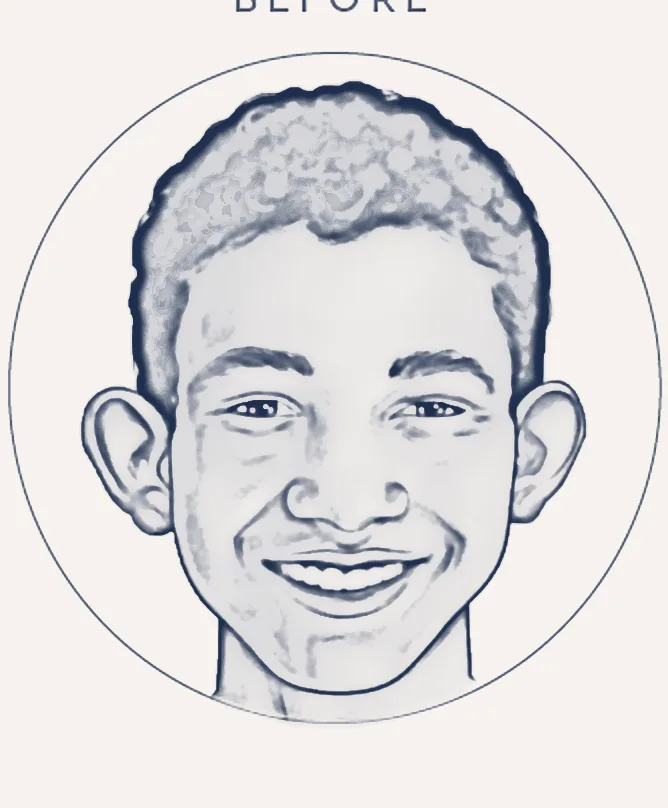
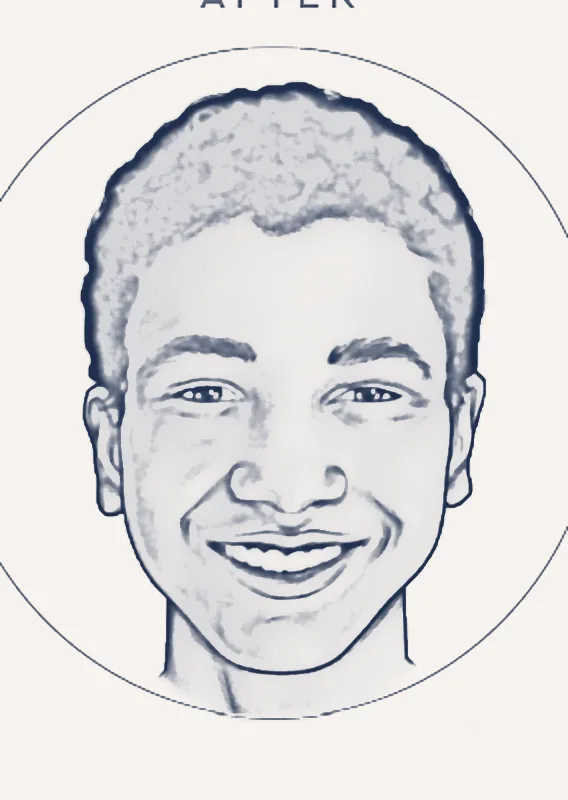
Even under local anaesthesia the operation is painless, because the area is completely numbed. In children under 10 I usually use general anaesthesia, which lasts about 1.5 hours in total, and the child goes home the same day. The technique is adapted to each ear. In every operation I check both ears side by side throughout, to achieve the greatest possible symmetry.
| Problem | What I do |
|---|---|
| Large concha | I remove the excess cartilage so that the curvature is reduced |
| Incomplete antihelix | I shape the fold with special stitches in the cartilage [1] |
| Marked protrusion | I weaken the cartilage on its front surface so that the ear does not spring back [2] |
Correcting the concha
When the ear sticks out because the concha is deep, I remove the excess cartilage. The curvature is reduced and the ear moves closer to the head without its outline changing. An alternative is to fix the concha to the bone behind the ear (the mastoid) with stitches (Furnas technique) [3].
Shaping the antihelix
When the antihelix fold is missing or incomplete, I create it with permanent stitches on the back surface of the cartilage (Mustardé technique [1]). The resulting fold is smooth.
Weakening the cartilage
When the protrusion is marked or the cartilage is stiff, I weaken the front surface of the cartilage so that it bends in the right direction and the risk of the ear coming back out is reduced (Stenström principle [2]). This matters more in adults, whose cartilage is less elastic.
A technique tailored to each ear
I adapt the technique to specific problems: asymmetry between the two ears, a prominent upper part of the ear or a protruding earlobe. When only one ear sticks out, both are usually operated on for symmetry.
Incisions and stitches
The incision is behind the ear, in the crease where it meets the head, and the scar cannot be seen from the front. Sometimes a small incision is also needed on the front surface, hidden in the folds. The skin stitches are removed on day 5; the internal stitches in the cartilage are permanent.
Combining otoplasty with other procedures
In older patients, I usually correct large or protruding earlobes during a facelift. We discuss other combinations at the consultation.
Hospital stay
The operation is done without an overnight stay: you go home the same day with a bandage around your ears. You must not drive after a general anaesthetic, and children always leave with a parent.
What is recovery like after otoplasty, week by week?
The ears stay bandaged for one week and the skin stitches come out on day 5. You return to school or work after 1 week and to your normal activities after 2 to 3 weeks. Once the bandage is off, you wear a headband for 3 weeks. Pain is mild to moderate and settles with ordinary painkillers.
In children the pain lasts 1 to 2 days, in adults 4 to 5 days, because adult cartilage is less elastic.
| When | How you feel | What you can do |
|---|---|---|
| Days 1–2 | Mild to moderate pain | Rest with the bandage on; ordinary painkillers |
| Days 3–5 | Pain eases: gone in children, in adults it settles by day 4–5 | The bandage stays on; stitches removed on day 5 |
| End of week 1 | Swelling and tenderness | Bandage removed; back to school and work |
| Weeks 2–4 | Swelling gradually goes down | Headband at night; normal activities after 2–3 weeks |
| Month 1 | Almost normal sensation | Back to non-contact sport and swimming |
| Month 2 | The cartilage has stabilised | Sleeping on your side, helmet, glasses |
| Month 3 | The ears have almost their final shape | Contact sports, e.g. football |
| Month 6 | The scar behind the ear is barely visible | Scars and ear shape have settled |
How long do I need to stay in Greece after otoplasty?
Otoplasty needs no overnight stay in hospital: you go home the same day. The skin stitches are removed on day 5 and the bandage at the end of the first week, so plan to stay in Greece for 5 to 10 days before flying home.
On the day of surgery you go back to your hotel or accommodation with a bandage around your ears. You must not drive after a general anaesthetic, and children always leave with a parent. The bandage stays on for the first week, and the skin stitches come out on day 5. I recommend you wait until at least day 5, after the stitches are out, before flying.
Once home, you wear a headband for 3 weeks after the bandage comes off. After you return home, follow-up is by video call at 10 days, 1 month, 6 months and 1 year. Before you travel, arrange the following at home:
- ordinary painkillers for the first days;
- a headband to wear for 3 weeks once the bandage is off;
- your flight for day 5 or later, since the stitches are removed at the practice on day 5;
- time off school or work for about 1 week, and no swimming or sport for 1 month.
If anything worries you once home, such as pain or redness, you should be examined promptly, and you can contact me directly: message the practice on WhatsApp and you receive a reply the same day.
How long do otoplasty results last?
The results of otoplasty are permanent. The ears reach almost their final shape within a few months, and the scar behind the ear becomes barely visible by month 6. Recurrence is rare; I can show you the exact rate in my own patients at the consultation.
In children, correction before school can limit teasing. In adults it allows a free choice of hairstyle. The ear reaches almost its full size at around age 6.
What are the risks of otoplasty?
Serious complications are rare, and hearing is not affected because the inner ear lies much deeper. The most common risk is the ear coming back out (recurrence), usually because a stitch gives way. The table below sets out each risk in detail; I explain the risks for your own case at the consultation.
| Complication | How common | Prevention and treatment |
|---|---|---|
| Recurrence (the ear sticks out again) | Rare, usually because a stitch gives way | Weakening the cartilage in marked protrusion, headband as described under recovery; corrected with a further operation |
| Asymmetry | Very rare | Both ears checked side by side during the operation; minor correction if needed |
| Haematoma (hematoma) | Very rare, in the first days | Bandage for the first week, review of medicines that affect clotting; drained if it occurs |
| Visible or palpable stitches | Very rare | Removed or replaced in a minor procedure |
| Over-correction (ear too close to the head) | Very rare | Gentle correction and symmetry check during the operation; revision if needed |
| Infection | Rare | Antisepsis, antibiotics when needed; prompt examination if there is pain or redness |
| Temporary numbness or sensitivity to cold | Common, temporary | Usually settles within a few months |
| Hypertrophic or keloid scar behind the ear | Rare | Scar care; scar revision if needed |
Smoking. In adults I recommend stopping at least 4 weeks before and 4 weeks after the operation; smoking increases healing complications.
Anticoagulants. If you take anticoagulants or antiplatelet medicines, tell me at the consultation. The decision to stop them is always made by the doctor who prescribes them.
What affects the cost of otoplasty?
I do not publish prices. The cost depends on the anaesthesia (local or general), on whether this is a first or a secondary operation, and on any combination with another procedure. You receive a quote after the consultation and examination, together with your written plan for one or both ears.
- Anaesthesia: general in children under 10, local from age 10.
- First or secondary otoplasty.
- Whether one or both ears are operated on.
- Combination with another procedure, e.g. earlobe correction with a facelift.
Frequently asked questions
What is the best age for otoplasty?
From the age of 4, ideally before the child starts school. The best age is 4 to 6: the ear has almost finished growing and the child is starting to notice it. Under the age of 10 the operation is done under general anaesthesia; from 10 onwards under local anaesthesia, as a day case. There is no upper age limit, and I operate on adults of all ages.
Is otoplasty painful?
You feel no pain during the operation, because the area is completely numbed. Afterwards, children have mild to moderate pain for 1 to 2 days. Adults have slightly more, for 4 to 5 days, because their cartilage is less elastic and the holding stitches put more pressure on it. The pain is controlled with ordinary painkillers, and the bandage stays on for the first week.
Does otoplasty affect hearing?
No. Otoplasty involves only the skin and cartilage of the outer ear. It does not touch the ear canal, the eardrum or the inner ear, which is responsible for hearing. The operation is done through an incision behind the ear, on the visible part of the ear only, so your hearing is the same after surgery as before.
Will there be visible scars after otoplasty?
The main scar lies behind the ear, in the crease where it meets the head, and cannot be seen from the front; any small incision on the front is hidden in the folds. It becomes barely visible within a few months and matures in about 6. Rarely, in people prone to thick scars, it becomes hypertrophic; we treat it with scar therapy or a minor correction.
Can ears stick out again after otoplasty?
Very rarely. The results of otoplasty are permanent and the recurrence rate is very low. When it happens, it is usually because a stitch holding the cartilage gives way. To reduce this risk, in marked protrusion I also weaken the front surface of the cartilage so that it does not spring back. Wearing the headband for 3 weeks after surgery, until the cartilage heals, is just as important. If an ear does come back out, it is corrected with a further operation.
When can I sleep on my side, swim or wear a helmet after otoplasty?
Swimming and sport: after 1 month. Sleeping on your side, wearing a helmet or glasses: after 2 months, because they press on the ear before the cartilage has stabilised. Contact sports: after 3 months. School and work: after 1 week, with normal activities after 2 to 3 weeks. In the first weeks, the headband protects the ear at night.
Only one ear sticks out. Do both need surgery?
Often, yes. The “normal” ear frequently has a slight protrusion that becomes obvious once the other ear is corrected, so operating on both gives better symmetry. At the consultation I examine each ear separately, measure how far each one stands from the head, and we decide together whether one or both ears should be treated.
Can a failed otoplasty be corrected?
Yes. I take on ears operated on elsewhere that have come back out, or that were over-corrected and look unnatural. A second operation is more demanding, because the cartilage and skin have already been operated on. The correction may include improving the scar or further shaping of the antihelix. At the consultation I assess what has been done and what can realistically be improved.
When can I fly home after otoplasty?
You go home from the hospital on the day of surgery, with no overnight stay. The skin stitches are removed on day 5 and the bandage at the end of the first week. I recommend waiting until at least day 5 before you fly. Once home, you wear a headband for 3 weeks after the bandage comes off and avoid swimming and sport for 1 month.
Can my follow-up be done at home?
Yes, after you return home, follow-up is by video call at 10 days, 1 month, 6 months and 1 year. You will wear a headband for 3 weeks once the bandage is off, and you can return to sport and swimming after 1 month. If you notice pain or redness, you should be examined promptly by a local doctor, and you can contact me directly on WhatsApp.
References
- Mustardé JC. The correction of prominent ears using simple mattress sutures. Br J Plast Surg. 1963;16:170–178.
- Stenström SJ. A “natural” technique for correction of congenitally prominent ears. Plast Reconstr Surg. 1963;32:509–518.
- Furnas DW. Correction of prominent ears by conchamastoid sutures. Plast Reconstr Surg. 1968;42(3):189–193.
- Janz BA, Cole P, Hollier LH Jr, et al. Treatment of prominent and constricted ear anomalies. Plast Reconstr Surg. 2009;124(1 Suppl):27e–37e.
- Limandjaja GC, Breugem CC, Mink van der Molen AB, et al. Complications of otoplasty: a literature review. J Plast Reconstr Aesthet Surg. 2009;62(1):19–27.
- Nazarian R, Eshraghi AA. Otoplasty for the protruded ear. Semin Plast Surg. 2011;25(4):288–294.
Consultation
In Thessaloniki, in Athens or by video. Examination, options and a written plan.