




Face · Rejuvenation
Upper Blepharoplasty and Ptosis Surgery in Thessaloniki and Athens, Greece
Blepharoplasty is one of the operations I perform most often, about 50 a year, and I have been a specialist plastic surgeon since 2012. My approach is “less is more”: I correct only the laxity and keep your expression exactly as it is.
Upper blepharoplasty removes the excess skin that weighs down the upper eyelid and makes you look tired. If the eyelid itself has dropped (ptosis), I correct it in the same operation. It is done under local anaesthesia, you go home the same day, and the shape of your eyes does not change.
about 50
operations a year

At a glance
What it treats
Excess skin, heavy upper lid, puffiness in the inner corner, drooping eyelid (ptosis)
Anaesthesia
Local
Operating time
20–25 minutes for blepharoplasty · 40 minutes to 1 hour with ptosis repair
Hospital stay
None; you go home the same day
Back to work
Desk work usually after 2–3 days, wearing sunglasses
Exercise
After 3 weeks
Final result
Scars mature gradually: less visible at 1–2 months, almost invisible at about 1 year
Where
Interbalkan Medical Center, Thessaloniki · Athens Medical Center, Marousi (Athens)
Medically reviewed by Dr Prodromos Papaioannou, Plastic Surgeon, HESPRAS member, ASPS International Member · Last reviewed:
What is upper blepharoplasty?
Upper blepharoplasty corrects laxity of the upper eyelid. I remove the excess skin, reduce the fatty bulge in the inner corner and, when needed, correct a drooping eyelid. The aim is a fresher, less tired look without changing the character of your eyes, so the result looks like you on a good day.
A heavy upper eyelid has three possible causes: excess skin, a low brow, or a drop of the eyelid itself (blepharoptosis). I tell them apart at the examination, because each one is corrected differently.
A tired look does not come from the eyelids alone. It also depends on the brows, the forehead and the midface, so I always assess the face as a whole.
My approach: what I correct and what I keep
A slightly heavy upper lid, especially in men, can be part of the face’s character rather than a problem. Before deciding, I assess the position and shape of the brow, the strength of the forehead muscle (frontalis) and your individual features.
I correct only the laxity and avoid unnecessary scars. An upper eyelid that loses volume looks hollow and older, so I remove less skin than surgeons used to.
Am I a good candidate for upper eyelid surgery?

Good candidates are healthy adults with excess upper eyelid skin, a small fat pad bulging in the inner corner, or a drooping eyelid that makes them look tired. Age matters less than the degree of laxity and the anatomy of your eyelids. The final decision is made at the examination, once I have measured your lids.
Who is a typical candidate?
- People whose excess skin covers the eyelid crease like a hood.
- People with a puffy bulge (a small fat pad) in the inner corner of the upper lid.
- People with ptosis, where the edge of the eyelid sits down over the pupil.
- People with a strong frown together with a heavy lid; here I also assess whether the corrugator muscle should be removed.
When I do not recommend it
- When the heaviness comes mainly from a low brow; a brow lift is then needed, alone or together with blepharoplasty.
- When the excess skin is very mild and does not justify a surgical incision.
- When there is an uncontrolled eye condition, such as severe dry eye, which must be treated first.
- When there is already little skin after a previous blepharoplasty, and removing more would make it hard to close the eye.
- When the wish is to change the shape or character of the eyes, which this operation cannot offer.
What happens at the consultation and how do I prepare?
At the consultation I measure your eyelids to tell a true droop from skin that simply hangs over the lid, and I examine the brow, the forehead muscle and the fat pads. You receive a written plan. Preparation is simple: under local anaesthesia no special tests are usually needed, but smoking and blood thinners need attention.
What happens at the consultation?
I measure MRD1 (the distance from the edge of the upper lid to the centre of the pupil) and the function of the levator muscle, to see whether the eyelid is drooping or is simply covered by skin. I examine the brow, the forehead muscle and the fat. If I suspect the weight comes from the brow, we do a clinical test. If the droop affects your vision, I ask for a visual field test. You leave with a written plan.
Which tests and instructions apply before surgery?
Under local anaesthesia no special tests are usually needed. Stop smoking 4 weeks before and 4 weeks after surgery. If you take anticoagulants or antiplatelet drugs, tell me; whether to stop them is decided by the doctor who prescribes them. If you wear contact lenses, bring your glasses.
How is upper blepharoplasty performed?
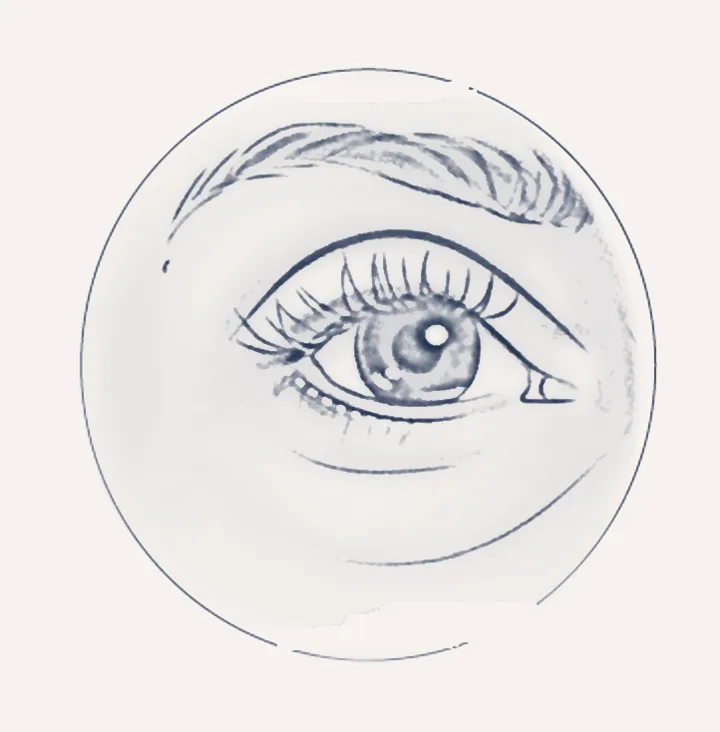
Upper blepharoplasty is done under local anaesthesia and takes 20 to 25 minutes, or 40 minutes to 1 hour when ptosis is corrected as well. Through an incision in the natural crease, I remove a measured amount of excess skin and reduce the inner fat pad, while preserving the volume of the eyelid.
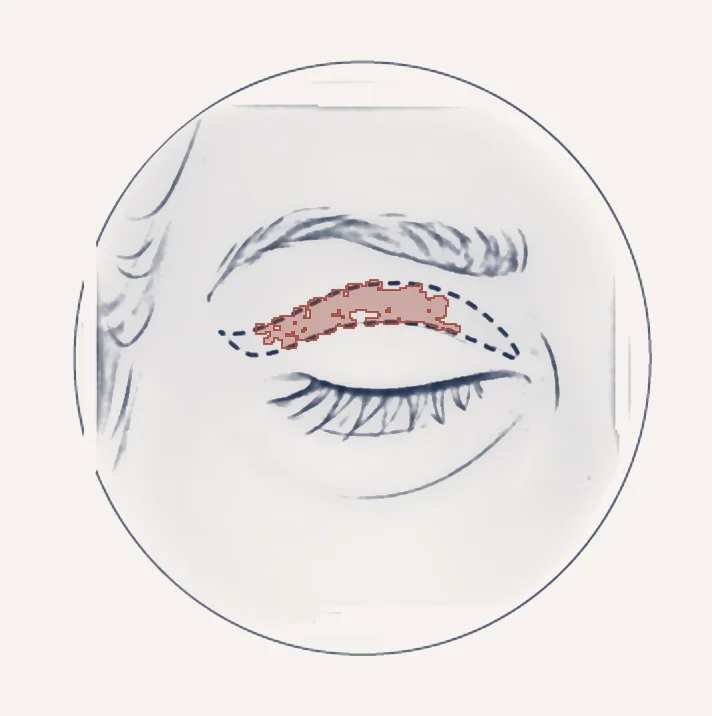
About 95% of these operations are done under local anaesthesia alone, and they do not hurt; you feel only pressure. When the lower eyelids are treated at the same time (lower blepharoplasty), I suggest local anaesthesia with sedation. I remove skin conservatively to avoid lagophthalmos, which means being unable to close the eyelids fully.
What I remove and what I keep
- Skin: I remove the excess; a thin strip of muscle only when the eyelid is heavy.
- Inner (nasal) fat pad: I almost always check it and reduce or reposition it.
- Central fat: I almost never touch it, so that the eyelid does not become hollow.
- Lacrimal gland: it rarely needs any intervention.
Fat removal is very conservative and limited to the inner part, so that the operation does not lead to an A-frame deformity, a skeletonised, empty look around the eyes. No large amount of fat is removed, so the eye never looks “emptied”.
Why I prefer local anaesthesia
Numbing the upper eyelid with local anaesthetic is very simple, and only a very small amount of the drug is needed. Under local anaesthesia you can also sit up and open your eyes during the operation, if needed, so that I can check the eyelid opening and symmetry when ptosis is corrected at the same time with a levator stitch. This matters most, and gives the greatest precision, when the droop of the eyelid is corrected too.
Drooping eyelid or excess skin?
In true ptosis the problem is not the skin but the muscle that opens the eyelid, the levator. Over the years its tendon stretches or detaches and the lid drops over the pupil. Depending on the measurements, I choose between two corrections, and I perform the correction in the same operation as the blepharoplasty.
| Technique | What it does | When |
|---|---|---|
| Upper blepharoplasty [4] | Removes skin, a thin strip of muscle when needed, and manages the nasal fat | Excess skin, heavy upper lid |
| Levator advancement [2] | Reattaches and shortens (plicates) the tendon of the muscle that opens the eyelid | Ptosis, depending on the measurements |
| Tarsus reduction (Fasanella–Servat) [3] | Removes a small strip from the inside of the eyelid, with no skin incision | Mild ptosis |
| Transpalpebral corrugator resection [1] | Through the same incision, removes the muscle that forms the vertical lines between the brows | Strong frown |
| Brow lift | Lifts the brow | Heaviness in the upper third with an overactive or weak forehead muscle, after a clinical test |
Removing the corrugator muscle through the blepharoplasty incision
The corrugator muscle pulls the brows inwards and down and forms the vertical frown lines between them. When the frown is strong, I remove part of the muscle through the same blepharoplasty incision, with no extra scar [1]. The area between the brows relaxes and the expression looks less tired or angry.
Incisions and stitches
The incision is placed so that it is not visible: it lies in the natural crease of the eyelid and is hidden when the eyes are open. The stitch is intradermal and non-absorbable, and it is removed on day 5. With an intradermal stitch you do not get the small vertical marks that external stitches sometimes leave.
Combining it with other procedures
Upper blepharoplasty can be combined with canthopexy, which fixes the outer corner of the eye in a higher position, so that the eyes no longer look sad and take on a more almond shape. It can also be combined with lower blepharoplasty, a brow or forehead lift, a temporal lift or a facelift. Combining it with a brow lift or temporal lift gives the so-called foxy eye or cat eye, with a more almond-shaped or more slanted eye, depending on your needs. For the lower eyelids, see the lower blepharoplasty page.
Hospital stay
You do not need to stay in hospital: you go home the same day, wearing sunglasses. Bring someone with you and do not drive, because swelling can briefly limit your vision.
How long is recovery after upper blepharoplasty?
Recovery is short: swelling and bruising last 5–7 days. You can return to desk work the next day wearing sunglasses, the stitch comes out on day 5, you can wear contact lenses after 10 days and make-up after 2 weeks, and you can exercise again after 3 weeks.
For the first few days, sleep on 2 pillows, and use cold compresses for the first 24 hours. Your vision is not affected. Physically demanding work needs 10–15 days off; some patients take 2 weeks off so that the operation goes unnoticed.
| When | How you feel | What you can do |
|---|---|---|
| Day 1 | Mild swelling, very little pain | Cold compresses, sleep on 2 pillows; go out wearing sunglasses |
| Next day | Vision is not affected | Desk work, wearing sunglasses |
| Days 1–7 | Mild bruising and swelling that fade | Light daily activities; no bending or lifting |
| Day 5 | The incision has healed | Stitch removal; sunglasses no longer needed, any bruising can be covered with concealer |
| Day 10 | Almost normal appearance | Contact lenses; physical work at 10–15 days |
| Week 2 | The scar is pink and fine | Make-up |
| Week 3 | Normal sensation | Back to exercise |
| Months 1–2 | The scar fades and shows little or not at all | Normal activity; sun protection on the scar |
| About 1 year | The scar is almost invisible | — |
How long do I need to stay in Greece after upper blepharoplasty?
Upper blepharoplasty needs no hospital stay: you leave the hospital the same day. The stitch is removed on day 5, so most international patients plan their stay around that visit. You can fly from day 5, after the stitch is out; plan 5 to 10 days in Greece in total, which I confirm at your consultation.
A typical plan looks like this:
- Day of surgery: you go home or to your hotel the same day, wearing sunglasses. Bring a companion, as you should not drive while the swelling may briefly limit your vision.
- Days 1–5: rest with your head raised on 2 pillows, use cold compresses for the first 24 hours, and avoid bending and lifting. Swelling and bruising fade over 5–7 days.
- Day 5: I remove the intradermal stitch. After this, sunglasses are no longer needed and a little concealer covers any remaining bruising.
- Flying home: from day 5, with no limit on flight length.
- Follow-up: by video call at 10 days, 1 month, 6 months and 1 year.
Before you travel, arrange for a few quiet days at home, glasses instead of contact lenses for the first 10 days, and time off physically demanding work for 10–15 days. Make-up can be worn again after 2 weeks and exercise after 3 weeks. Once home, you can message the practice on WhatsApp, and keep time free for your video follow-ups at 10 days, 1 month, 6 months and 1 year.
What results can I expect, and how long do they last?
Upper blepharoplasty corrects loose skin without changing the shape of your eyes, and morning puffiness improves. In my experience the result lasts more than 15 years. When some laxity returns after many years, it is often caused by the brows descending rather than the eyelids, and the removed fat rarely comes back.
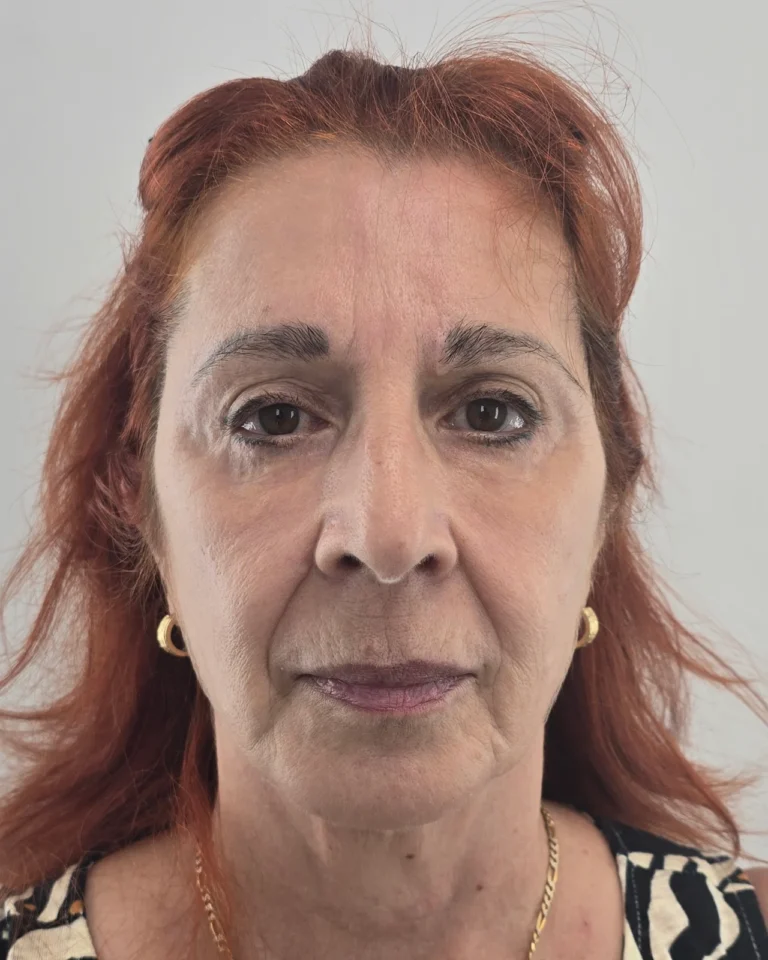
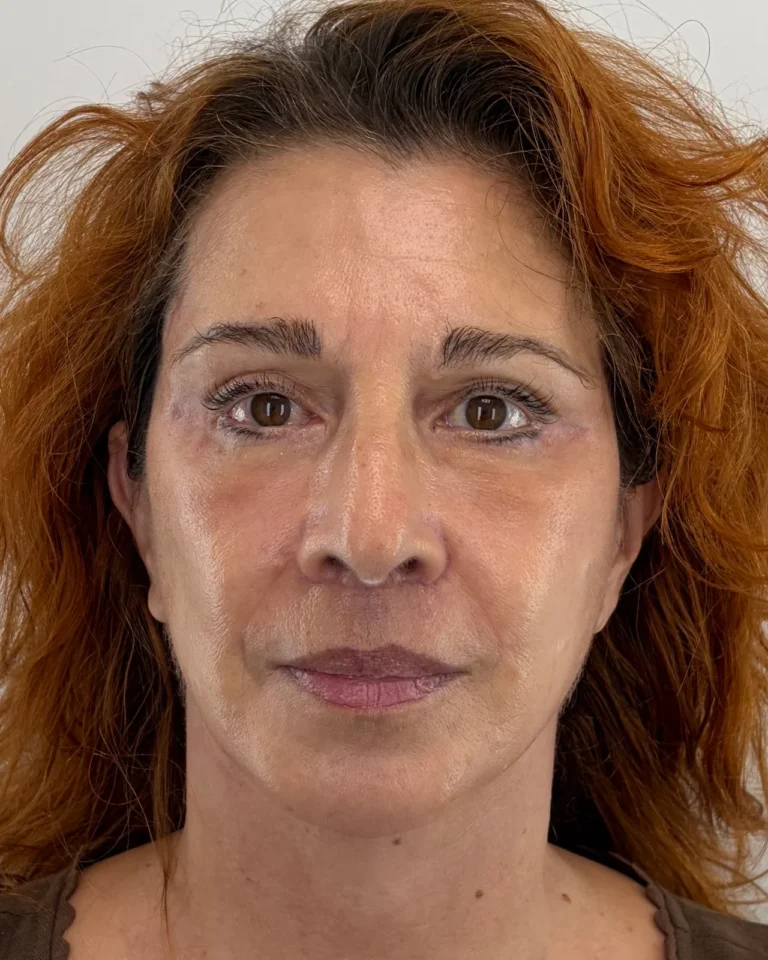
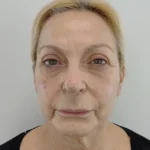
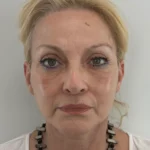
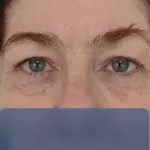
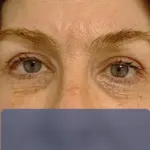
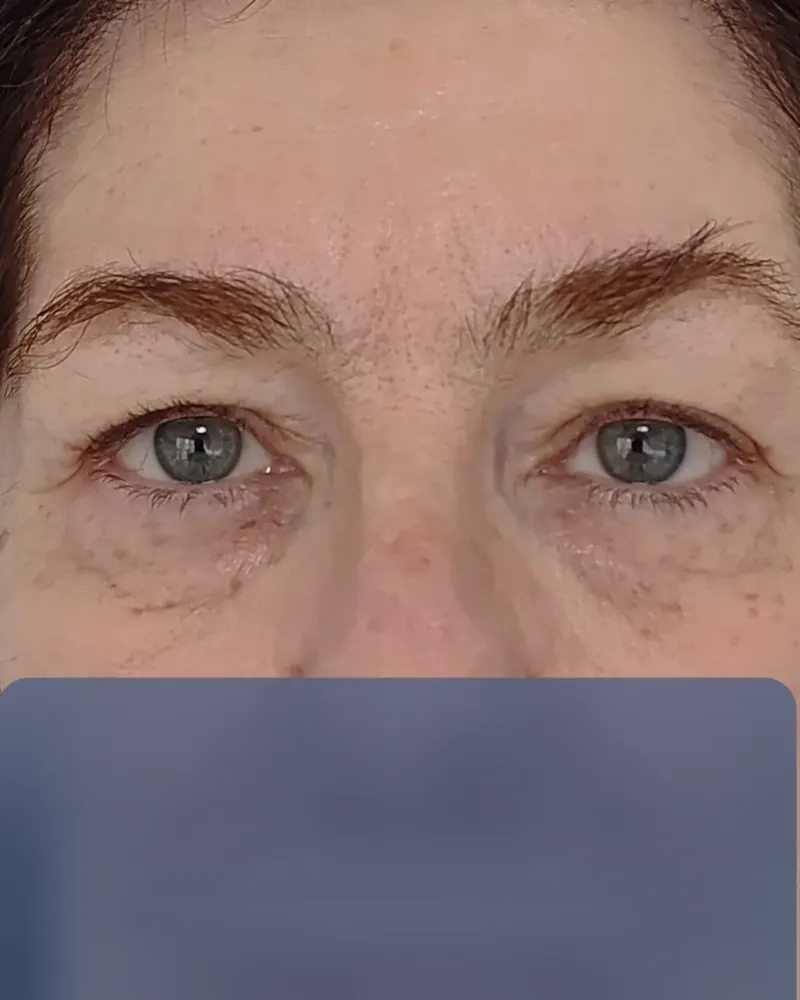 Before
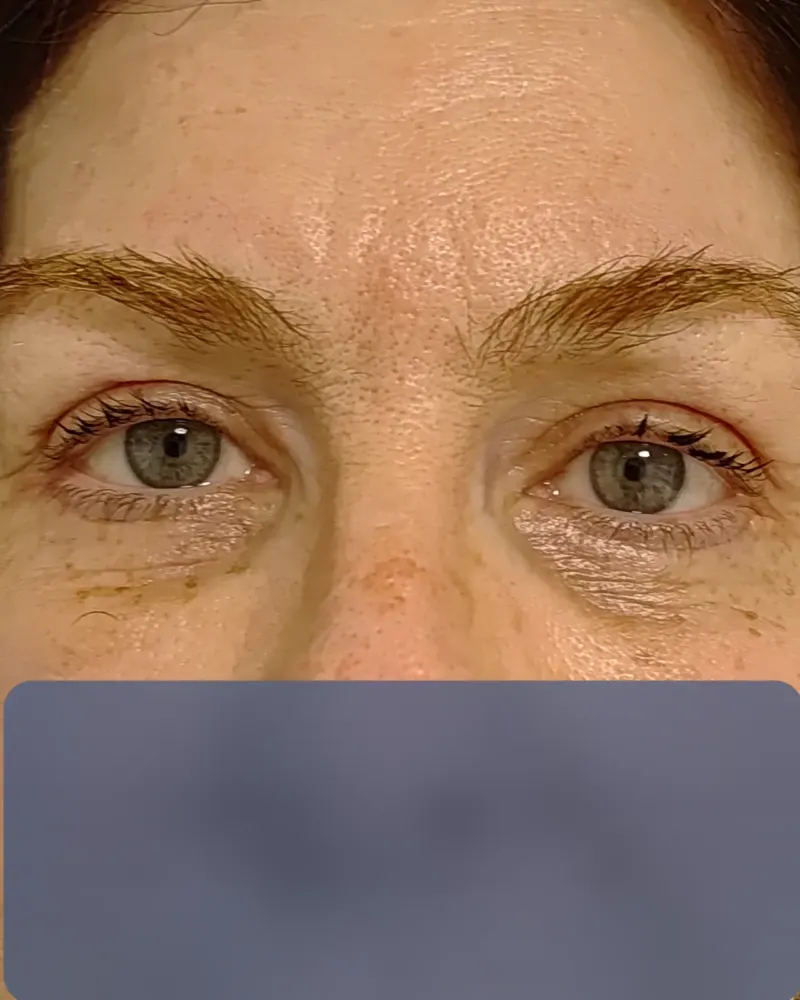 After
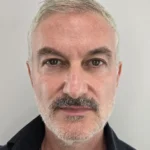
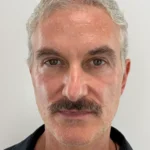
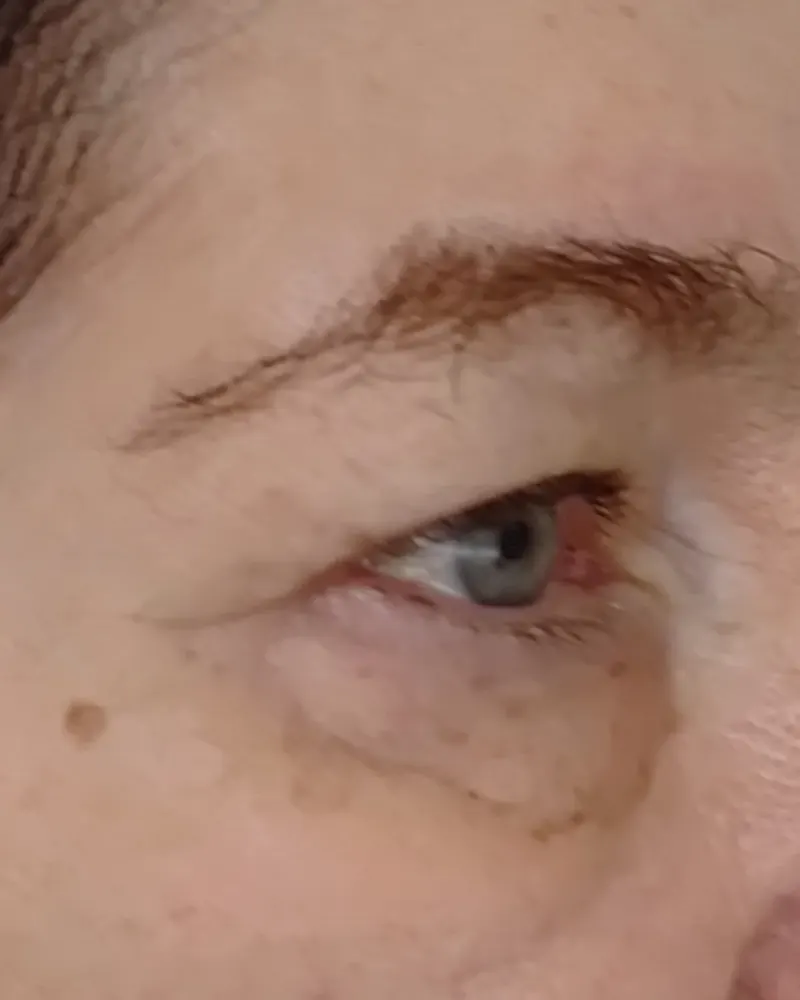 Before
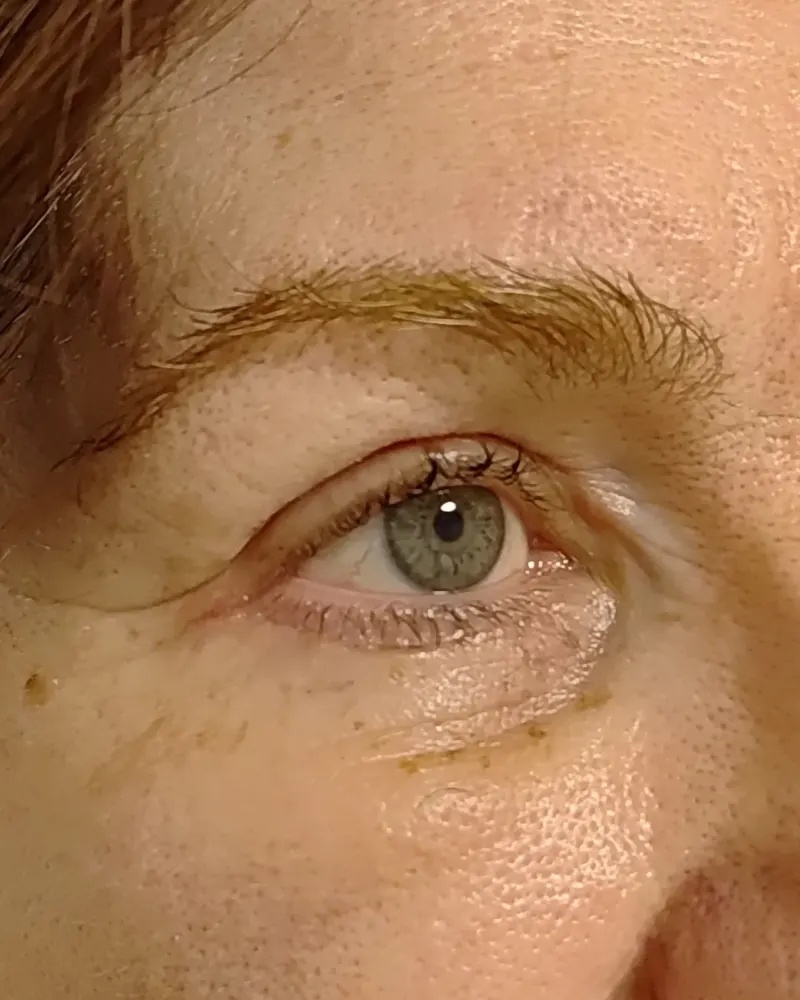 After
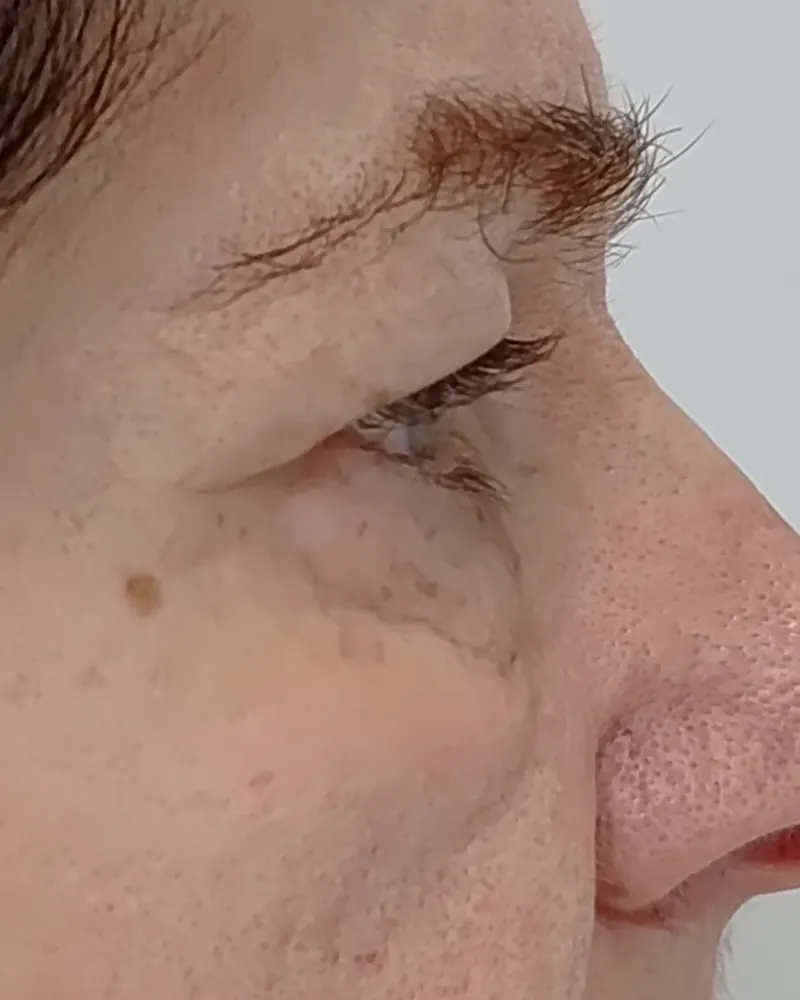 Before
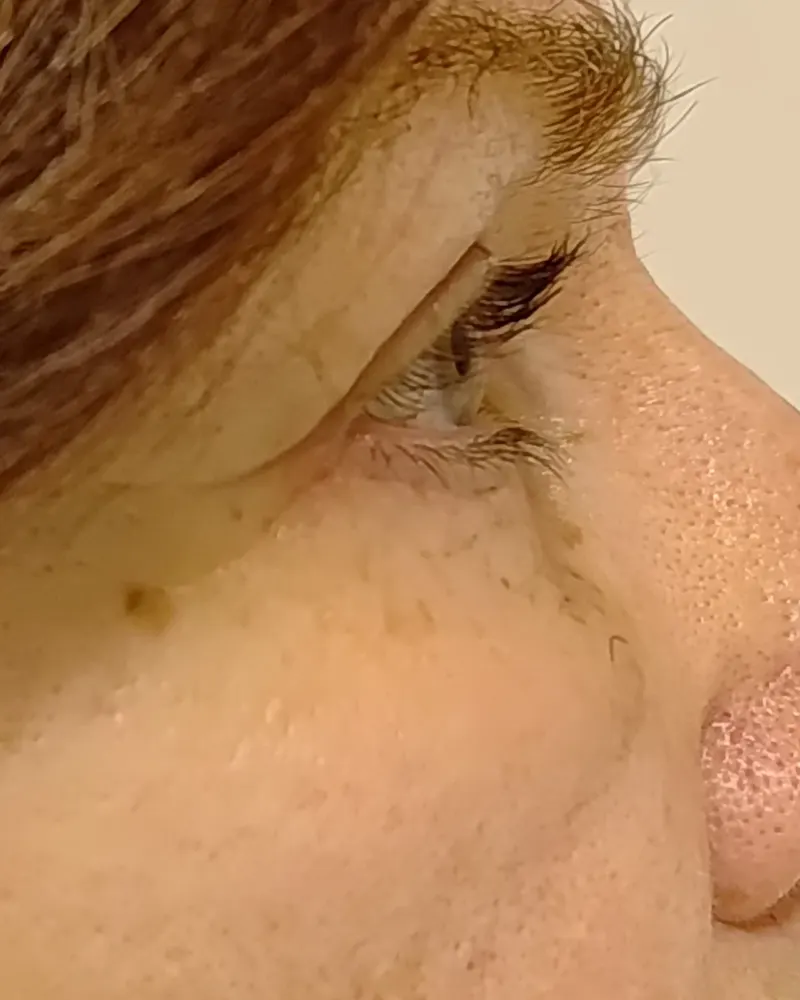 After
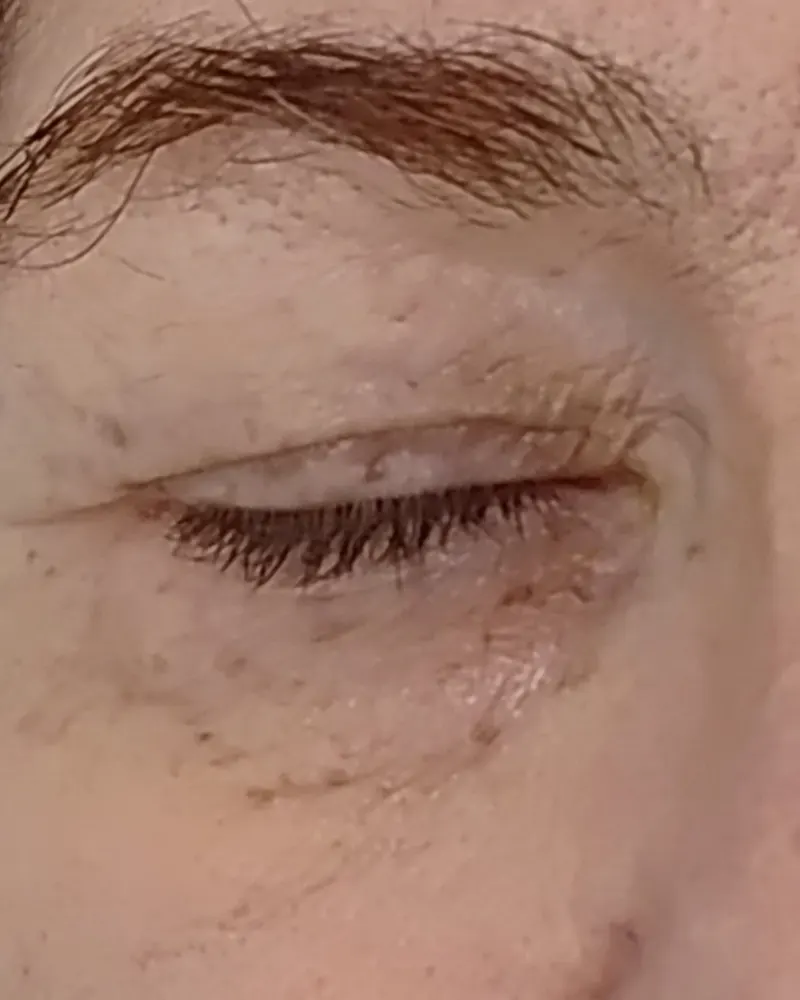 Before
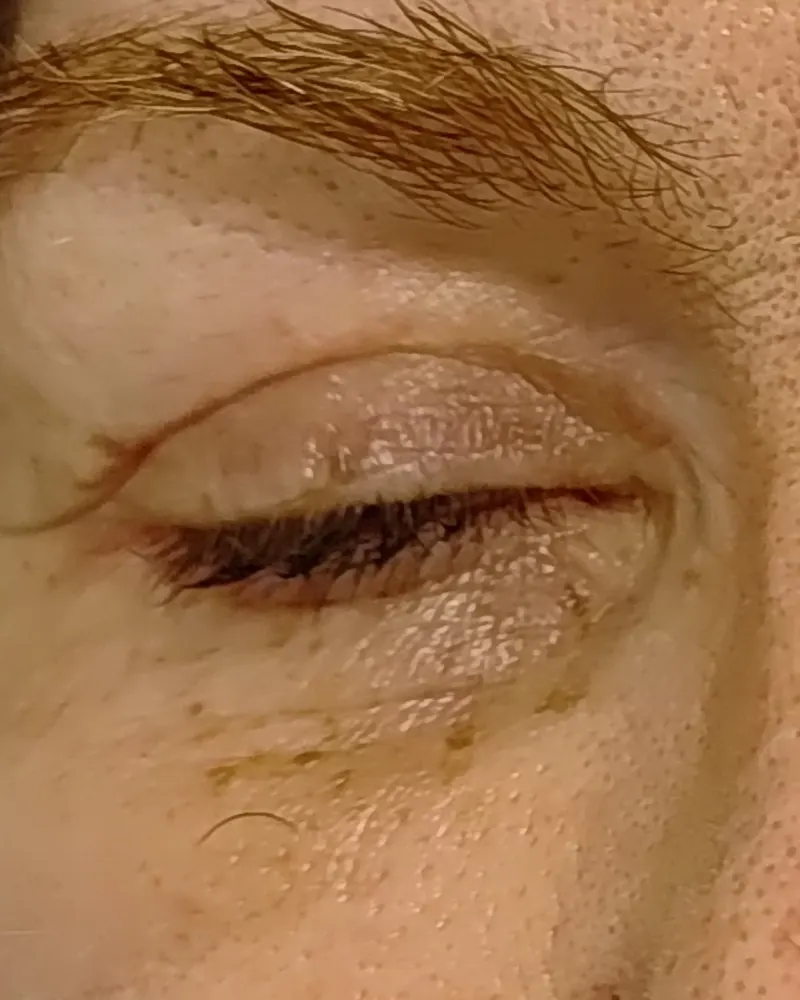 After
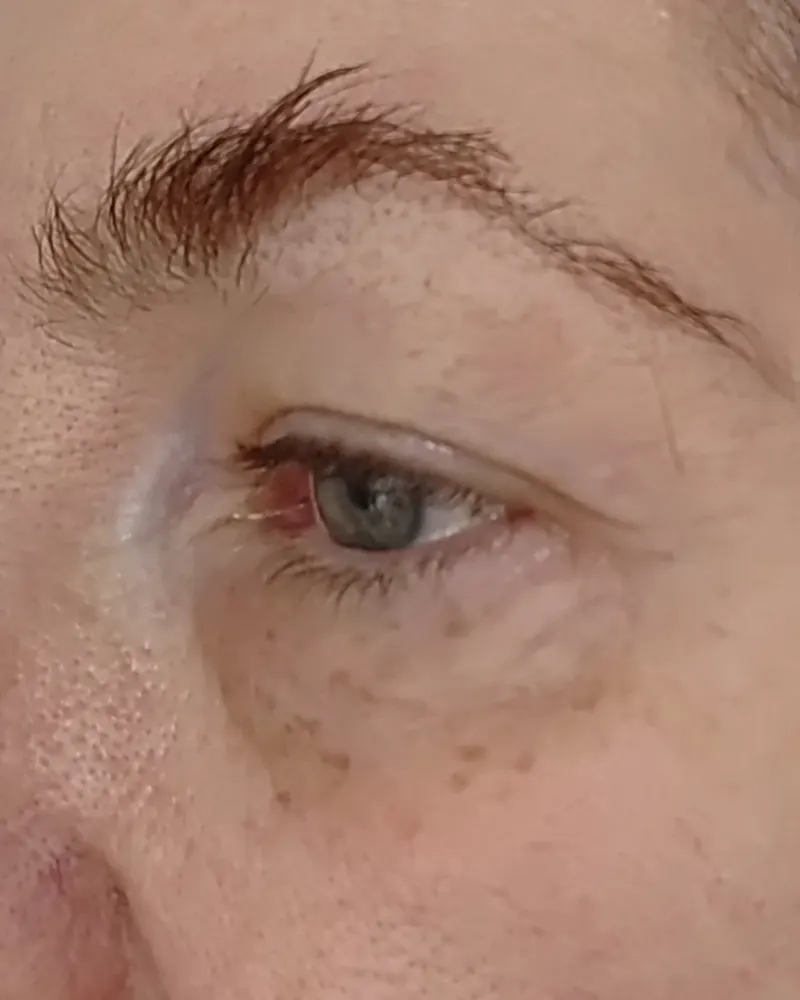 Before
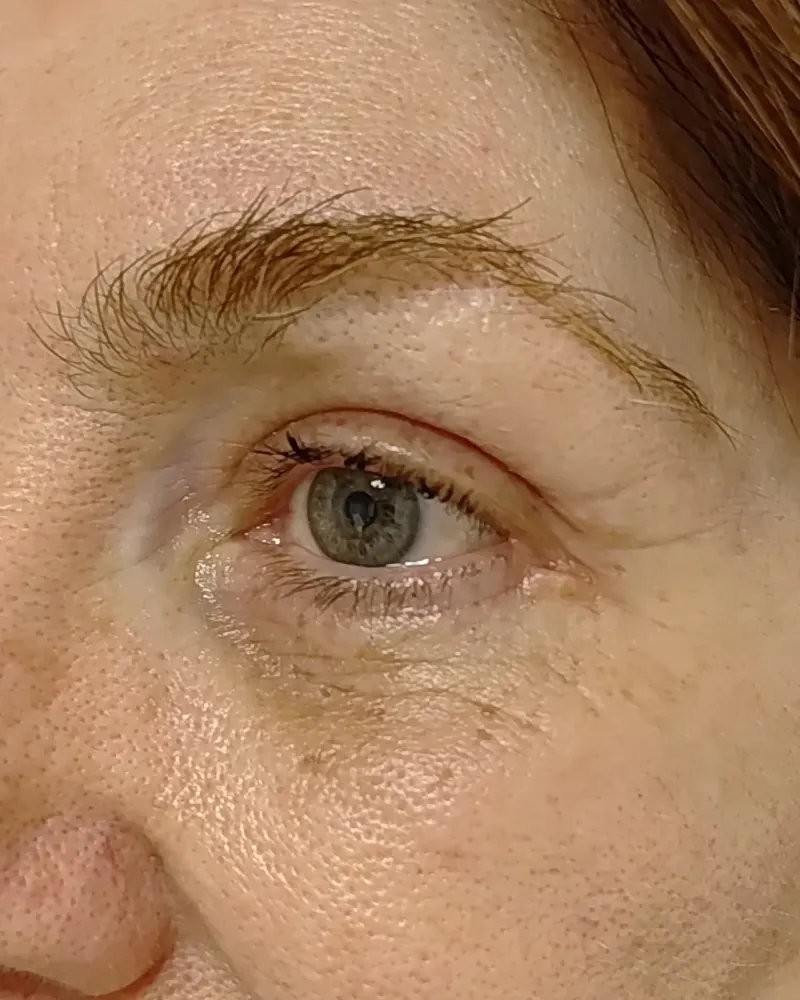 After
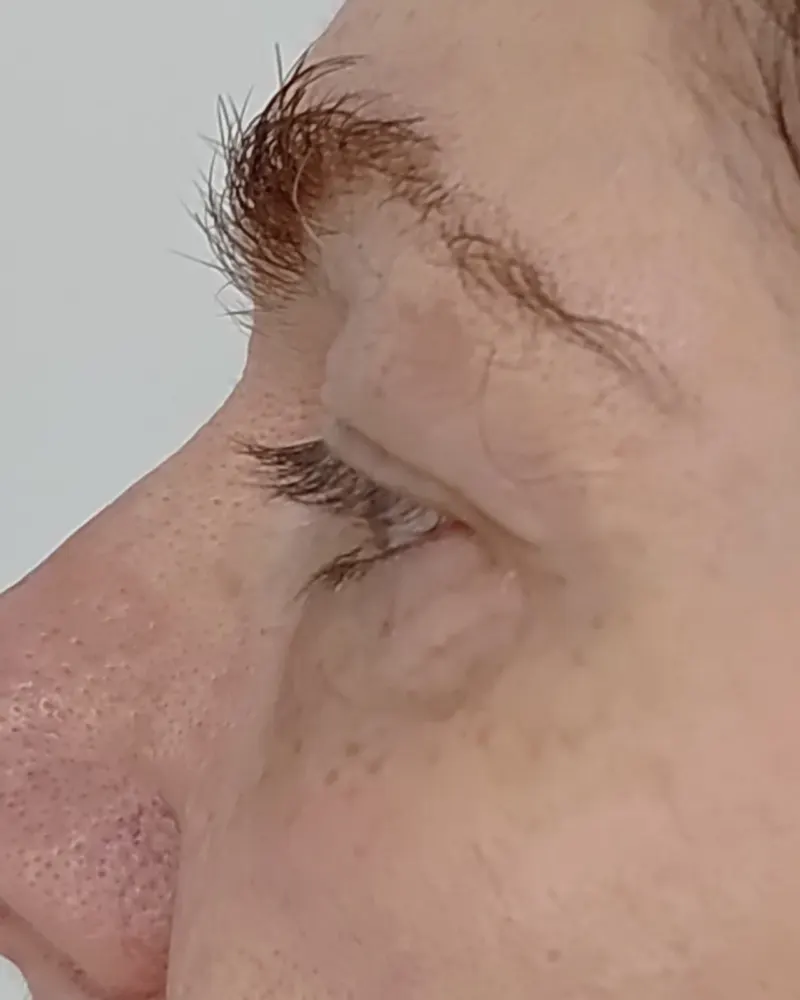 Before
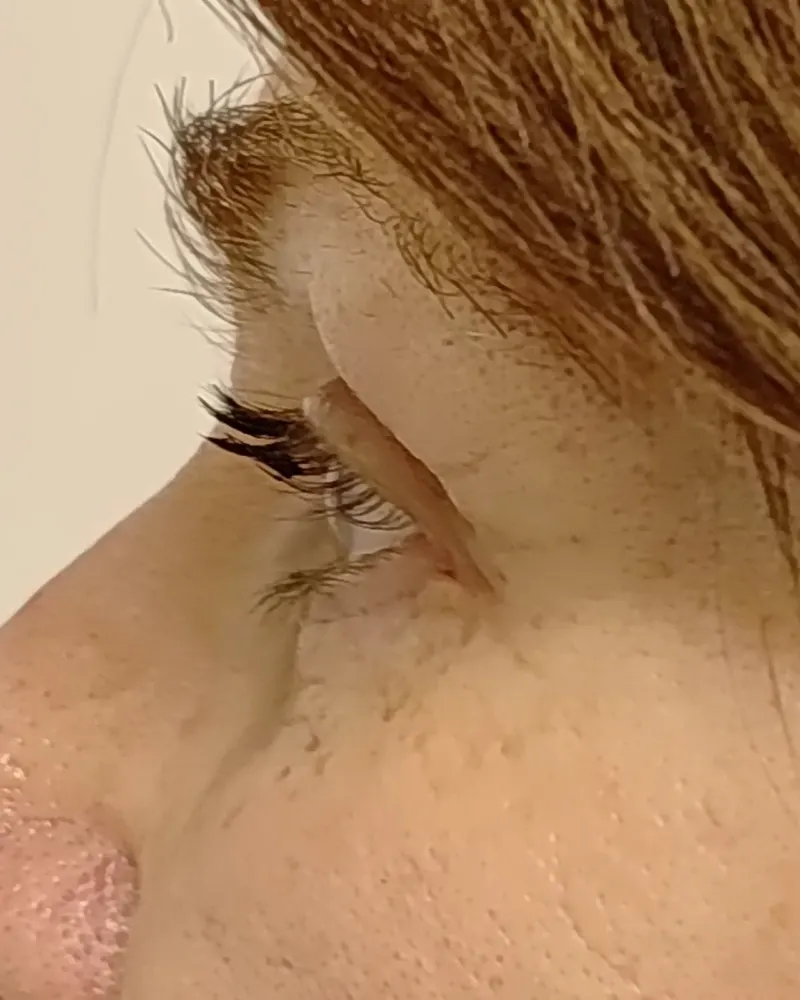 After
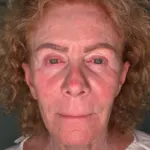
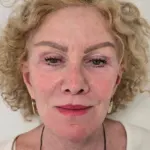
Upper blepharoplasty and lower blepharoplasty
Woman, 50–60 · Upper blepharoplasty and lower blepharoplasty · 1 month after · Surgeon: Dr Prodromos Papaioannou
Front
Results vary from patient to patient.
After the excess skin has been removed, many years pass before new laxity appears, and it is often due to the brows descending rather than the eyelids. The fat rarely recurs. I prefer to leave a little natural laxity rather than remove too much, which changes both the appearance and the function of the eyelid.
What are the risks of upper eyelid surgery?
Complications in the upper eyelids are few: temporary swelling, bruising and healing problems. The main risks are asymmetry and under- or over-correction, mostly when ptosis is corrected. I explain the risks that apply to you at the consultation, and the table below shows how each one is prevented and treated.
| Complication | How common | Prevention and treatment |
|---|---|---|
| Swelling and bruising | Common, temporary | Cold compresses, sleeping on 2 pillows; they settle in 5–7 days |
| Asymmetry, under- or over-correction of ptosis | Not rare, mainly when ptosis is corrected | Symmetry checked with you sitting up under local anaesthesia; in some cases a small revision |
| Healing problems or a more visible scar | Rare | Intradermal stitch in the natural crease; if needed, additional laser treatment |
| Dry eye, difficulty closing the eye fully (lagophthalmos) | Rare, usually temporary | Conservative, measured skin removal; eye drops and ointment |
| Hollow upper lid (A-frame deformity) | Rare | Fat removed only from the inner part; the central fat is almost never removed |
| Haematoma | Rare | Medicines that affect clotting are reviewed; if it occurs, it is drained |
| Infection | Rare | Treated with antibiotics |
Smoking. Stop 4 weeks before and 4 weeks after surgery; smoking slows healing of the incision.
Blood thinners. Tell me if you take anticoagulants or antiplatelet drugs. Stopping them is always agreed with the doctor who prescribes them.
What affects the cost of upper blepharoplasty?
I do not publish prices. The cost depends on what needs correcting: skin only, a drooping eyelid, or a combination with another procedure. You receive a written quote after the consultation and examination, once we have agreed exactly what will be done. The main factors are:
- Whether it is blepharoplasty alone or blepharoplasty with ptosis repair.
- Corrugator muscle removal or canthopexy in the same operation.
- Combination with lower blepharoplasty, a brow lift or a facelift.
- The anaesthesia: local, or local with light sedation.
- Insurance: the operation is usually not covered when it is done for cosmetic reasons.
Frequently asked questions
Will the blepharoplasty scar be visible?
Very little. The incision lies in the natural crease of the eyelid and is hidden when your eyes are open. I close it with an intradermal stitch, so you do not get the small vertical marks that external stitches can leave. The scar takes 1–2 months to fade and is almost invisible after about a year. If it is more visible or there is some discolouration, I use additional laser treatment.
Will upper blepharoplasty change the shape of my eyes?
No, unless you ask for it. I remove a measured amount of skin and almost never remove the central fat, so the eyelid does not become hollow. I correct only the laxity, respecting your anatomy and the volume loss that comes with age. The shape changes only if you ask for it, for example with a canthopexy for a more almond-shaped eye.
Is upper eyelid surgery painful? Will I be asleep?
It does not hurt. In about 95% of my cases the operation is done under local anaesthesia, so you are awake and feel only the sting of the injection. This means you can sit up and open your eyes so that we check the opening and symmetry together before I close the incision. Afterwards the discomfort is mild and is controlled with ordinary painkillers.
How much time off work will I need after blepharoplasty?
For desk work, usually 5 to 7 days, until the stitch is removed on day 5. Your vision is not affected and you can go out from the next day wearing sunglasses. Physically demanding jobs need 10 to 15 days. After day 5, a little concealer covers any remaining bruising, so few people will notice.
How long does upper blepharoplasty last?
In my experience, usually more than 15 years. Once the excess skin has been removed, it takes many years for new laxity to develop, and it is often caused by the brows descending rather than the eyelids. The fat that is removed rarely comes back. A little laxity after many years looks more natural than an eyelid that looks pulled.
Can ptosis and excess skin be corrected at the same time?
Yes. At the examination I measure the distance from the edge of the eyelid to the centre of the pupil (MRD1) and the function of the levator muscle, to see whether the eyelid is truly drooping or is simply covered by skin. If there is ptosis, I correct it in the same operation as the blepharoplasty: with levator advancement or, for mild ptosis, with tarsus reduction (Fasanella–Servat). The operation then takes 40 minutes to 1 hour and is again done under local anaesthesia, so that we can check symmetry with your eyes open.
Do I need blepharoplasty or a brow lift?
It depends on where the heaviness comes from. When the brow has dropped, it pushes skin down onto the eyelid, and blepharoplasty alone is not enough. I examine the position and shape of your brow and the strength of the forehead muscle. In many cases blepharoplasty is enough; in others both procedures are done together. See the brow lift page for more.
When can I wear make-up and contact lenses again?
Make-up after 2 weeks, once the incision has healed, and contact lenses after 10 days; until then, wear glasses. If you have an important event coming up, mention it at your consultation so that we can schedule the operation with enough time in hand for the swelling and bruising to settle.
When can I fly home after upper blepharoplasty?
You can usually fly home from day 5. There is no hospital stay, so the main point that sets the length of your stay is the stitch, which I remove on day 5. Swelling and bruising settle over 5–7 days, and after day 5 a little concealer covers any remaining bruising, so you can travel discreetly. Wear glasses rather than contact lenses for the first 10 days, and keep your sunglasses with you. I confirm your exact travel date at the consultation, based on your plan.
Can my follow-up be done at home?
Yes. After you return home, follow-up is by video call at 10 days, 1 month, 6 months and 1 year. The visit that needs to happen in person is the stitch removal on day 5, which I do before you travel. After that, recovery is mostly about time: the scar fades over 1–2 months and is almost invisible at about a year. Protect the scar from the sun and contact me if you notice anything unexpected, such as increasing swelling, pain or difficulty closing the eye. Once home, message the practice on WhatsApp and you receive a reply the same day; in an emergency, call us, and for an acute problem go to the nearest hospital emergency department.
References
- Guyuron B, Michelow BJ, Thomas T. Corrugator supercilii muscle resection through blepharoplasty incision. Plast Reconstr Surg. 1995;95(4):691–696.
- Anderson RL, Dixon RS. Aponeurotic ptosis surgery. Arch Ophthalmol. 1979;97(6):1123–1128. doi:10.1001/archopht.1979.01020010577015
- Fasanella RM, Servat J. Levator resection for minimal ptosis: another simplified operation. Arch Ophthalmol. 1961;65(4):493–496.
- Nahai F. The Art of Aesthetic Surgery: Principles and Techniques. 3rd ed., vol. 2: Facial Surgery. Thieme; 2020.
- Rodrigues C, Carvalho F, Marques M. Upper eyelid blepharoplasty: surgical techniques and results — systematic review and meta-analysis. Aesthetic Plast Surg. 2023;47(5):1870–1883. doi:10.1007/s00266-023-03436-6
- Bacharach J, Lee WW, Harrison AR, et al. A review of acquired blepharoptosis: prevalence, diagnosis, and current treatment options. Eye (Lond). 2021;35(9):2468–2481. doi:10.1038/s41433-021-01547-5
Consultation
In Thessaloniki, in Athens or by video. Examination, options and a written plan.