
Face · Aesthetics
Rhinoplasty in Thessaloniki and Athens, Greece
I perform 20 to 25 primary and 10 to 15 revision rhinoplasties a year and have been a specialist plastic surgeon since 2012. I do most of them with the open structural technique, which gives full control of the tip and support that lasts over time.
Rhinoplasty changes the shape of the nose and, when needed, corrects the deviated septum and enlarged turbinates that make breathing difficult, all in the same operation. You go home the same day.
20–25
operations a year

At a glance
What it treats
Size, dorsum (hump), tip, asymmetry; deviated septum, enlarged turbinates, difficulty breathing
Anaesthesia
General; local for small corrections, e.g. of the tip
Operating time
2 to 2.5 hours · revision with rib cartilage 3 to 4 hours
Hospital stay
None; home the same day
Back to work
About 10 days
Exercise
Light after 1 month; strenuous after 3 to 6 months
Final result
Natural look at about 3 months; final result at 6 to 12 months
Where
Interbalkan Medical Center, Thessaloniki · Athens Medical Center, Marousi
Medically reviewed by Dr Prodromos Papaioannou, Plastic Surgeon, HESPRAS member, ASPS International Member · Last reviewed:
What is rhinoplasty?
Rhinoplasty is surgery that reshapes the nose and, where needed, improves breathing. I work on the bones and cartilage so that the nose suits the proportions of your face, using an open or closed approach depending on the problem. The operation can be cosmetic, functional or both, depending on what bothers you.
Many noses with a cosmetic problem also have a deviated septum and enlarged turbinates. I correct these in the same operation, because they affect both the support of the nose and your breathing.
Cartilage from the septum is often used as a graft. That is why the septum and the shape of the nose are best corrected together, by the same surgeon [6].
Am I a good candidate for rhinoplasty?

Rhinoplasty suits healthy people whose nose has finished growing, usually from 16 in girls and 18 in boys, who want to change its shape or breathe better. The final decision is made at the examination, once I have looked at your nose from the outside and the inside.
Who is a typical candidate?
- People with a hump on the bridge, a large or wide nose, or a tip that is wide, drooping or poorly defined.
- People with a crooked or asymmetric nose, after an injury or from birth.
- People who find it hard to breathe through the nose because of a deviated septum, enlarged turbinates or a problem with the internal or external nasal valve.
- People who snore because of nasal congestion; when an enlarged uvula also contributes, I reduce the uvula as well.
- People who have had rhinoplasty before and are unhappy with the cosmetic or functional result.
- People with congenital nasal differences, such as those seen with cleft lip.
When do I advise against it?
- Before the nasal bones and septum have finished growing, usually before 16 in girls and 18 in boys. Under 18, parental consent is always required.
- For revision rhinoplasty, usually before 12 months have passed since the previous operation, in some cases 6.
- When the goal is to have someone else’s nose, with different features and different proportions.
- When there is an active infection or an uncontrolled health problem that raises the risk of anaesthesia.
What happens at a rhinoplasty consultation?
At the consultation I examine your nose from the outside and the inside, check how you breathe, and we decide together which corrections you need, which technique suits you and whether this is a primary or revision rhinoplasty. You leave with a written treatment plan and a written cost.
What does the examination cover?
I look at the shape of the bridge (dorsum) and the tip, the thickness of the skin, the stability of the middle third of the nose (the middle vault), the symmetry of your face and your breathing. A clinical examination of the inside of the nose shows what is needed to improve breathing: correction of the septum, the turbinates, the nasal valve or something else.
How do we decide on the shape of your new nose?
There are basic principles that define the aesthetics and harmony of a nose, and they always take the proportions of the whole face into account. There is, however, no template. The nose should be in proportion with the chin and the eyes: a very small nose gets lost in a large face, while a very large one dominates the eyes, cheekbones and lips. I usually suggest a natural, timeless result: a straight bridge leading to a slightly lifted tip, without an upturned look.
Beyond ideal proportions, what matters most is what you want and how you picture your nose. A computer simulation helps to show the changes, but it is not a guarantee of the result. Through our conversation it becomes clear exactly what we want to achieve, and I tailor the operation to that.
What tests and preparation do I need before surgery?
You will need pre-operative blood tests and a check-up for general anaesthesia. Smoking affects healing, especially after open rhinoplasty, so stop for at least 4 weeks before and 4 weeks after surgery. If you take anticoagulants or antiplatelet medicines (blood thinners), tell me; they are only stopped in agreement with the doctor who prescribes them. Fasting instructions are given individually. Patients under 18 need parental consent. The date of surgery is set once the tests are complete.
How is rhinoplasty performed?
Rhinoplasty is usually performed under general anaesthesia and takes 2 to 2.5 hours with the open technique. I do most operations as open structural rhinoplasty, using cartilage grafts to support the tip, and I correct the septum, turbinates and nasal valve in the same operation. You go home the same day.
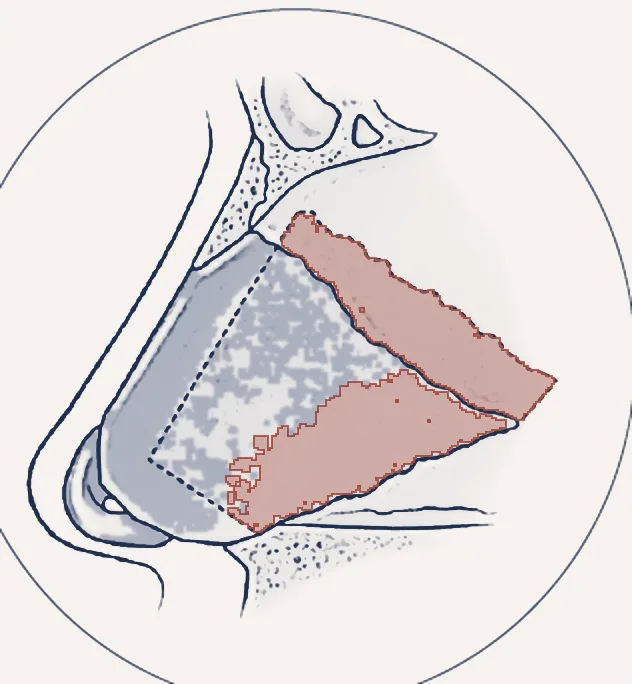
Small corrections, for example of the tip, can also be done under local anaesthesia. A closed rhinoplasty takes about 1.5 hours, and a revision rhinoplasty with rib cartilage 3 to 4 hours. There are four main techniques: closed open roof, closed preservation, open preservation and open structural rhinoplasty. Each has its advantages and suits particular cases.
Open or closed rhinoplasty?
In closed rhinoplasty the incisions are made inside the nostrils, so there is no external scar. The cartilage and bone framework is released and corrected step by step; at the end the proportions of the nasal pyramid are restored and the upper lateral cartilages and tip cartilages are adjusted to it. The scope for changing the tip, however, is more limited than with the open approach.
In open rhinoplasty there is one additional small incision across the columella, the strip of skin between the nostrils. This lets me see the whole anatomy of the nose and control the tip and its support precisely. That is why I perform most rhinoplasties open. I keep the closed approach for a few selected cases where the tip needs no change at all.
Open structural rhinoplasty
Open structural rhinoplasty is the operation of choice when the tip needs more work [1]. “Structural” means that the tip cartilages are fully rebuilt and supported with cartilage grafts. The technique is based on the tripod theory of the tip: the lower lateral (alar) cartilages are reinforced with a third leg, either a septal extension graft or a columellar strut graft.
- Tip: supported with a septal extension graft or a columellar strut and, where needed, with more specialised grafts to the tip or the alar cartilages.
- Middle vault: when the arch of the bridge is out of proportion with its width, I remove the hump (open roof) and rebuild the vault with spreader flaps or spreader grafts [2]. This also treats the internal nasal valve.
- Thin skin: I cover the bridge with a temporal fascia graft so that irregularities do not show [8].
- Grafts: cartilage preferably from the septum; when that is not enough, from a rib, with no functional or visible change at the donor site.
Cartilage grafts give greater control over the result, reduce the unpredictable factors of the first months of healing and protect the tip from drooping, which can happen many years later. They also make it possible to treat complex problems: marked asymmetry, congenital differences such as cleft lip, and noses that have had previous surgery.
Preservation rhinoplasty
In preservation rhinoplasty the bridge is not opened: the middle vault stays intact and no osteotomies (bone cuts) are made on the bridge [3, 4]. With the push down and let down techniques, controlled osteotomies are made at the sides and a strip of septum is removed beneath the bridge, so that the nasal pyramid lowers as one unit. I perform it through an open approach.
It is mainly suited to a small hump with a bridge whose arch is in proportion with its width, very thin skin where osteotomies could leave visible irregularities, asymmetry of the nasal bones, or instability of the middle vault. It does not work equally well in every nose, so I use it rarely, only when the indication is right.
Functional rhinoplasty: septum, turbinates and nasal valve
A rhinoplasty should always be functional. I correct the breathing problem first and then the hump and the other cosmetic concerns. I straighten a deviated septum (a severe deviation may need extracorporeal septoplasty, where the septum is rebuilt outside the nose [6]), reduce enlarged turbinates and treat the internal or external nasal valve. When snoring is also caused by an enlarged uvula, I reduce the uvula in the same operation.
Revision rhinoplasty
Revision (secondary) rhinoplasty corrects the result of a previous operation on the nose. It is more demanding: there is scar tissue, and earlier surgery has changed the anatomy [5, 7]. I first analyse the cosmetic and functional problems in detail and assess which can be corrected, to what degree and how.
Cartilage grafts are almost always needed to replace what was removed. I take them from the septum if it has not been operated on, otherwise from a rib. Some cases have extensive damage and need more complex reconstruction. Revision surgery is usually done 12 months after the previous operation, in some cases after 6, and takes from a short time up to 3 to 4 hours, depending on the corrections.
Rhinoplasty for men and for different ethnic backgrounds
In men the aim is usually a straight, stronger bridge and a tip that is not lifted too much, so that the nose stays masculine. When the skin is thick, or the nose has features of a different ethnic background such as a low bridge or a wide tip, support with grafts matters even more, because thick skin hides detail. The aim is a nose that suits the face without changing its identity.
Incisions and stitches
With open rhinoplasty the only visible incision is on the columella, between the nostrils. It is W-shaped and designed to become hard to see within a few months. The internal stitches dissolve; only the external columella stitches are removed, on day 7, together with the splint and the soft silicone sheets with built-in breathing tubes inside the nose. I do not use nasal packing, because it offers no advantage and removing it is very unpleasant.
Can rhinoplasty be combined with other procedures?
Correction of the septum, turbinates and uvula is done in the same operation. Rhinoplasty can also be combined with other facial procedures, for example chin correction when the nose and chin are out of proportion.
Do I need to stay in hospital?
No overnight stay is needed. You go home the same day, with someone to accompany you. You must not drive after a general anaesthetic.
What is recovery like after rhinoplasty?
Rhinoplasty is not very painful, because I do not pack the nose. The splint and silicone sheets come out after about a week, and most people return to work after about 10 days. By one month 60 to 70% of the swelling has gone; swelling in the tip takes 6 to 12 months to settle.
Swelling goes through three stages. For the first 10 days there is marked, soft swelling of the face, around the eyes and cheeks. Up to about 6 weeks the swelling sits mainly in the nose and is fairly even, so the nose looks a little larger. In the last stage, which lasts 6 to 12 months, the swelling stays mainly in the tip, and as it settles more of the final detail appears. These times are averages and vary from person to person.
| When | How you feel | What you can do |
|---|---|---|
| Days 1–7 | Mild pain, usually controlled with an ordinary painkiller; breathing through the nose is limited but possible through the tubes in the silicone sheets; marked facial swelling, little or no bruising | Rest with your head raised; saline rinses 3–4 times a day; no alcohol |
| About 1 week | The splint and silicone sheets are removed; breathing becomes easier | Go out and about; slight yellowish discolouration may remain |
| About 10 days | Swelling around the eyes and cheeks settles | Work and daily activities |
| 1 month | 60–70% of the swelling has gone; the nose is still sensitive | Light exercise; a little alcohol; take care to avoid knocks |
| 2 months | The nose still looks slightly larger at the tip | Glasses and nose blowing; in some cases tape on the bridge (taping) until then |
| 3 months | The nose takes on a natural look | You can sleep face down |
| 3–6 months | Swelling remains mainly in the tip | Strenuous exercise |
| 6–12 months | Tip swelling settles | Final result |
For the first 2 months the nose needs real care: do not wear glasses and do not blow your nose. Clean it with saline rinses 3 to 4 times a day. Alcohol: none in the first week, only a little in the first month. Smoking affects healing, especially after open rhinoplasty.
How long do I need to stay in Greece after rhinoplasty?
Most of your stay is set by one appointment: the splint, the silicone sheets inside the nose and the columella stitches come out on day 7. There is no overnight hospital stay, so you return to your accommodation the same day with a companion. The total stay I recommend is 7 to 10 days.
- Hospital: no overnight stay; you go home the same day. You must not drive after the general anaesthetic.
- Day 7: removal of the splint, the silicone sheets and the external columella stitches at the practice.
- Flying home: after the day-7 appointment, with no limit on flight length.
- Follow-up once you are home: by video call at 10 days, 1 month, 6 months and 1 year, all done by me.
- Back to work: about 10 days after surgery, so plan your time off from the date of the operation.
At home you will need saline for rinses 3 to 4 times a day. For 2 months you should not wear glasses or blow your nose, and you should protect the nose from knocks. Light exercise is possible after 1 month and strenuous exercise after 3 to 6 months. Swelling of the face is most visible in the first 10 days, which is worth bearing in mind when you book your return.
What results can I expect, and how long do they last?
The nose looks natural at about 3 months, and the final result shows at 6 to 12 months, once the swelling in the tip has settled. The changes to bone and cartilage are permanent, and support with cartilage grafts helps the tip keep its shape over the years.
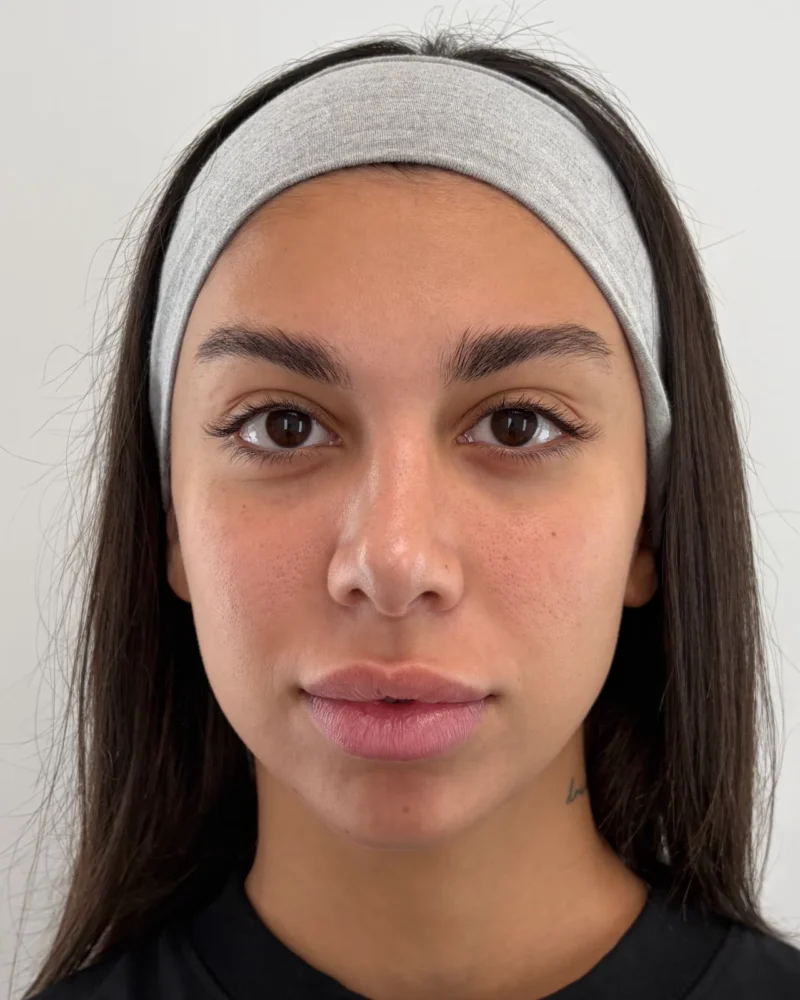
 Before
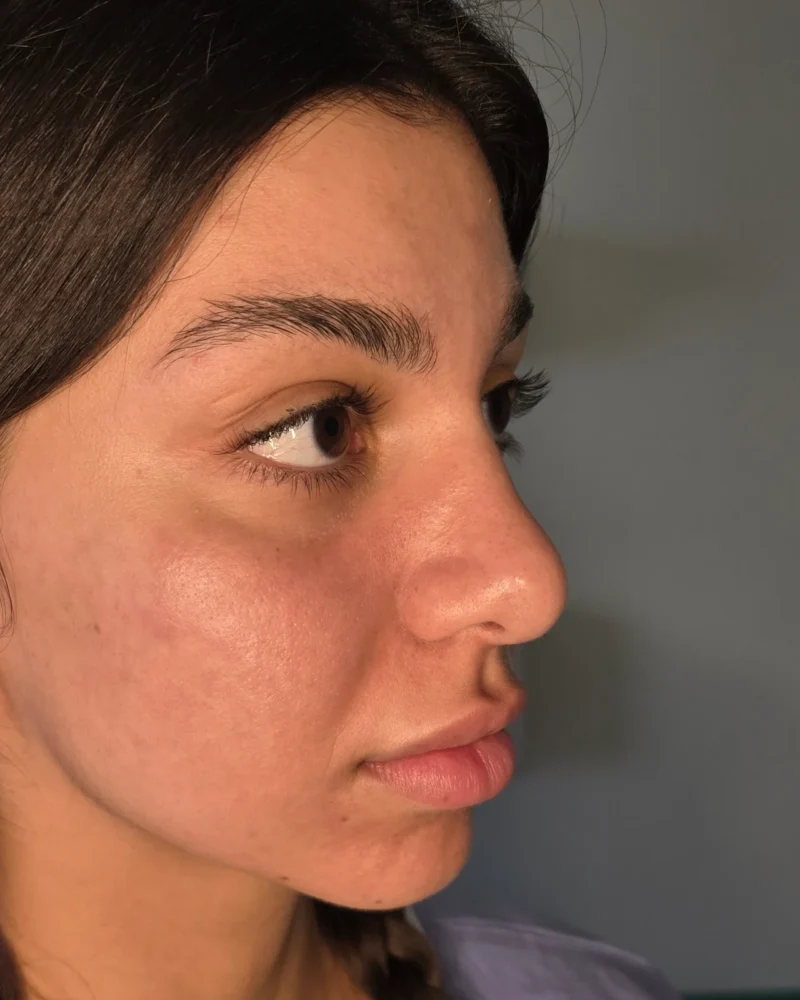
 After
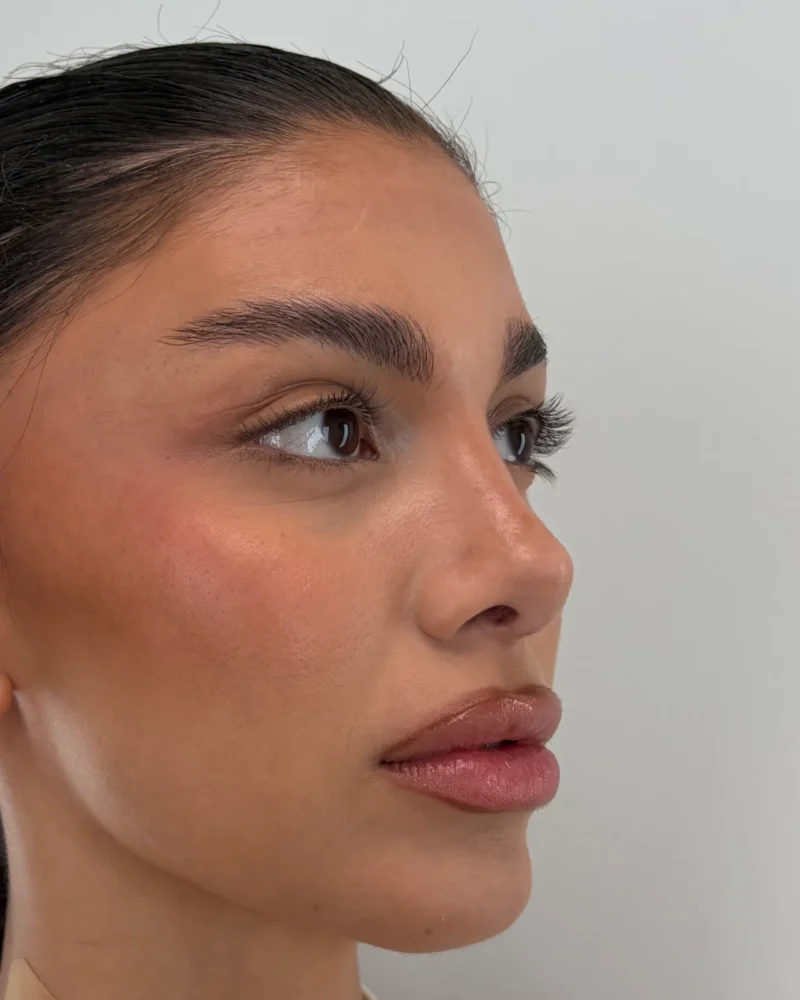
 Before
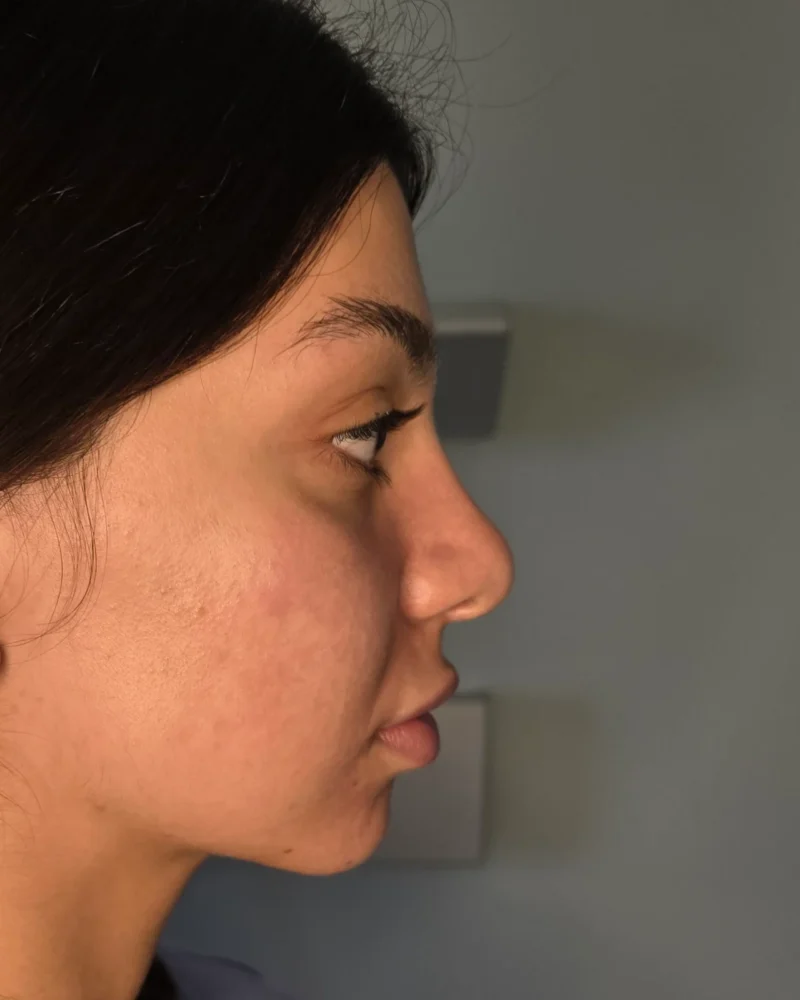
 After
 Before
 After
 Before
 After
 Before
 After
Rhinoplasty
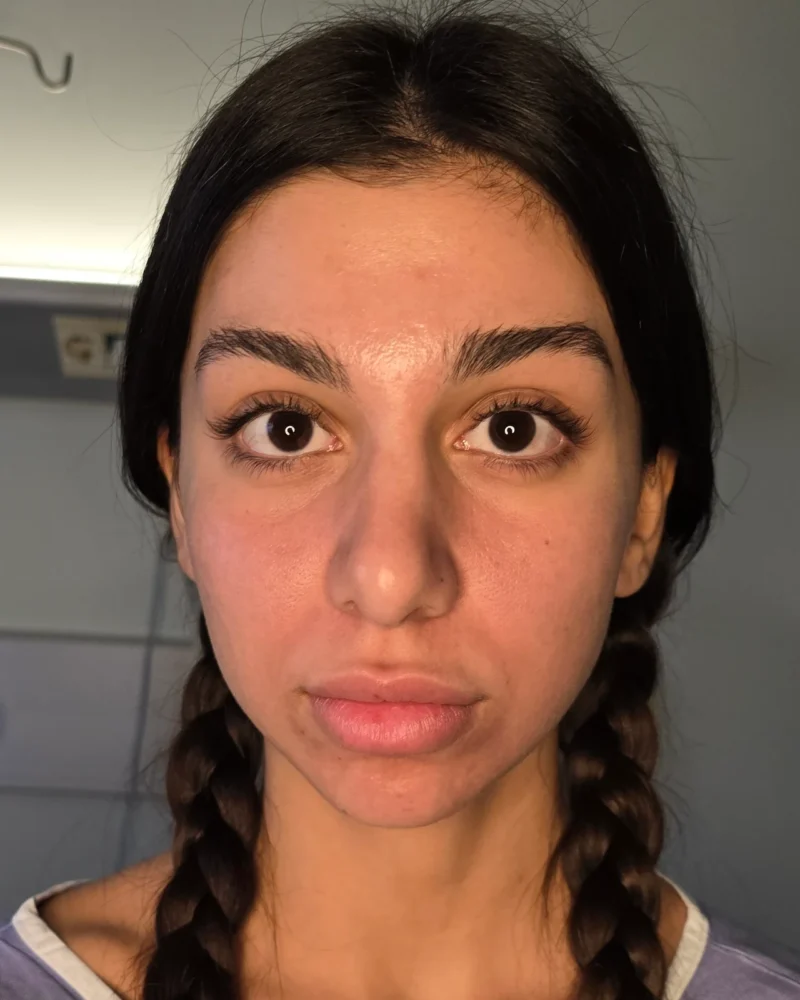
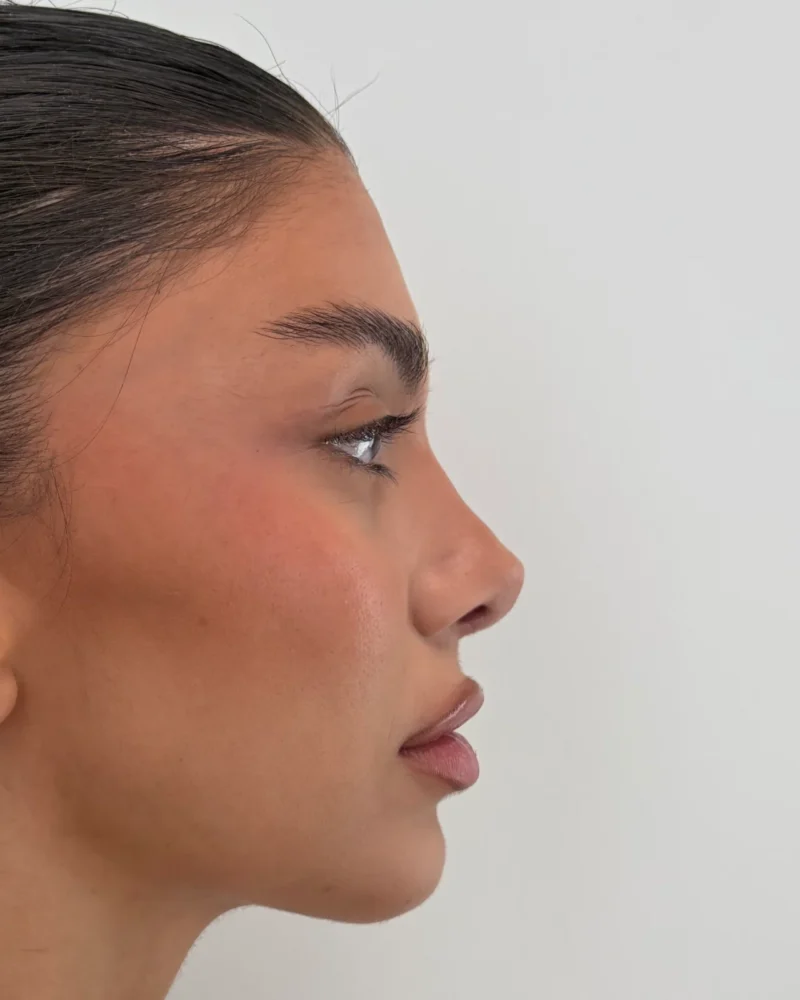
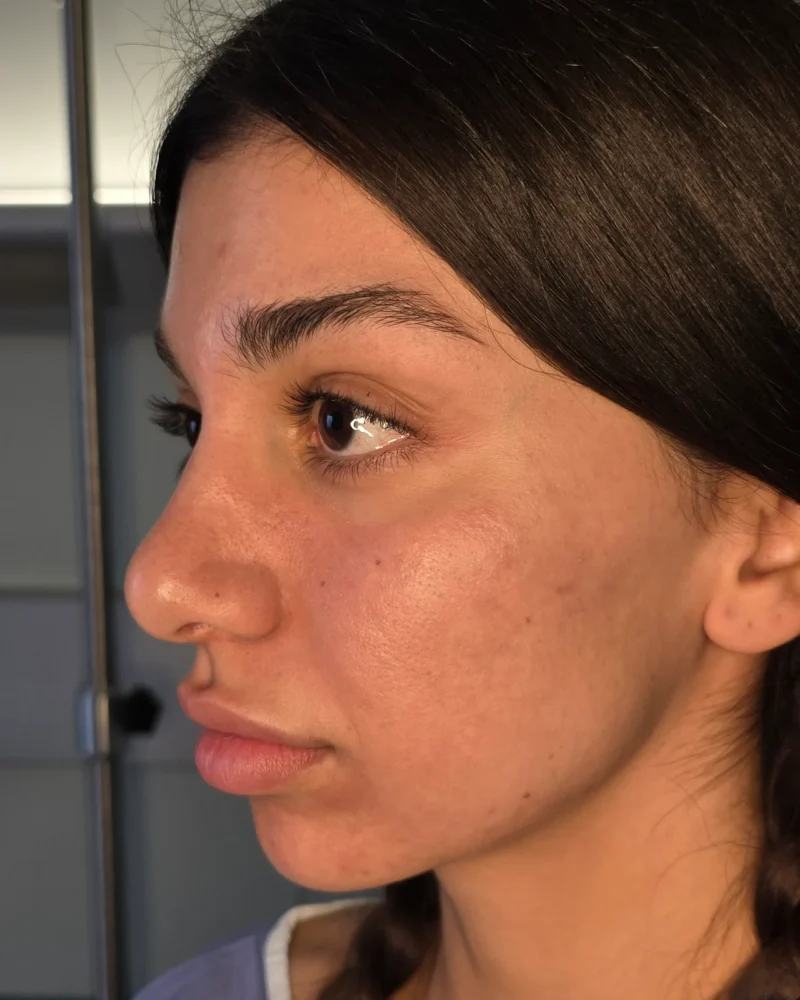
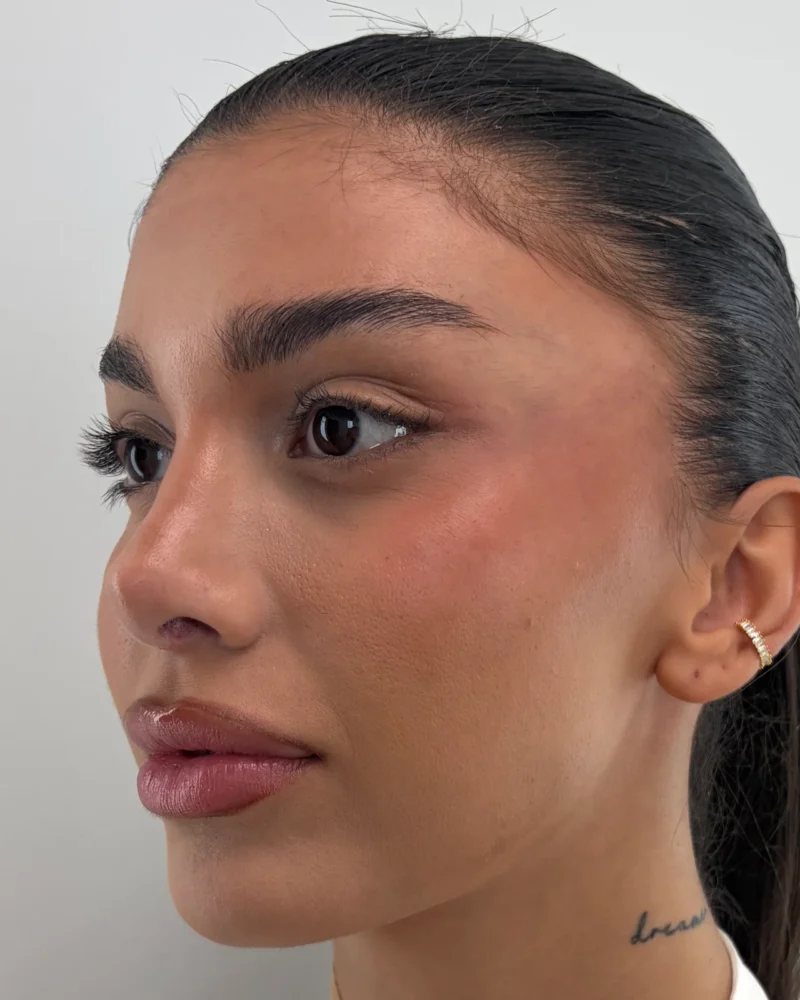
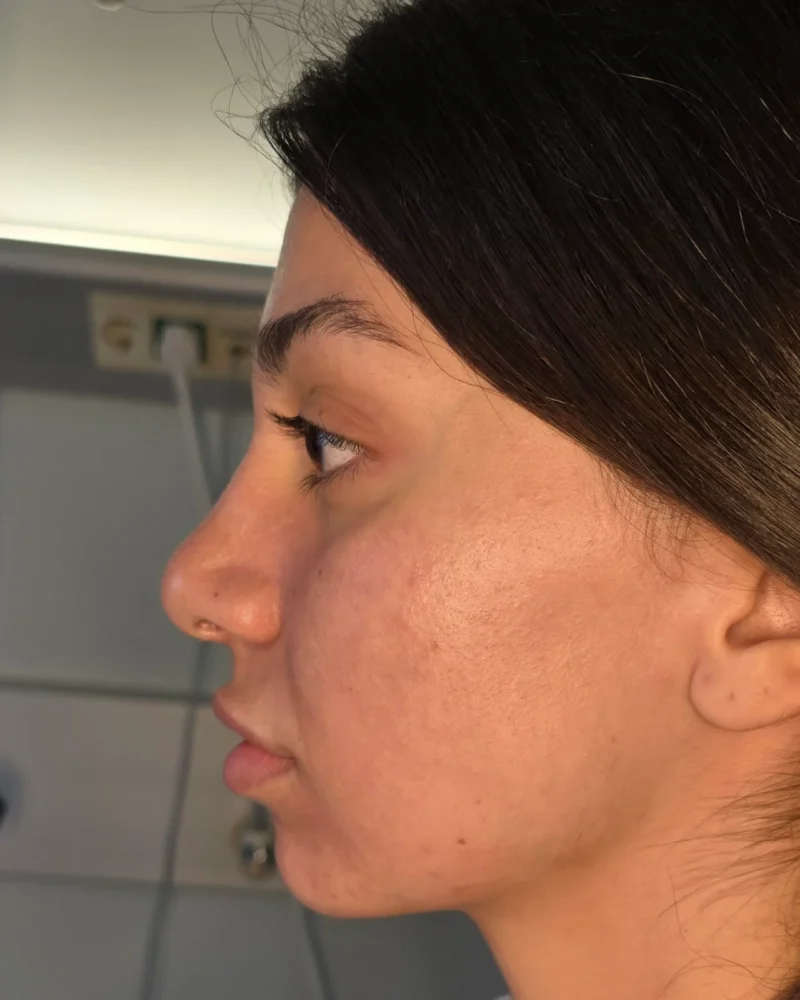
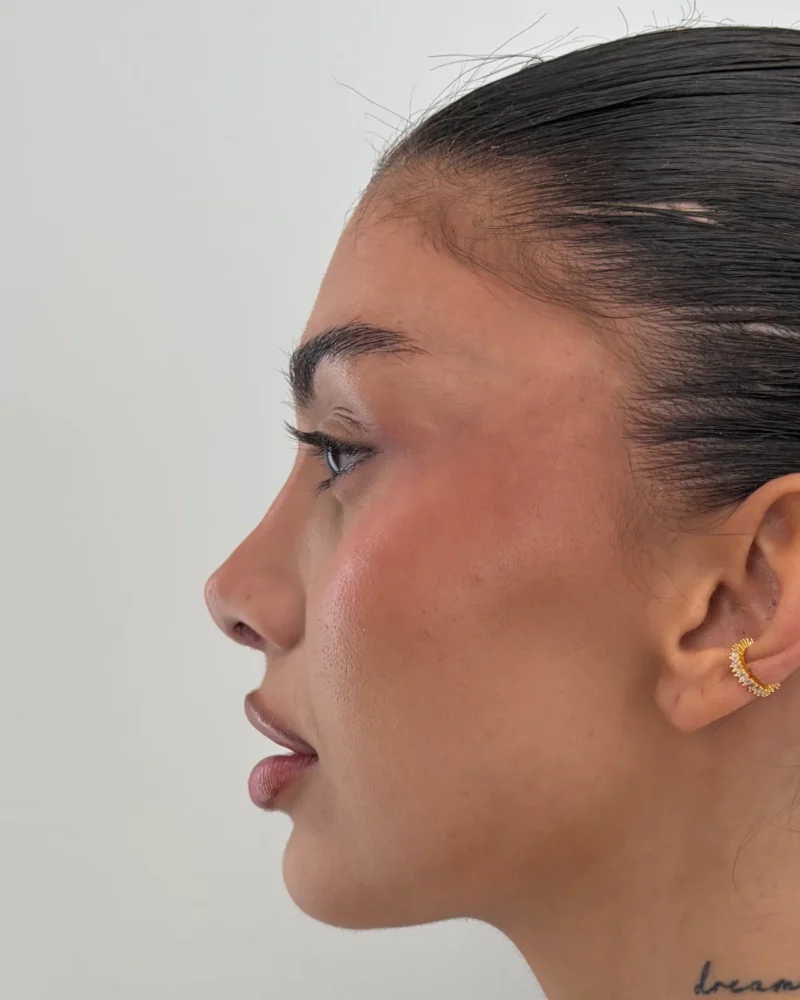
Woman, 18–25 · Rhinoplasty · 2 years after · Surgeon: Dr Prodromos Papaioannou
Front
Results vary from patient to patient.
How much the nose changes is an individual decision. For some people success means the character of the face does not change at all: friends say you look better without being able to tell what changed. For others, success is a radical change of the nose, which is equally valid. However much we change the nose, following the basic principles of aesthetics, the aim is for it to sit in harmony with the rest of the face.
On the functional side, breathing through the nose usually improves a lot and the blocked feeling goes. People who had serious breathing difficulty often notice a big improvement in sport and sleep, and those who snored also see an improvement. The face keeps changing with age, and the nose with it.
What are the risks of rhinoplasty?
Rhinoplasty is a common operation and serious complications are rare. Swelling is expected and temporary. Occasionally a small functional or cosmetic imperfection remains, which can usually be corrected with a minor procedure under local anaesthesia. I explain the risks that apply to your own case at the consultation.
| Complication | How common | Prevention and management |
|---|---|---|
| Swelling and bruising | Common, temporary; bruising is slight or absent | Head raised in the first days, following the instructions; tip swelling settles in 6–12 months |
| Small cosmetic or functional imperfection | Rare | Usually corrected with a minor procedure under local anaesthesia (touch-up), after 12 months |
| Asymmetry | Rare | Detailed planning and support with grafts; correction with a touch-up |
| Difficulty breathing | Rare | Correction of the septum, turbinates and valve in the same operation; check-up after surgery |
| Bleeding | Rare | Review of medicines that affect clotting; no alcohol in the first week |
| Numbness of the tip | Rare | Usually temporary, recovers over months |
| Infection | Rare, mainly with rib grafts | Antibiotics; following the cleaning instructions |
| Visible irregularities of the bridge in thin skin | Rare | Covering the bridge with a temporal fascia graft [8] |
| Columella scar (open technique) | Rarely visible | W-shaped incision that becomes hard to see within a few months |
Smoking. Stop for at least 4 weeks before and 4 weeks after surgery. Smoking affects healing, especially the skin of the columella after open rhinoplasty.
Blood thinners. Tell me if you take anticoagulants or antiplatelet medicines. They are only ever stopped in agreement with the doctor who prescribes them.
How much does rhinoplasty cost?
We do not publish prices. The cost of rhinoplasty depends on the technique, whether it is a primary or revision operation, whether rib cartilage is needed and the type of anaesthesia. The quote is binding, with no hidden costs, and you receive it after the consultation, once your treatment plan is clear.
- The technique: open structural, preservation or closed.
- Primary or revision rhinoplasty.
- Graft harvesting, especially rib cartilage.
- Functional corrections: septum, turbinates, nasal valve, uvula.
- The anaesthesia: general or local.
- Combination with another facial procedure.
Rhinoplasty: frequently asked questions
Is rhinoplasty painful?
Pain after rhinoplasty is mild, and an ordinary painkiller is usually enough. The reputation for severe pain comes mostly from nasal packing, which is uncomfortable, especially when it is pulled out. I do not pack the nose. Instead I use soft silicone sheets with built-in tubes that let air through, so you can breathe through your nose, although less freely in the first days. The main discomfort is that for about a week breathing through the nose is not normal, until the splint and silicone sheets are removed.
How long does swelling last after a nose job?
Most of the swelling goes in the first month, but swelling in the tip takes 6 to 12 months. For the first 10 days there is marked swelling of the face, around the eyes and cheeks. Up to about 6 weeks it sits mainly in the nose, which looks a little larger. By one month 60 to 70% of the swelling has gone. After that, healing is slower: the swelling stays in the tip and, as it settles, the details of the final result appear. Timings vary quite a lot from person to person.
Will rhinoplasty leave a scar?
Closed rhinoplasty leaves no external scar, because all the incisions are inside the nose. With open rhinoplasty the only visible scar is on the underside of the nose, across the columella between the nostrils. The incision is W-shaped and designed to become hard to see within a few months. Smoking can affect healing of the columella skin, which is why I ask you to stop for at least 4 weeks before and 4 weeks after surgery.
Open vs closed rhinoplasty: which is better?
Neither is better in every case; the choice depends on what needs correcting. Closed rhinoplasty leaves no external scar, but the scope for changing the tip is more limited. Open rhinoplasty gives me a full view and control of the tip and its support with grafts, and leaves a small scar on the columella that becomes hard to see within a few months. That is why I perform most rhinoplasties open. At the consultation I explain which approach suits your nose.
How old do you have to be to have rhinoplasty?
Rhinoplasty can be done once the nasal bones and septum have finished growing, usually at 16 for girls and 18 for boys. The operation works on the bone and cartilage framework of the nose, so it is not done before growth has settled. Under 18, parental consent is always required, and at the consultation we talk with the teenager and the parents about exactly what bothers them and what can realistically change.
Crooked nose and breathing problems: should I see a plastic surgeon or an ENT surgeon?
Ideally, the surgeon who performs your rhinoplasty should be able to correct both the cosmetic and the functional problem; it is a matter of training. Rhinoplasty is always combined with correction of the septum and turbinates when needed: the breathing problem is corrected first, then the hump and the other cosmetic concerns. It is better to do both in one operation by the same surgeon, because septal cartilage is often used as a graft to improve the shape of the nose.
When can I wear glasses and exercise after rhinoplasty?
Glasses after 2 months, light exercise after 1 month and strenuous exercise after 3 to 6 months. These rules protect the bony framework, which is still sensitive, help breathing recover and reduce swelling. For the first 2 months take particular care to avoid knocks and do not blow your nose. Clean the nose with saline rinses 3 to 4 times a day. In some cases tape on the bridge of the nose (taping) is also needed to support healing.
How soon can I have revision rhinoplasty?
Revision rhinoplasty can usually be done safely 12 months after the previous operation, and in some cases after 6 months. First we analyse in detail what bothers you cosmetically and functionally, and what can be corrected. It is more demanding than a first operation, because there is scar tissue and the anatomy has changed. Cartilage grafts are almost always needed, from the septum if it has not been operated on, otherwise from a rib, and the operation can take 3 to 4 hours.
When can I fly home after rhinoplasty?
You can fly home after the day-7 appointment. Rhinoplasty needs no overnight hospital stay, and the splint, the silicone sheets inside the nose and the columella stitches come out on day 7, so most of the stay is built around that appointment. There is no limit on flight length. Once home, keep up saline rinses 3 to 4 times a day, avoid glasses and nose blowing for 2 months, and protect the nose from knocks.
Can my follow-up be done at home?
After you return home, follow-up is by video call at 10 days, 1 month, 6 months and 1 year, with photos you send me. The appointment that has to be in person is on day 7, when the splint, silicone sheets and columella stitches are removed. After that, recovery follows a predictable course: return to work at about 10 days, light exercise after 1 month, glasses after 2 months, and the final result at 6 to 12 months.
References
- Toriumi DM. Structure approach in rhinoplasty. Facial Plast Surg Clin North Am. 2005;13(1):93–113. doi:10.1016/j.fsc.2004.07.004
- Sheen JH. Spreader graft: a method of reconstructing the roof of the middle nasal vault following rhinoplasty. Plast Reconstr Surg. 1984;73(2):230–239.
- Saban Y, Daniel RK, Polselli R, et al. Dorsal preservation: the push down technique reassessed. Aesthet Surg J. 2018;38(2):117–131. doi:10.1093/asj/sjx180
- Daniel RK. The preservation rhinoplasty: a new rhinoplasty revolution. Aesthet Surg J. 2018;38(2):228–229. doi:10.1093/asj/sjx258
- Constantian MB. Four common anatomic variants that predispose to unfavorable rhinoplasty results: a study based on 150 consecutive secondary rhinoplasties. Plast Reconstr Surg. 2000;105(1):316-31; discussion 332-3. PMID: 10627002.
- Gubisch W. Twenty-five years experience with extracorporeal septoplasty. Facial Plast Surg. 2006;22(4):230–239. doi:10.1055/s-2006-954841
- Rohrich RJ, Savetsky IL, Avashia YJ. Why primary rhinoplasty fails. Plast Reconstr Surg. 2021;148(5):1021-7. doi:10.1097/PRS.0000000000008494.
- Barone M, Cogliandro A, Salzillo R, et al. The role of skin thickness in the choice of a rhinoplasty technique for thin-skinned patients: analysis of long-term results and patient satisfaction. Aesthetic Plast Surg. 2020;44:1742–1750. doi:10.1007/s00266-020-01763-6
Consultation
In Thessaloniki, in Athens or by video. Examination, options and a written plan.