


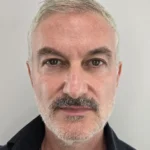
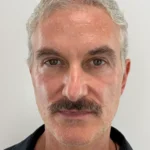
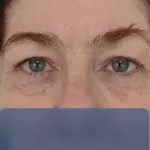
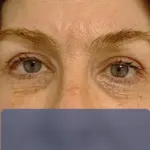






























Face · Rejuvenation
Deep plane facelift in Thessaloniki and Athens, Greece
I perform 50 to 70 deep plane facelifts a year and have been a specialist plastic surgeon since 2012. I have worked through the SMAS techniques on the way to the deep plane, which I now use almost exclusively, with a focus on facial proportions, the vector of the lift and the position of the scars.
A deep plane facelift repositions skin, fat and the SMAS together, after the retaining ligaments that hold them down have been released. It corrects laxity along the jawline, in the midface and in the neck, and the skin is closed without tension. It is for men and women with moderate to marked laxity.
50–70
deep plane facelifts a year

At a glance
What it treats
Laxity of the jawline, midface and neck
Anaesthesia
General (local anaesthesia with sedation is possible, but I do not recommend it)
Operating time
3–5 hours; longer when combined with deep neck surgery or a temporal lift
Hospital stay
Same day; one night for patients travelling from further away
Back to work
About 3 weeks; 10 days of full downtime
Exercise
After 1 month
Final result
6–12 months
Where
Interbalkan Medical Center, Thessaloniki · Athens Medical Center, Marousi (Athens)
Medically reviewed by Dr Prodromos Papaioannou, Plastic Surgeon, HESPRAS member, ASPS International Member · Last reviewed:
What is a deep plane facelift?
A deep plane facelift works beneath the SMAS, the fibromuscular layer that lies under the skin and fat. The retaining ligaments are released, so the midface, the jawline and the neck are lifted as a single unit instead of by pulling on the skin. Hamra first described the technique in 1990 [1].
The deeper the tissues are mobilised, the more stable the result; a superficial lift does not last as long. The deep plane technique rests on a detailed understanding of the facial retaining ligaments [6, 7].
| Technique | What is lifted | Ligaments | Tension on the skin |
|---|---|---|---|
| Skin only (traditional facelift) | Skin | Not released | High |
| SMAS plication | Skin, with a fold of the SMAS | Not released | Moderate |
| High / vertical SMAS | Skin and SMAS separately | Partly | Moderate |
| Deep plane | Skin, fat and SMAS as one | Yes | Low |
In my practice
I have performed SMAS plication, vertical SMAS and high SMAS facelifts, and settled on the deep plane. In my experience, releasing the ligaments gives a natural, long-lasting result. Recovery also seems gentler, probably because the lift takes place in the deeper layers. Today I perform the deep plane technique almost exclusively.
The deep plane facelift treats the midface (down to the corners of the mouth) and the lower face (jawline and neck). The forehead and eyes have their own procedures: a forehead lift and blepharoplasty (eyelid surgery). For isolated concerns there are also the neck lift and the midface lift.
Am I a good candidate for a deep plane facelift?

A deep plane facelift suits men and women with moderate to marked laxity of the face and neck, usually after the age of 40. Whether it is right for you depends on your anatomy, the quality of your tissues and your general health, not on your age alone.
Who is a typical candidate?
- Laxity along the jawline and in the cheeks.
- Deep nasolabial folds and marionette lines at the corners of the mouth.
- Loose skin, fat and bands in the neck, or a “double chin”.
- People with a naturally heavy lower face (“bottom-heavy” face), who can benefit at a younger age, even before 40.
- Good general health and a stable weight.
When do I not recommend it?
- Severely aged or damaged skin. A facelift repositions tissue; it does not renew the quality of the skin, the connective tissue or the ligaments. I prefer to say this clearly.
- Heavy smoking (around a pack a day). It does not rule surgery out, but I may adjust the plan slightly to protect the skin; 5–10 cigarettes a day is usually fine. See “What are the risks of a deep plane facelift?”.
- Mild laxity, where a smaller operation such as a mini facelift is enough.
- Expectations a facelift cannot meet, such as changing your features or the quality of your skin.
The forehead and eyes are treated with an endoscopic forehead lift or blepharoplasty, often in the same operation.
How do I prepare for a deep plane facelift?
Preparation starts at the consultation, where we look at your face as a whole and agree a plan. Before surgery you will need blood tests and, depending on your age and medical history, a cardiac check. If you smoke, nicotine stops about a week before and a week after the operation.
What happens at the consultation?
Each face needs a holistic assessment, so that the overall result looks natural and youthful without looking overdone. A deep plane facelift reverses a large and important part of facial ageing, but it is sometimes better combined with other procedures, so that the whole face looks the same age and the upper and lower face stay in proportion. We discuss this together at the consultation.
What tests and instructions apply before surgery?
You will need pre-operative blood tests and, where needed, a cardiac assessment, depending on your age and history. If you smoke, I recommend stopping, or switching to nicotine-free vaping, for about a week before and a week after surgery. If you take blood thinners, the plan is always agreed with the doctor who prescribed them (see “What are the risks of a deep plane facelift?”). The date of surgery is set once the tests are complete.
How do I choose a deep plane facelift surgeon?
The deep plane technique has a demanding learning curve, because the ligaments are released close to the branches of the facial nerve, and it needs specific training. Volume and specialisation in the technique matter. Questions worth asking any surgeon:
- Which technique do you use, and do you release the ligaments?
- How many deep plane facelifts do you perform a year?
- Can I see cases at least one year after surgery?
- Where is the operation done, and who gives the anaesthetic?
- Who follows me up after surgery, and how?
50–70
deep plane facelifts a year
I perform 50–70 deep plane facelifts a year. Since the early learning phase of the technique, my work has moved on to the aesthetics of the result: proportions, the direction of the lift and the position of the scars.
How is a deep plane facelift performed?
A deep plane facelift is done under general anaesthesia (anesthesia) and takes 3 to 5 hours. Through incisions around the ear I release the main facial ligaments and lift skin, fat and SMAS as one unit, almost vertically, against gravity. The skin is closed without tension, using absorbable stitches.
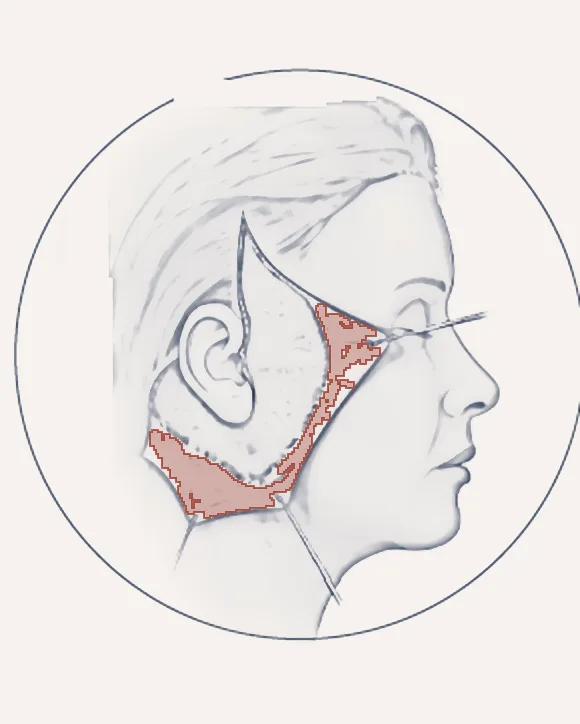
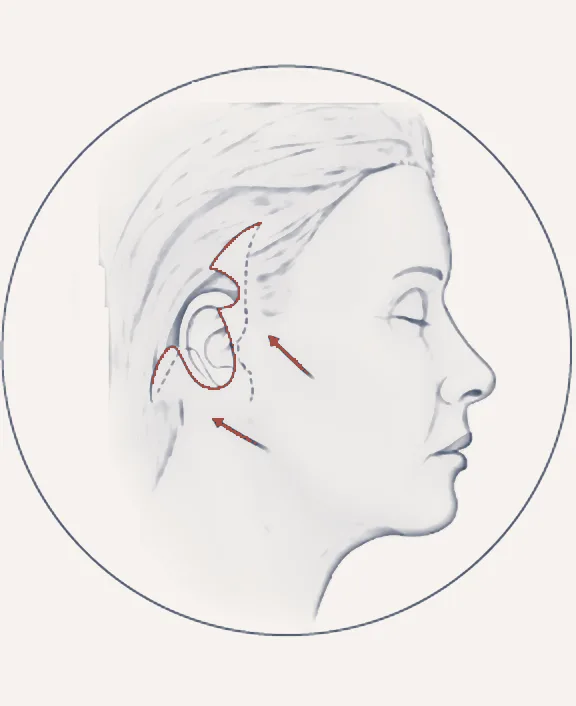
The operation can also be done under local anaesthesia with sedation, but I do not recommend it: general anaesthesia allows precise surgery in a still field and keeps blood pressure under control. The operation takes longer when it is combined with deep neck surgery, a temporal lift or other procedures. The way the tissues are lifted differs fundamentally from other facelift techniques, mainly because of the depth at which they are mobilised and the vector of the lift.
Releasing the ligaments and the vector of the lift
The key step for an effective lift is releasing the five main facial ligaments, the connective tissue that holds the skin and soft tissues in place [6, 7]. Once released, the tissues are secured in their new position to strong structures such as the temporal and parotid fascia and the mastoid process.
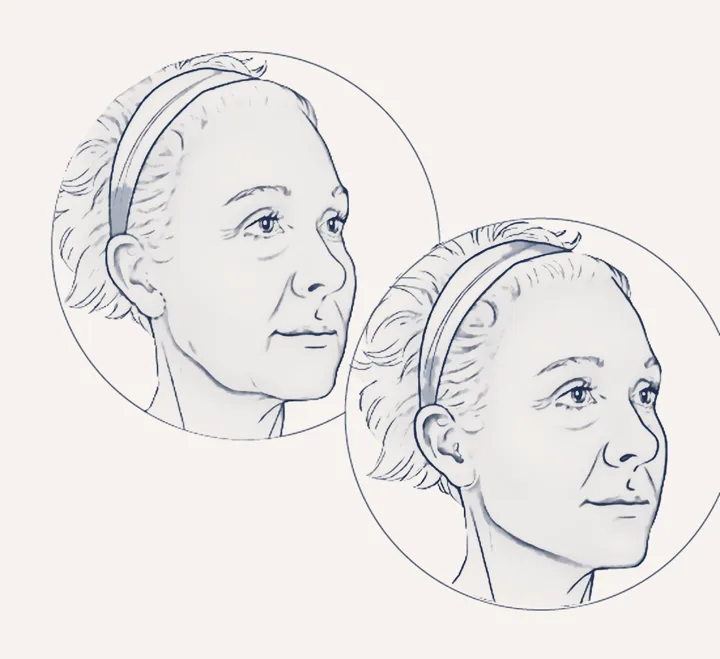
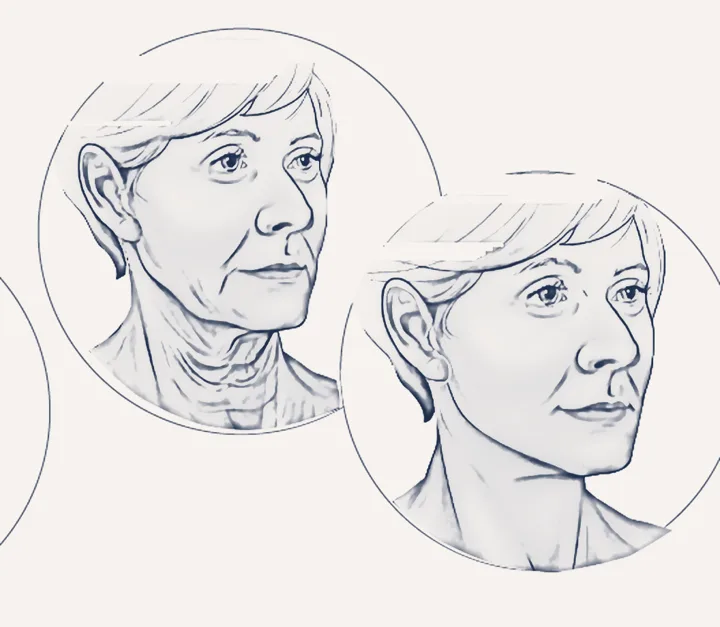
The lift follows a vector of 60–70 degrees. In other words, the tissues are lifted almost vertically, directly against gravity, which is more effective and looks more natural than a sideways pull. Another advantage is that skin undermining on the face is limited, usually to 2–3 centimetres, which leaves little dead space for bruising and reduces healing problems. Where needed, the tissues can also be folded to add volume to the cheeks.
The neck: face and neck lifted as one
The dissection in the deep plane starts at about the corner of the eye and continues without a break down to the neck, beneath the mobile part of the SMAS and the platysma, the most superficial muscle of the neck. The face and neck are therefore lifted as one unit, which is far stronger and more effective.
Sometimes, as well as the lift backwards, the centre of the neck needs to be approached through a small incision under the chin, for a “hammock” fixation of the platysma that better corrects the “double chin” under the jaw. When needed, the deeper structures of the neck are also corrected (deep neck surgery), and the result can be refined with neck liposuction. If your concern is mainly the neck, see the neck lift page.
Incisions and stitches
To hide most of the scarring, the incisions are placed around the ear, in natural creases and within the hair. Depending on how much excess skin there is, the incision may start in front of the sideburn, run down beneath it and continue behind the tragus in women, or in front of the tragus in men so that the beard line does not shift. It then passes under the earlobe, rises behind the ear and runs down towards the hairline.
The hairline and the position of the hair do not change, and the shape of the ear is not affected. The skin is closed without tension, so that the scar does not widen or distort the area around the ear. I close with continuous, intradermal, absorbable stitches, so there are no stitches to remove.
Haemostatic net and drains
At the end of the operation I place a haemostatic net in every patient and remove it on day 1. Together with a medication that reduces bleeding, it reduces bruising and swelling, and most patients do not need drains. I use drains in men and in patients who take blood thinners.
Combined procedures
When a deep plane facelift is combined with a lift of the upper third of the face (the forehead, brows and eyes), we call it a “total facelift”. Common combinations in the same operation:
- deep neck surgery (the deeper structures of the neck) and a temporal lift;
- an endoscopic forehead and brow lift, and blepharoplasty;
- a lip lift (lifting the upper lip);
- fat transfer and nanofat;
- changes to the shape of the face, such as rhinoplasty or a silicone chin implant;
- laser or fractional RF skin treatment for the fine lines around the mouth.
Each combination adds to the length of the operation and of the anaesthetic.
Hospital stay
Patients who live locally usually go home the same day. Patients travelling from further away stay one night in the hospital. Surgery takes place at Interbalkan Medical Center in Thessaloniki or at Athens Medical Center in Marousi, Athens.
How long is recovery after a deep plane facelift?
Allow 10 days of full downtime and about 3 weeks before you can be seen socially without visible signs of surgery. Pain is mild, with a feeling of pressure in the neck for 2 to 3 weeks. The final result settles over 6 to 12 months.
Recovery has three stages. In the first 3 weeks the swelling and bruising settle. At 6–8 weeks there is a firmer swelling in the cheeks and under the jaw, which softens without visible distortion. At 6–12 months the final result is in place.
- DowntimeDay 1I remove the haemostatic netVisit at the practice
- Day 5Check that all is going wellVisit at the practice
- Day 10Walking, light activitiesVideo call
Patients from abroad: 5–10 days in Greece (minimum 5)
- SocialWeek 3Back to work and social life
- Firm swellingMonth 1ExerciseVideo call
- Weeks 6–8The firm swelling softens
- RemodellingMonths 3–6Numbness fades, scars lightenVideo call at 6 months
- Final resultMonths 6–12Scars matureVideo call at 1 year
Recovery varies from person to person and is not always predictable.
| When | What you feel | What you can do |
|---|---|---|
| Day 1 | Swelling, a feeling of tightness | Check-up; I remove the haemostatic net |
| Days 1–10 | Swelling, bruising, tightness in the neck; mild pain, controlled with simple painkillers | Rest at home with your head raised; the stitches dissolve |
| From day 10 | Fluid gradually settles | Walking and light activities; make-up to cover any marks if needed |
| Weeks 2–3 | Swelling goes down; numbness in the cheeks and ears, pressure in the neck | Gradually more activity |
| Week 3 | Socially presentable | Back to work and social life |
| Month 1 | Some residual swelling | Exercise |
| Weeks 6–8 | The firm swelling in the cheeks and under the jaw softens | Normal activity |
| Months 3–6 | Remodelling: numbness fades, scars lighten | Normal activity |
| Months 6–12 | Tissues soften, scars mature | Final result |
Follow-up visits
I see you on day 1 and remove the haemostatic net. On day 5 we check that everything is going well. Follow-up then continues by video call at 10 days, 1 month, 6 months and 1 year, and I do every check myself.
Recovery and the appearance of the scars vary from person to person and are not always predictable.
How long do I need to stay in Greece after a deep plane facelift?
Plan to stay in Greece for 5 to 10 days after a deep plane facelift; the minimum is 5 days. Patients travelling from abroad spend the first night in the hospital, and the stitches are absorbable, so there is nothing to remove before you fly home.
A typical stay looks like this:
- Night of surgery: one night in the hospital.
- Day 1: check-up and removal of the haemostatic net.
- Day 5: check-up; this is the minimum before you leave.
- Flying home: from day 5, after your final check the day before the flight; plan 5 to 10 days in Greece in total.
Your face will look different for a while, and this can cause a problem with your passport. If you fly home before the second week, you may need a medical certificate; we issue it for you.
Once you are home, I see you by video call at 10 days, 1 month, 6 months and 1 year.
Before you travel, arrange someone to help you for the first days and, if you would like it, nursing care at home; all follow-up checks are done by me. For the first 10 days you will be resting at home with your head raised, taking simple painkillers.
What results can I expect, and how long do they last?
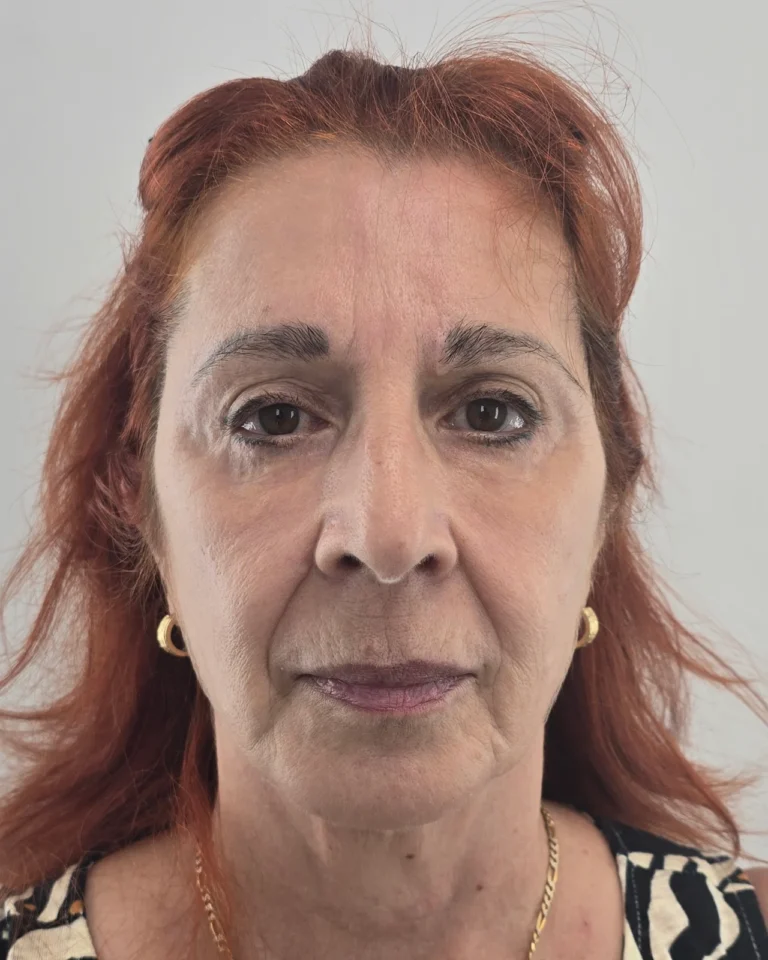
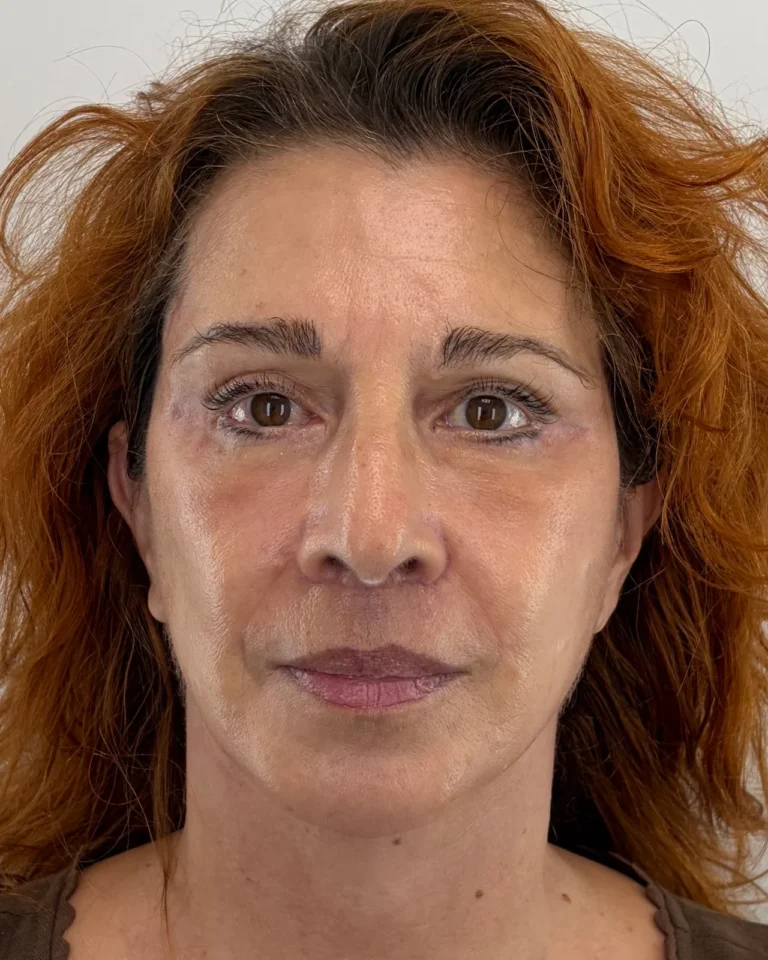
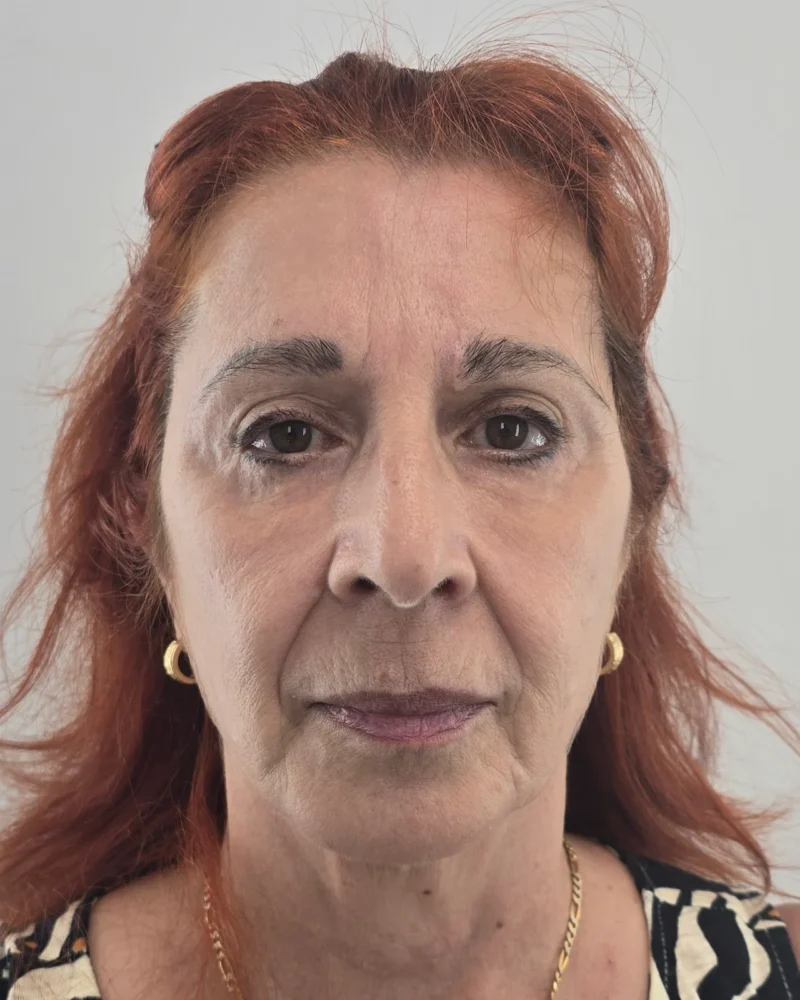
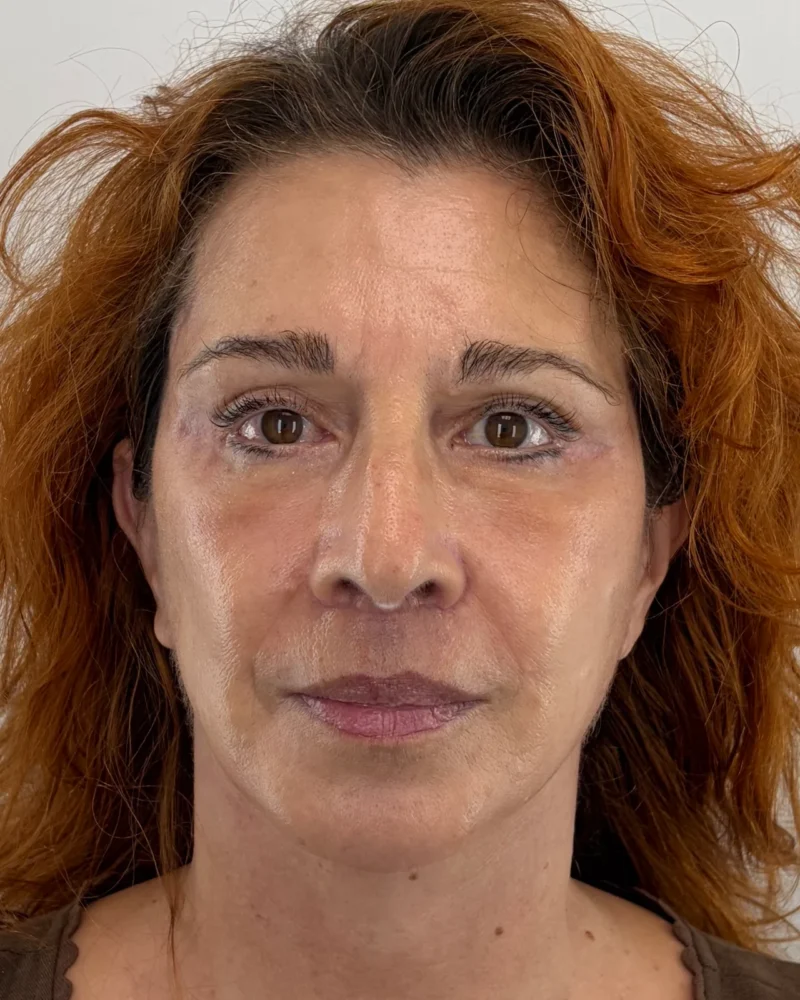
The final result shows at 6 to 12 months. Because the tissues are lifted in the deep plane rather than by tension on the skin, the face does not look pulled, and your features, expression and the position of your mouth are preserved. Normal ageing continues, but from a better starting point.
 Before
 After
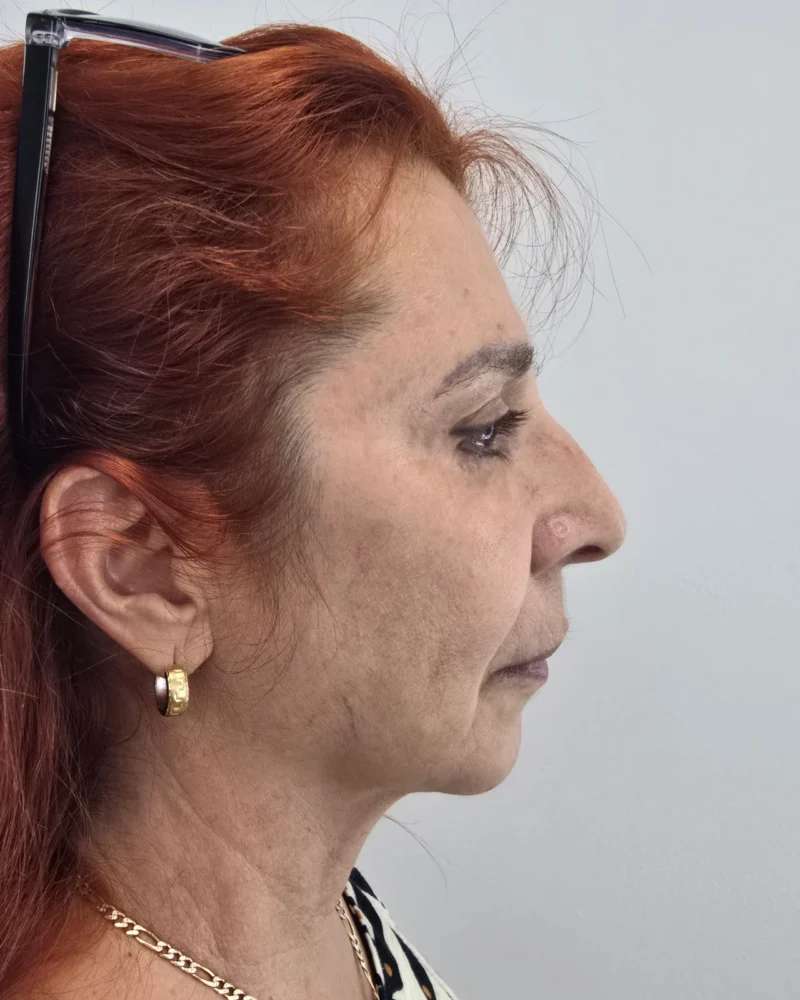 Before
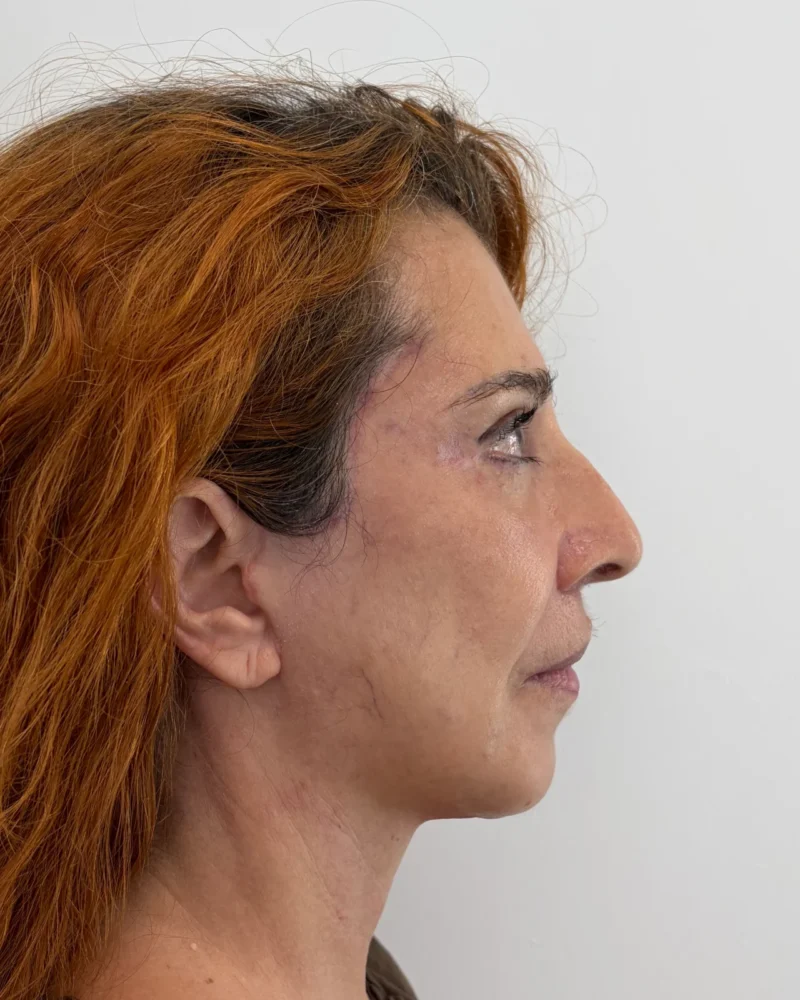 After
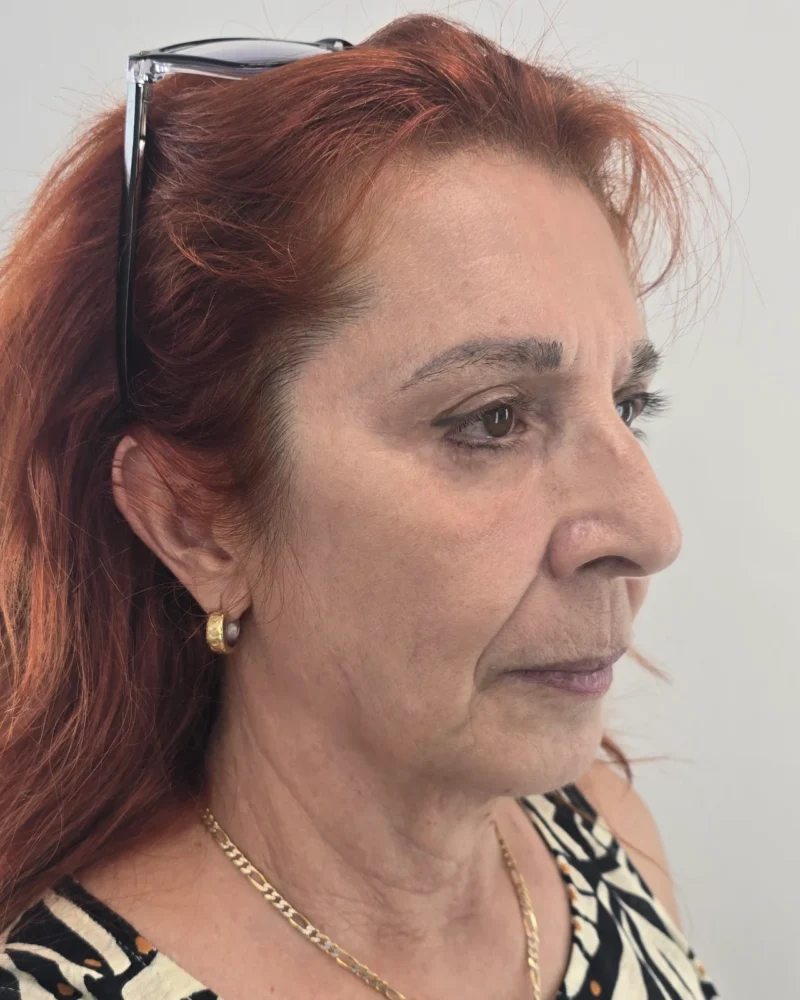 Before
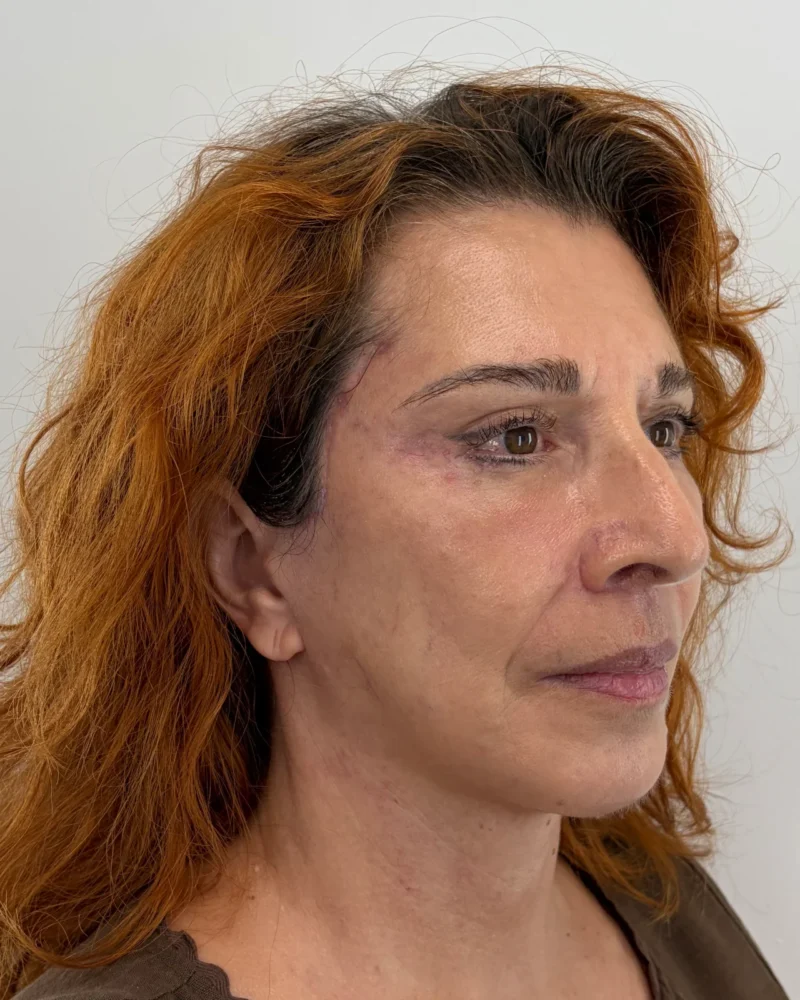 After
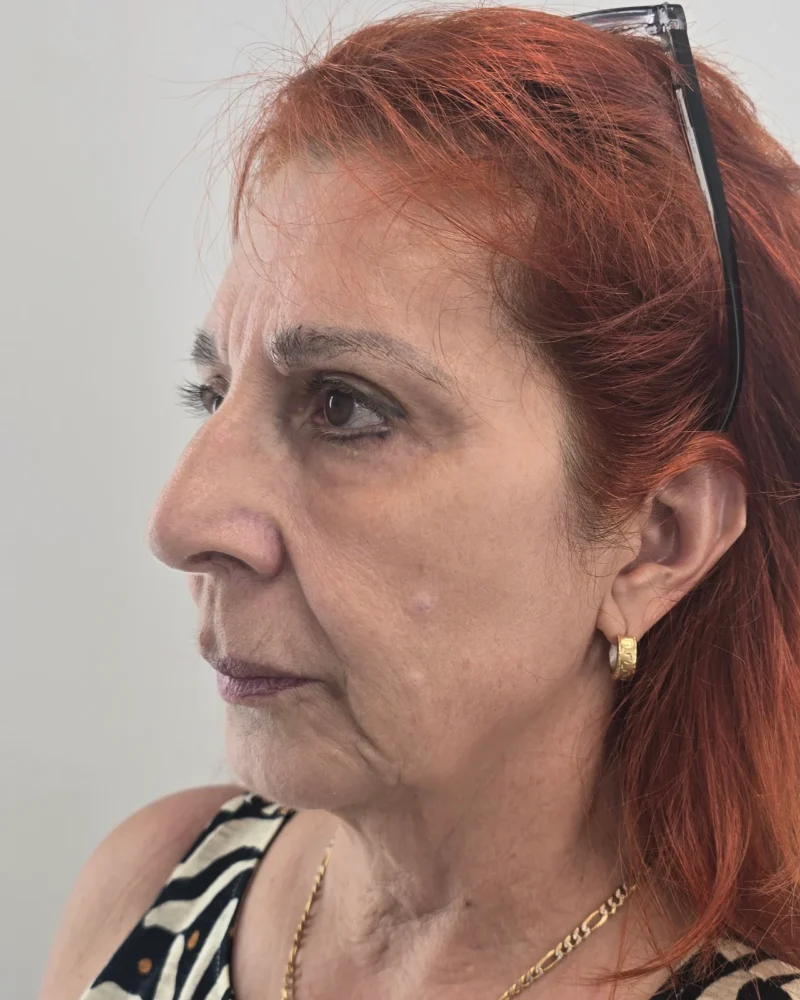 Before
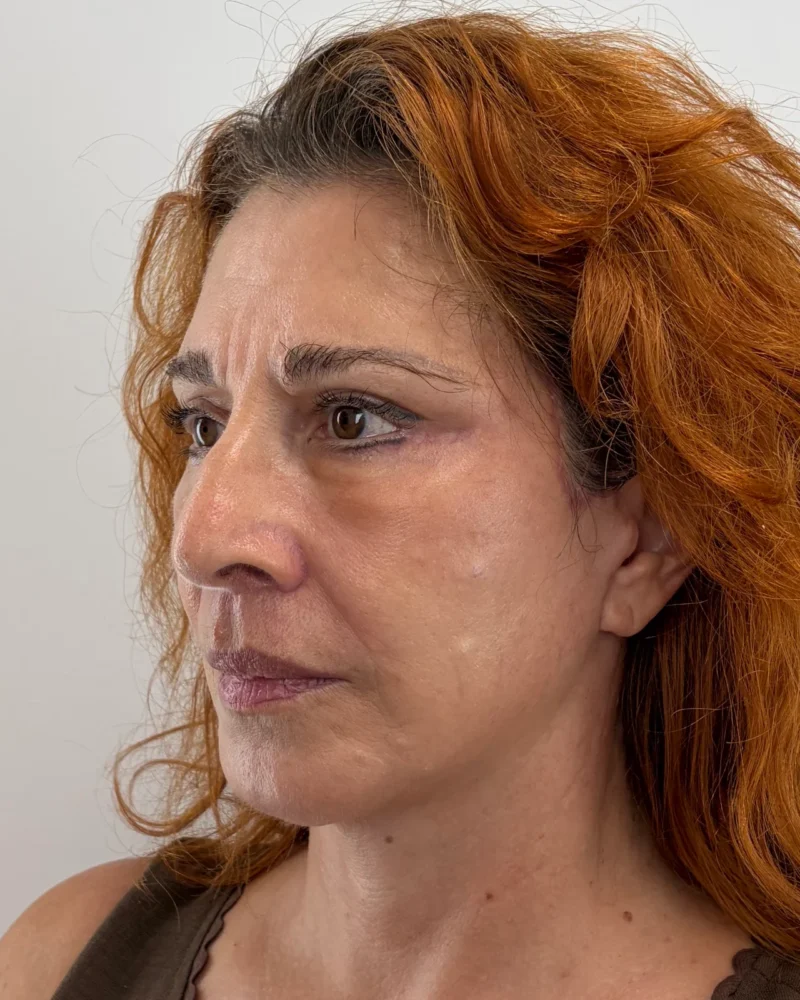 After
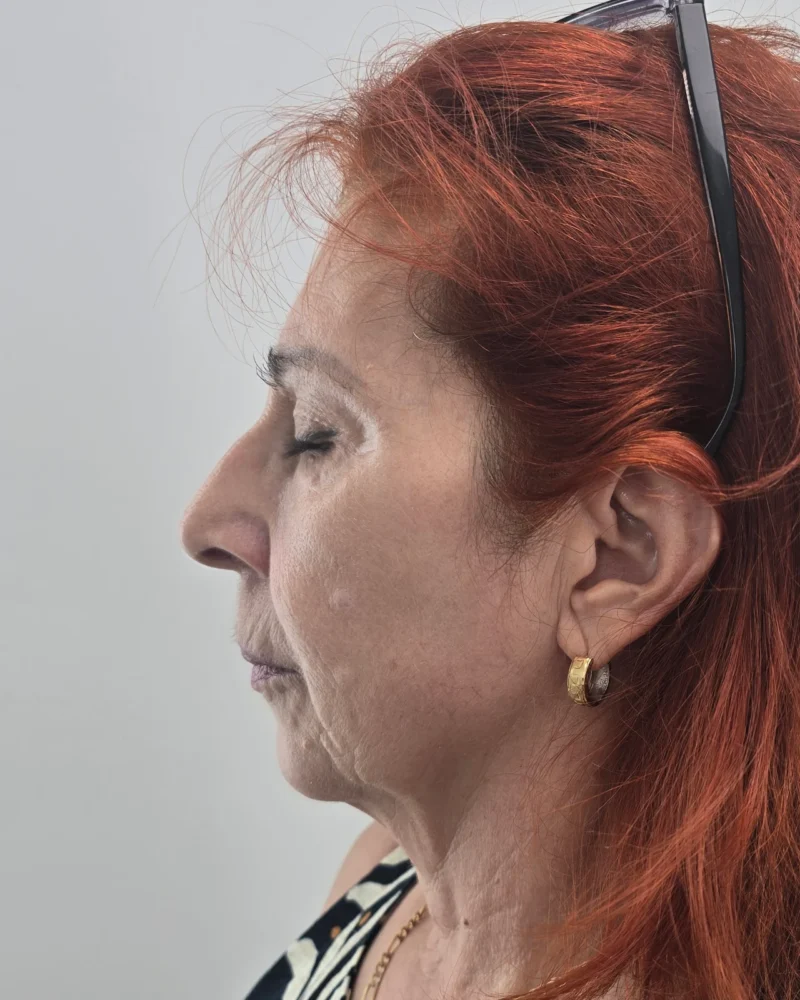 Before
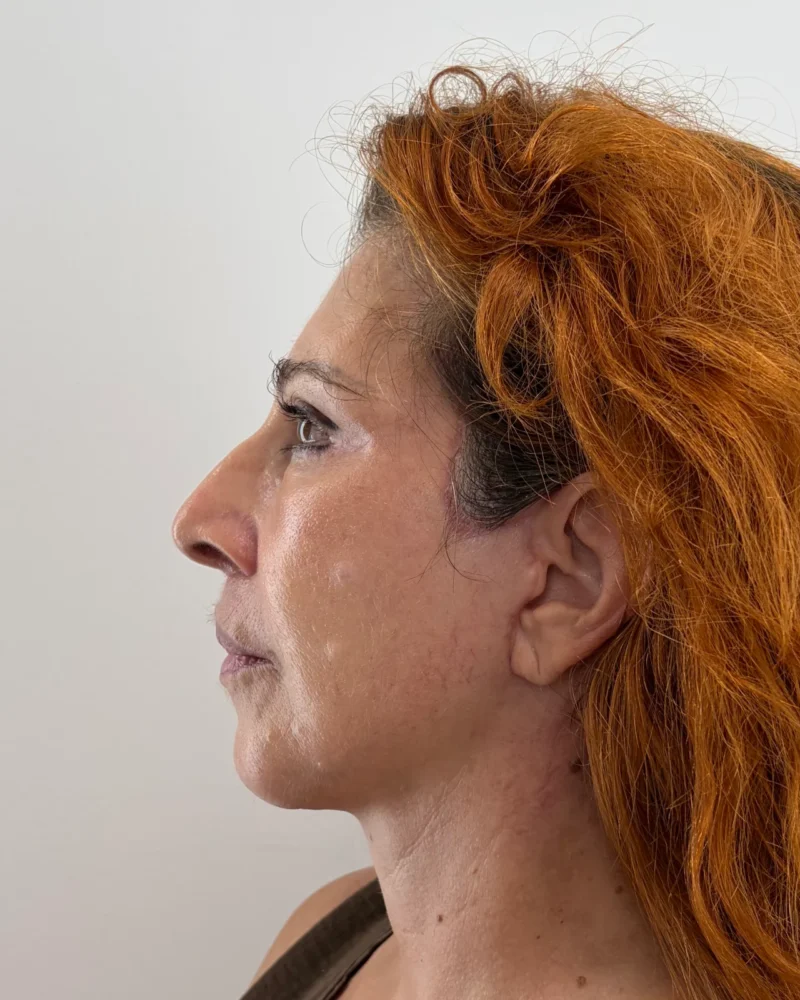 After
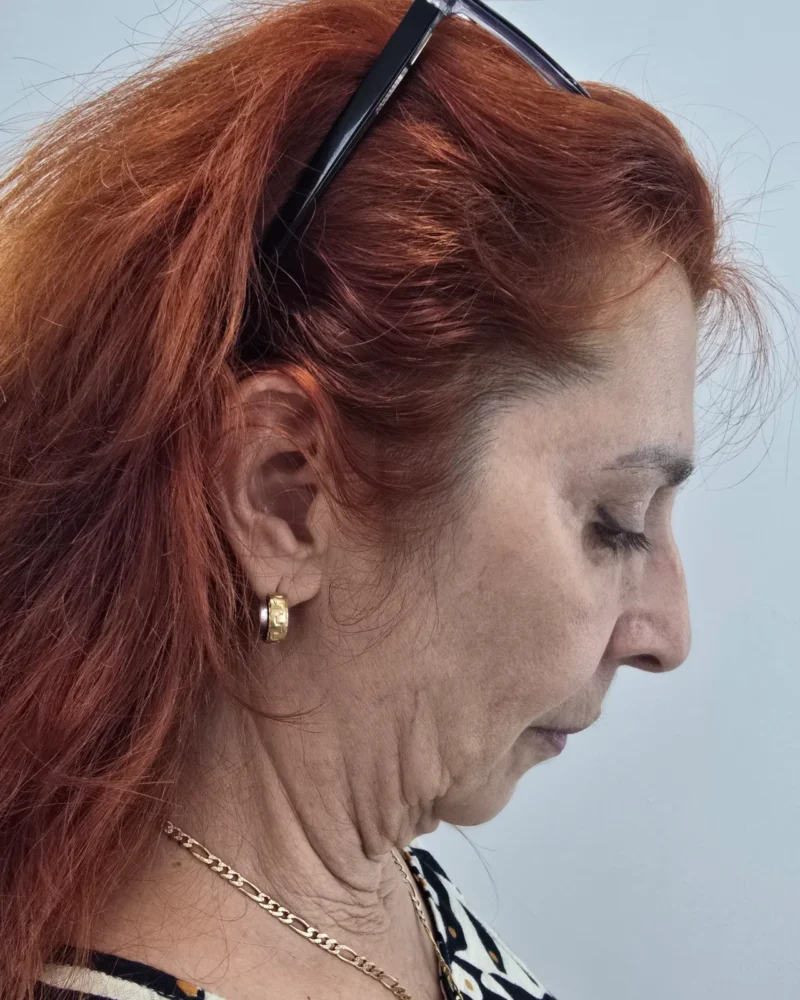 Before
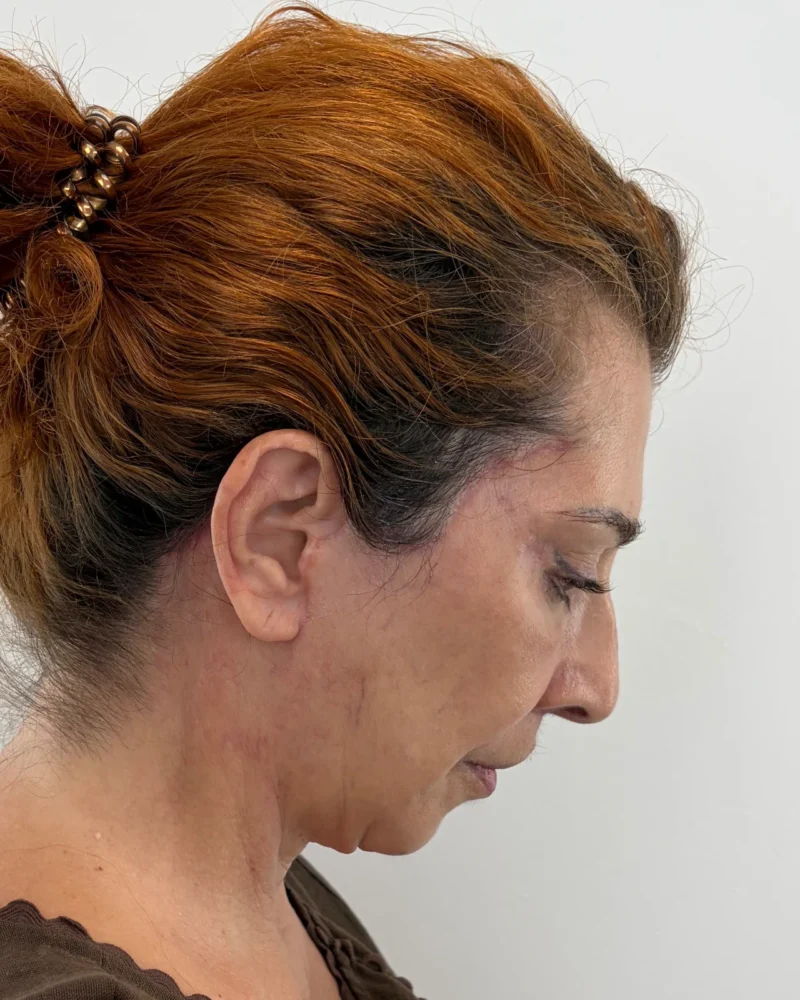 After
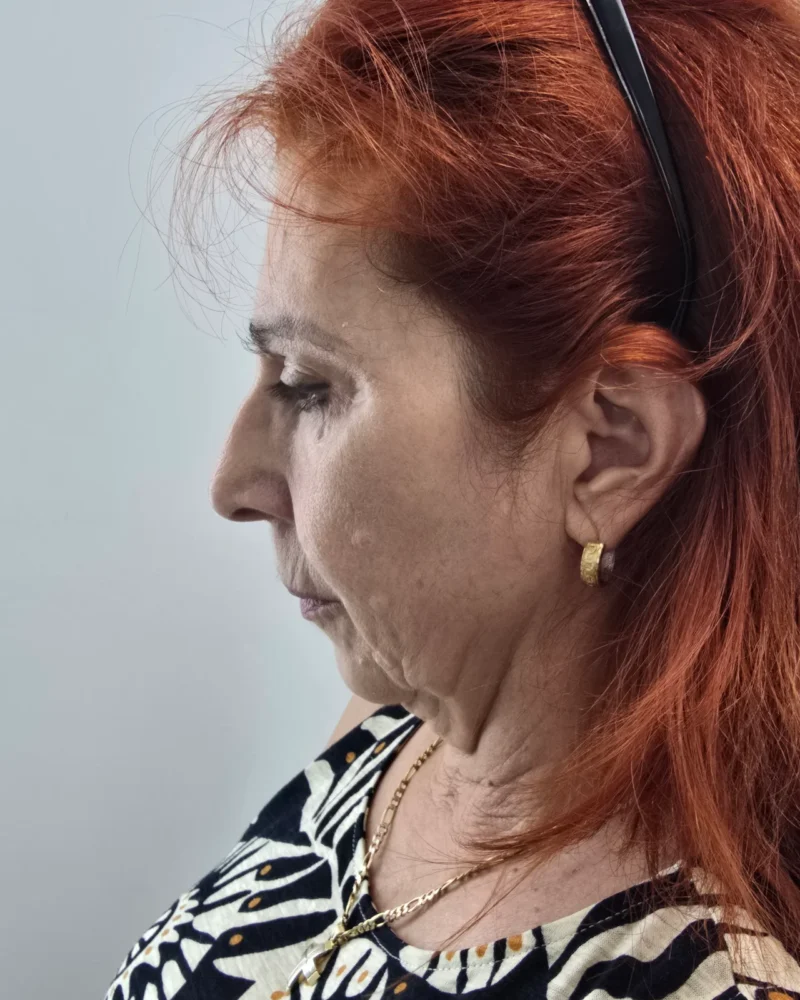 Before
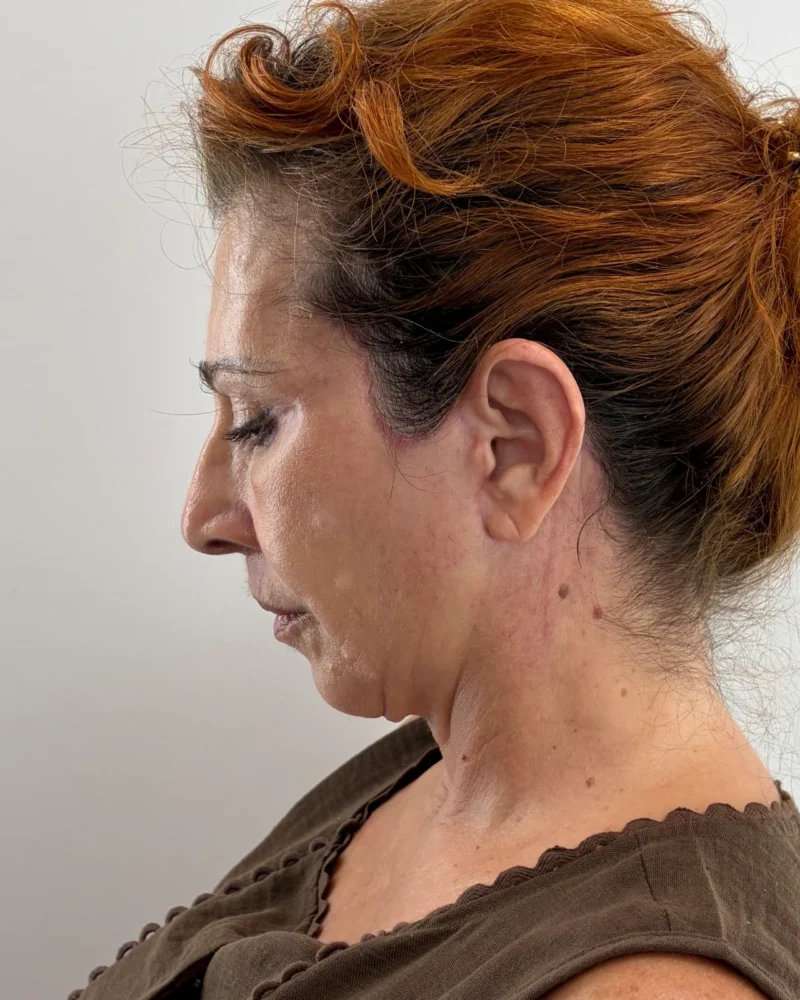 After
Deep plane facelift
Woman, 50–60 · Deep plane facelift · 3 months after · Surgeon: Dr Prodromos Papaioannou
Front
Results vary from patient to patient.
I avoid an overdone, “frozen” or overfilled look; the aim is a fresh, rested and natural face. In my experience the deep plane facelift is superior in both how natural the result looks and how long it lasts, and it is effective whatever your age or degree of laxity. Long-term studies show that most patients still look younger than before surgery 5 years or more later; the deep plane result lasts well because the ligaments are released and the tissues repositioned without tension. Keeping your weight stable is a condition for this. After 5–6 months the scars usually allow you to wear your hair pulled back without them showing. A skin treatment such as laser resurfacing enhances the result, because it removes fine surface lines.
What are the risks of a deep plane facelift?
In a meta-analysis of 41,141 patients, deep plane facelifts had a complication rate similar to simpler SMAS techniques [2]. The most common early complication is a haematoma (hematoma), which specific measures help prevent. Temporary weakness of a facial nerve branch is rare. I explain the risks for your own case at the consultation.
| Complication | How common | Prevention and treatment |
|---|---|---|
| Haematoma | The most common early complication; the literature reports 1–15% [3] | A medication that reduces bleeding, into the vein and in the local anaesthetic; a haemostatic net for every patient, a drain for men and patients on blood thinners (see below) |
| Temporary weakness of a facial nerve branch | Rare; about 0.7% with the deep plane technique, no permanent injury in the meta-analysis [2] | Recovers over weeks to months |
| Skin necrosis | Rare; much more likely in smokers | Stop nicotine, or switch to nicotine-free vaping, \~1 week before and after; hyperbaric oxygen for heavy smokers |
| Numbness | Common, temporary | Fades gradually over 3–6 months |
| Temporary change in facial muscle movement | Not rare, temporary | Resolves with no clinical consequence |
| Pressure in the neck | Common, temporary | Lasts 2–3 weeks |
| Firm swelling in the cheeks and under the jaw | Common, temporary | Softens over 6–8 weeks |
| Scars | Visible in the first months | Placed in natural creases and the hair, closed without tension; mature over 6–12 months |
How I prevent haematoma
I use a medication that reduces bleeding, given into the vein and within the local anaesthetic solution, which also contains a medicine that narrows the small blood vessels [5]. I do not lower blood pressure during surgery: this gives a false sense of safety, and when the pressure rises after you wake up it can lead to a serious haematoma. The deep plane itself bleeds little, because the deep tissues close tightly; the risk lies in the undermined skin, from the temple to the neck and especially under the ears. That is why every patient has a haemostatic net, and men and patients on blood thinners also have a drain.
Smoking. I ask you to stop nicotine (including nicotine vaping) one week before and one week after surgery. A pack a day or more counts as heavy smoking and can change the surgical plan; in that case I also suggest hyperbaric oxygen to support healing.
Blood thinners. Always in agreement with your cardiologist or the doctor who prescribed them. If they can be stopped safely one week before surgery, that is enough. If not, we switch to injectable blood thinners for at least 7–10 days and then return to your usual treatment.
How much does a deep plane facelift cost?
The cost depends on the extent of the operation, any combined procedures, the length of surgery and the hospital. I do not publish prices: you receive a quote after your consultation and examination, once we have agreed your plan. These are the factors that shape it:
- The extent: the face alone, or also deep neck surgery and a temporal lift.
- Combined procedures: forehead lift, blepharoplasty, lip lift, fat transfer.
- The length of the operation and the overnight stay in the hospital.
- The hospital: Thessaloniki or Athens.
Cost level
Premium
A specialised, long operation
Frequently asked questions
What is the best age for a deep plane facelift?
There is no set age; your anatomy and the quality of your tissues decide. Most patients are over 40, and the average age is over 50. People with a naturally heavy lower face, or with early laxity after major weight loss, can benefit earlier, even before 40. Whether the operation suits you is decided at the examination, based on your anatomy and tissue quality.
Where are the facelift incisions, and will the scars show?
The scars are hidden around the ear. They usually fade considerably in 3–4 months and mature in 6–12 months, because the skin is closed without tension. The incision starts in front of the sideburn, runs behind the tragus in women and in front of it in men (so the beard line does not move), then under the earlobe and behind the ear. Your hairline does not change. Healing varies from person to person.
How long does swelling last after a deep plane facelift?
Most of the swelling and bruising settles in about 3 weeks, which is usually when patients return to social life. A firmer swelling in the cheeks and under the jaw follows for 6–8 weeks and softens gradually without visible distortion. The swelling resolves fully, and the final result appears, at 6–12 months. The feeling of pressure in the neck lasts 2–3 weeks.
When can I fly home after a deep plane facelift?
The minimum stay in Greece is 5 days, which covers your check-ups on day 1 and day 5; plan 5 to 10 days in total. The earliest day to fly is day 5, after your day-5 check. Because your appearance changes for a while, this can cause a problem with your passport; if you fly before the second week, you may need a medical certificate, which we issue. There are no stitches to remove before you leave.
Can my follow-up be done at home?
Yes, from day 5 onwards. The day 1 visit, when I remove the haemostatic net, and the day 5 check-up take place in person in Greece. After you return home, I see you by video call at 10 days, 1 month, 6 months and 1 year, wherever you live; nursing care at home can be arranged if you would like it.
Will a deep plane facelift make me look pulled?
Rarely, when the lift is done in the deep plane, almost vertically, and the skin is closed without tension. A pulled look comes from stretching only the skin sideways. My aim is that your features, expression and the position of your mouth do not change, and that your face looks natural. I avoid an overdone, “frozen” or overfilled look; the goal is a face that looks fresh and rested.
How long does a deep plane facelift last?
Studies show that most patients still look younger than before surgery 5 years or more later. The deep plane lasts well because the ligaments are released and the tissues are repositioned without tension. Ageing continues, but from a better starting point. A stable weight, sun protection and not smoking all help the result last.
Can a deep plane facelift be combined with other facial procedures?
Yes, and I often recommend it. The deep plane facelift treats the middle and lower face; combined with a lift of the upper third it becomes a “total facelift”, so that the upper and lower face stay in proportion. I combine it with a forehead and brow lift, blepharoplasty, a lip lift, fat transfer, rhinoplasty or a chin implant. Each combination adds to the length of the operation.
Is a facelift better than a thread lift?
A surgical facelift. In a thread lift, barbed threads are placed under local anaesthesia, anchored in the fat under the skin and used to pull the tissues upwards and sideways. The face often looks irregular for the first days, so you may need to stay at home for 10–15 days, as long as after a facelift. The threads are expensive, the result lasts a few months, and if surgery is needed later the surgeon meets scar tissue [8]. Weighing the two, the balance is clearly in favour of a facelift.
Can a facelift cause permanent nerve damage?
Temporary weakness of a facial nerve branch is rare: about 0.7% with the deep plane technique in a meta-analysis of more than 41,000 patients, with no permanent injury [2]. When it happens, it recovers over weeks to months. Permanent injury is extremely unlikely. More common are numbness in the cheeks and ears, which fades gradually over 3–6 months, and a temporary change in facial muscle movement with no clinical significance. Because the ligaments are released close to the nerve branches, the surgeon’s experience with the technique matters.
References
- Hamra ST. The deep-plane rhytidectomy. Plast Reconstr Surg. 1990;86(1):53–61.
- Jacono AA, Alemi AS, Russell JL. A meta-analysis of complication rates among different SMAS facelift techniques. Aesthet Surg J. 2019;39(9):927–942.
- Grover R, Jones BM, Waterhouse N. The prevention of haematoma following rhytidectomy: a review of 1078 consecutive facelifts. Br J Plast Surg. 2001;54(6):481–486.
- Tonnard P, Verpaele A, Peeters G, et al. Nanofat grafting: basic research and clinical applications. Plast Reconstr Surg. 2013;132(4):1017–1026.
- Butz DR, Geldner PD. Plast Reconstr Surg Glob Open. 2016;4(5):e716.
- Furnas DW. The retaining ligaments of the cheek. Plast Reconstr Surg. 1989;83(1):11–16.
- Mendelson BC, Muzaffar AR, Adams WP Jr. Surgical anatomy of the midcheek and malar mounds. Plast Reconstr Surg. 2002;110(3):885–896.
- Gülbitti HA, Colebunders B, Pirayesh A, et al. Thread-lift sutures: still in the lift? A systematic review of the literature. Plast Reconstr Surg. 2018;141(3):341e–347e.
Consultation
In Thessaloniki, in Athens or by video. Examination, options and a written plan.